3
Published Winter 2025

ASSESSMENT AND MANAGEMENT OF SUSTAINABILITY

In the last edition of DFSI Magazine, the concept of how to integrate sustainability in relation to dredging projects was explained. The focus of this article, adapted from the fourth chapter of the Dredging for Sustainable Infrastructure book (2018), discusses the assessment and management of sustainability activities that need to be implemented in a project and provides the theme for this issue.

Community-based ecological mangrove restoration IN QUELIMANE, MOZAMBIQUE

The Quelimane Mangrove Restoration (QMaR) initiative, led by Van Oord, demonstrates a community-based ecological approach to mangrove restoration. Through hydrological interventions and alternative livelihood initiatives, 4 hectares of degraded mangrove habitat are being restored. One year after implementation, seedlings have established and grown well, especially near natural water sources. Over 100 community members have participated in an alternative livelihood programme, reducing dependence on mangrove logging and improving household incomes. Some even made investments such as purchasing property, demonstrating enhanced economic stability. These results highlight the critical role of integrating ecological restoration with community empowerment and livelihood support in achieving sustainable mangrove restoration.

SENEGAL, NDAYANE PORT CREATING A COMMUNITY-BASED SUSTAINABLE IMPACT

How can we balance the economic benefits of a large port development with measures that protect society and the environment? The deep-water port of Ndayane, 50 kilometres south of Dakar, is a practical example. Developed by DP World, with dredging and reclamation works being done by Jan De Nul, this port facility aims to boost trade and drive economic growth in Senegal, while also showing how major infrastructure projects involving challenging dredging and reclamation activities can create added value for local communities and the surrounding environment.

TALKING HEADS

Successful sustainable port and coastal protection projects require more than environmental impact assessments; an integrated economic analysis that monetises social and environmental impacts is essential to reveal societal value and assess sustainability. We asked two industry professionals to share their expertise on the topic.

Empowering coastal youth through marine education

Dredging projects often focus on engineering and environmental outcomes, but their social impact can be equally transformative. In Costa Rica, DEME’s maintenance dredging works for the Costa Rican Petroleum Refinery (Recope – Refinadora Costarricense de Petróleo) haves parked a meaningful community initiative. Through the “Friends of the Sea” campaign, DEME, in collaboration with the national NGO called Latin American Sea Turtles Association (LAST), engaged young students from Moín Primary School in environmental education, fostering awareness and responsibility. This article explores how dredging projects can serve as platforms for social engagement, education and long-term sustainability.

GULHIFALHU RECLAMATION PROJECT

Environmental and social management in marine infrastructure projects is fast evolving. In Gulhifalhu’s pristine waters, Boskalis delivered one of the Maldives’ most complex dredging and reclamation projects amid sensitive habitats and high stakeholder expectations. Guided by international best practice and close collaboration with partners, robust controls safeguarded marine habitats while enabling development. The result stands as a blueprint for future projects, demonstrating that sustainable marine infrastructure can deliver lasting benefits for nature, communities and economic progress.
2
Published Summer 2025

Bankbusters: Ecosystem-based riverbank management

Estuarine tidal wetlands offer vital ecosystem services, including flood protection, erosion control and water purification. However, these estuarine ecosystems actually face significant pressures caused by both human activities and natural forces, leading to habitat and ecosystem degradation and loss. The Bankbusters project adressess these issues by reusing soft dredged sediments to restore tidal marshes and mudflats as natural riverbank systems. As such, this initiative promotes biodiversity, enhances flood resilience and supports sustainable economic growth through innovative, eco-friendly and resilient solutions in the Scheldt estuary.

AquaForest: A nature-based solution for dredged sediments

AquaForest is a demonstration project led by Jan De Nul showcasing a green-grey approach, where dredged sediments are being reused to create 50 hectares of mangrove habitat in the Guayas Delta, Ecuador. The project aimed to advance knowledge on the conceptual design and eco-engineering approaches of mangrove habitats, while strengthening local engagement and generating diversified income opportunities for local communities. A new mangrove island was built in the end of 2024 and is currently being monitored to quantify the provision of ecosystem services over time with the aim of future upscaling of this type of nature-based solutions.

TALKING HEADS

Alex Hekman, NL2120 and René Vrugt, Ministry of Infrastructure and Water Management discuss the necessity for a complete approach aimed at sustainable and climate-proof use of land and water systems.

RESTORING OYSTER REEFS with nature inclusive marine infrastructure

While essential to coastal development and maritime industries, dredging and marine construction activities can unintentionally disrupt marine ecosystems. At Van Oord, we aim to deliver solutions for marine infrastructural developments that protect and enhance habitats and biodiversity. Over the past few years, we have explored how nature-inclusive designs can transform traditional marine infrastructure into ecosystem-supporting assets. The reintroduction of the European flat oyster to the North Sea is a key example.

Fehmarnbelt tunnel trench dredging project: a multifaceted sustainable approach

A fixed and direct transport connection between Scandinavia and Central Europe has been an enduring vision for many decades. This vision is now about to be realised with the construction of the Fehmarnbelt Fixed Link – an immersed tunnel that will cross the approximately 18-kilometre-wide Fehmarnbelt sea strait between Rødbyhavn in Denmark and Puttgarden in Germany.
1
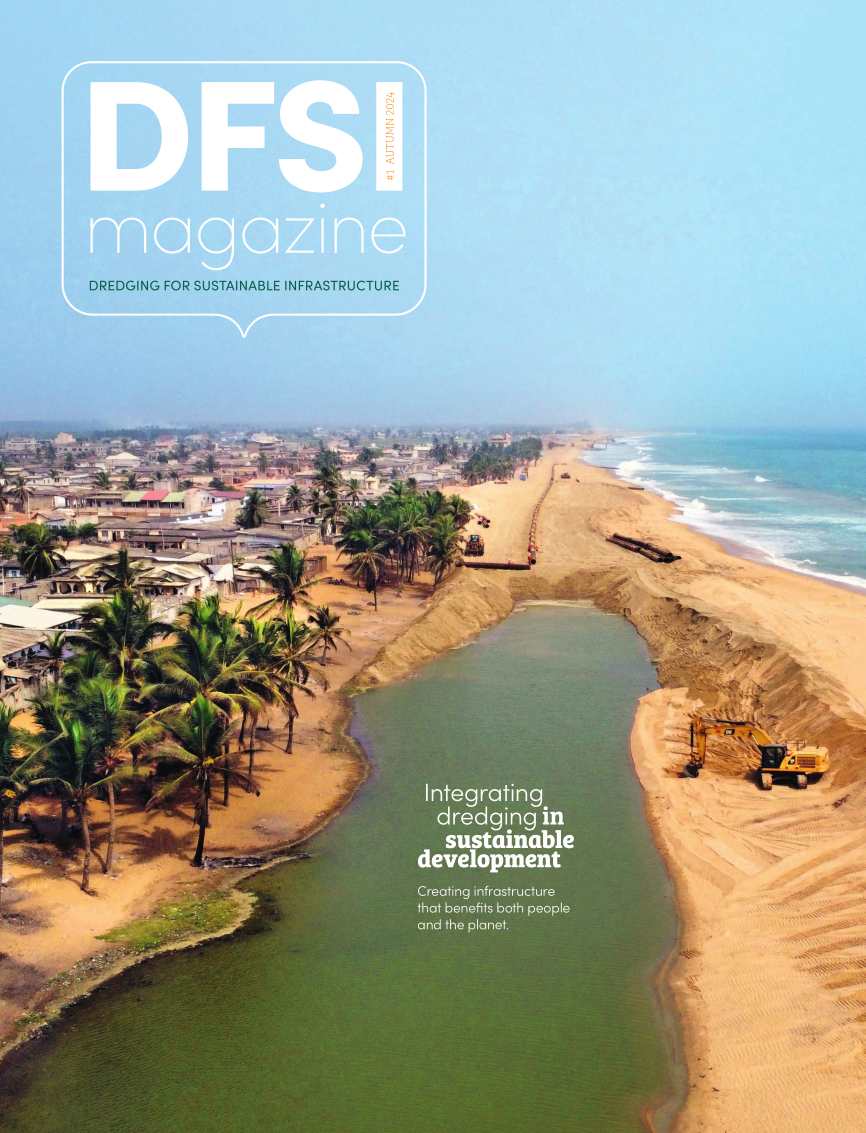
Published Autumn 2024

INTEGRATING DREDGING IN SUSTAINABLE DEVELOPMENT

Adapted from the second chapter of Dredging for Sustainable Infrastructure (2018), this article forms the foundation for this first issue and presents the concept of sustainability in relation to dredging projects. It describes the approaches and practices that are key to creating more sustainable solutions and infrastructure – a modern way of thinking about dredging.

NATURE-BASED SOLUTIONS IN BENIN

In early 2018, the Government of the Republic of Benin awarded Jan De Nul a design and build contract to protect a 5-kilometre-long stretch of coastline near the town of Avlékété. The project fits into the government’s plan to turn the local coastal zone, which includes a lagoon, sandspit and beaches, into tourist hotspots. Yet the persistent oceanic swell and chronic erosion required an intervention. This is the perfect starting point for a nature- based structure that offers multiple ecosystem services. Its long-term effectiveness, however, hinges on the support of its end users. Stakeholder engagement was therefore central to the project.

DELTA21

Sustainability, innovation and collaboration are key to successfully facing today’s global challenges of grid congestion and climate change. To combat these challenges, the Delta21 concept has been developed in the Netherlands. Located in the mouth of the Haringvliet estuary in the Dutch Delta, the project combines energy storage, flood protection and the restoration of nature. The concept could be elaborated upon and applied worldwide, inspiring governments, public bodies knowledge centres and developers to face climate change and move away from fossil fuels.

TALKING HEADS

Lara Muller (Invest International) and Pieter van Eijk (Wetlands International), discuss the role investors and NGOs can play in driving demand for nature-based solutions.

SAND MOTOR PROTECTING COASTAL COMMUNITIES IN TOGO AND BENIN

Authors: Bas Boerma
The coastline of Togo and Benin moves between 1 and, in some places, even 10 metres every year. Land inwards, of course. Climate change is the cause: sea level rise leads to coastal erosion and that poses a direct threat to economic activities and life on the West African coast. “The inhabitants of this region depend primarily on fishing and tourism for their incomes and livelihoods. Thanks to this coastal protection project, they can benefit from the opportunities the beach and coastal environment offer them, now and in the future,” says Boskalis regional manager Pieter Boer.

DEPLOYING PRIVATE CAPITAL TO ACCELERATE THE GREEN TRANSITION

Authors: Arjan Hijdra
Green solutions in ports, waterways and coastal projects have increasingly become available thanks to many years of research and pioneering efforts in practice. These sustainable solutions have shown to be good alternatives for classic solutions, but application is far from mainstream yet. One of the major hurdles is the lack of access of private capital to finance these kinds of solutions despite the strong interest of capital markets in green infrastructure opportunities. Identifying the hurdles and paving a way forward to overcome these hurdles could therefore help to increase the uptake of those green solutions.