

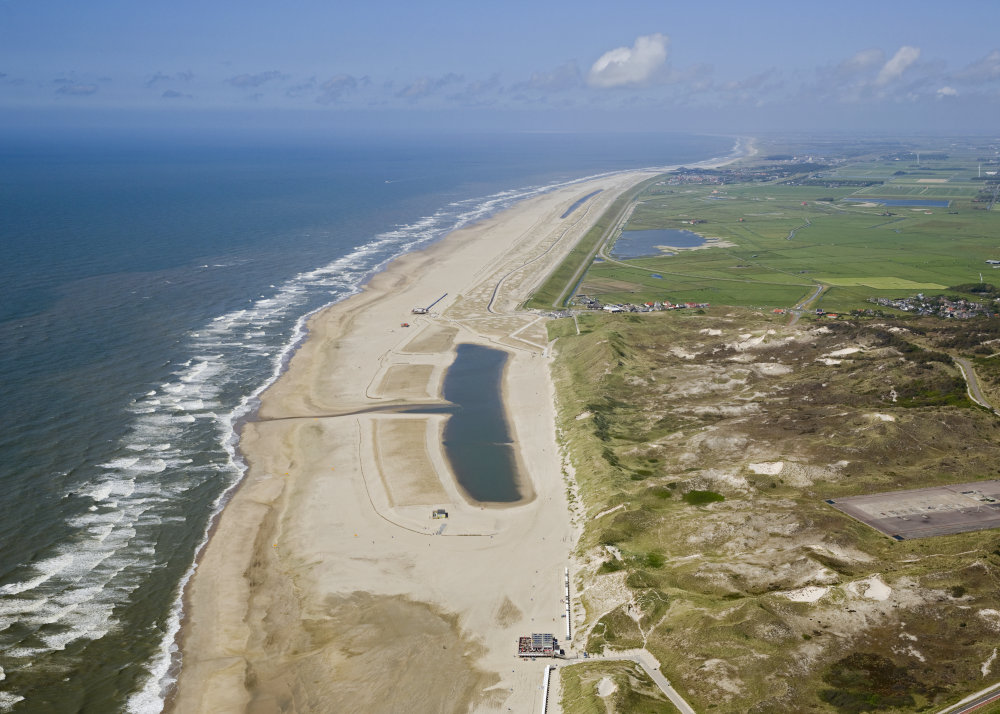
ASSESSMENT AND MANAGEMENT OF SUSTAINABILITY
In the last edition of DFSI Magazine, the concept of how to integrate sustainability in relation to dredging projects was explained. The focus of this article, adapted from the fourth chapter of the Dredging for Sustainable Infrastructure book (2018), discusses the assessment and management of sustainability activities that need to be implemented in a project and provides the theme for this issue.

SENEGAL, NDAYANE PORT CREATING A COMMUNITY-BASED SUSTAINABLE IMPACT
How can we balance the economic benefits of a large port development with measures that protect society and the environment? The deep-water port of Ndayane, 50 kilometres south of Dakar, is a practical example. Developed by DP World, with dredging and reclamation works being done by Jan De Nul, this port facility aims to boost trade and drive economic growth in Senegal, while also showing how major infrastructure projects involving challenging dredging and reclamation activities can create added value for local communities and the surrounding environment.
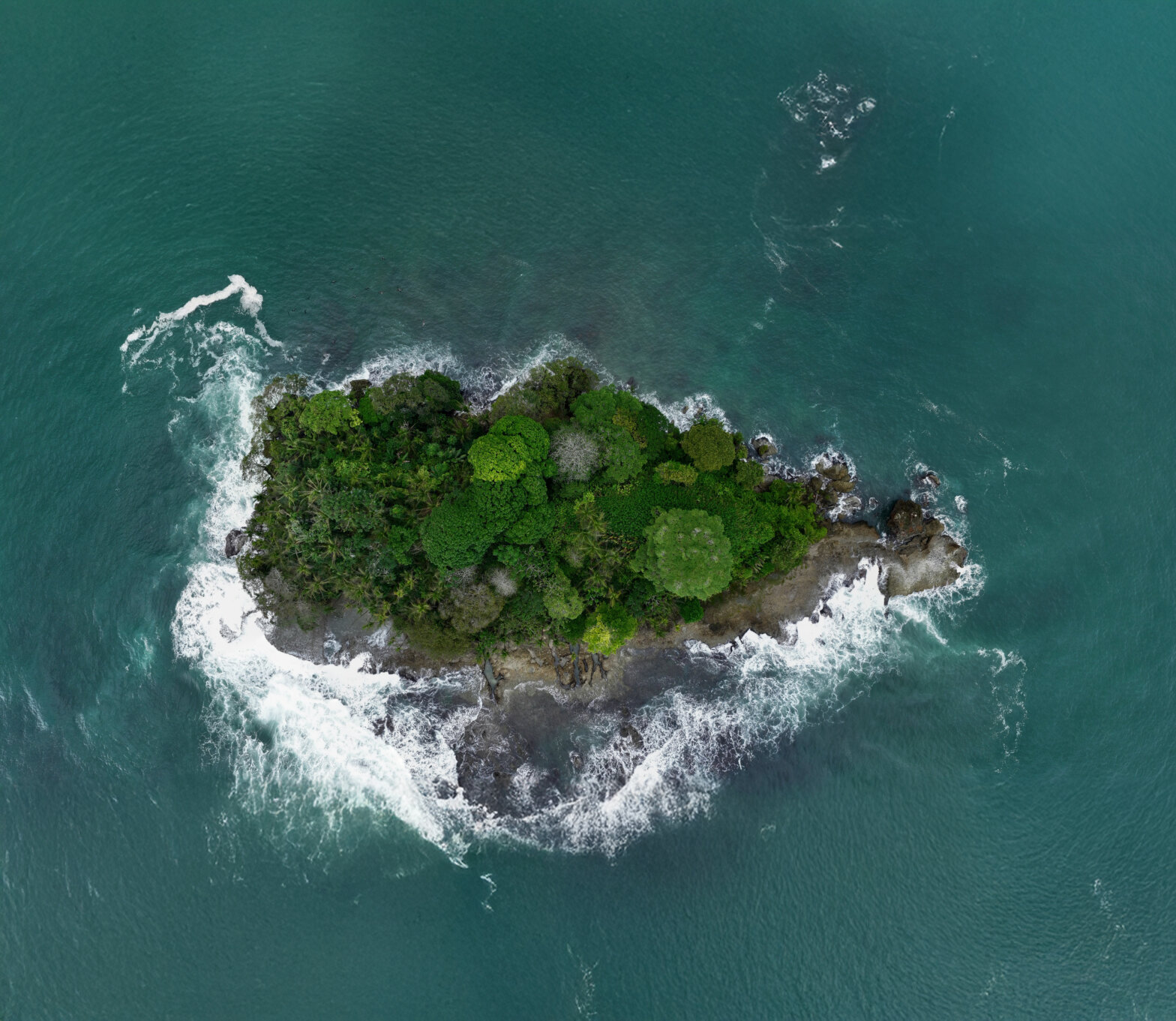
Empowering coastal youth through marine education
Dredging projects often focus on engineering and environmental outcomes, but their social impact can be equally transformative. In Costa Rica, DEME’s maintenance dredging works for the Costa Rican Petroleum Refinery (Recope – Refinadora Costarricense de Petróleo) haves parked a meaningful community initiative. Through the “Friends of the Sea” campaign, DEME, in collaboration with the national NGO called Latin American Sea Turtles Association (LAST), engaged young students from Moín Primary School in environmental education, fostering awareness and responsibility. This article explores how dredging projects can serve as platforms for social engagement, education and long-term sustainability.

GULHIFALHU RECLAMATION PROJECT
Environmental and social management in marine infrastructure projects is fast evolving. In Gulhifalhu’s pristine waters, Boskalis delivered one of the Maldives’ most complex dredging and reclamation projects amid sensitive habitats and high stakeholder expectations. Guided by international best practice and close collaboration with partners, robust controls safeguarded marine habitats while enabling development. The result stands as a blueprint for future projects, demonstrating that sustainable marine infrastructure can deliver lasting benefits for nature, communities and economic progress.
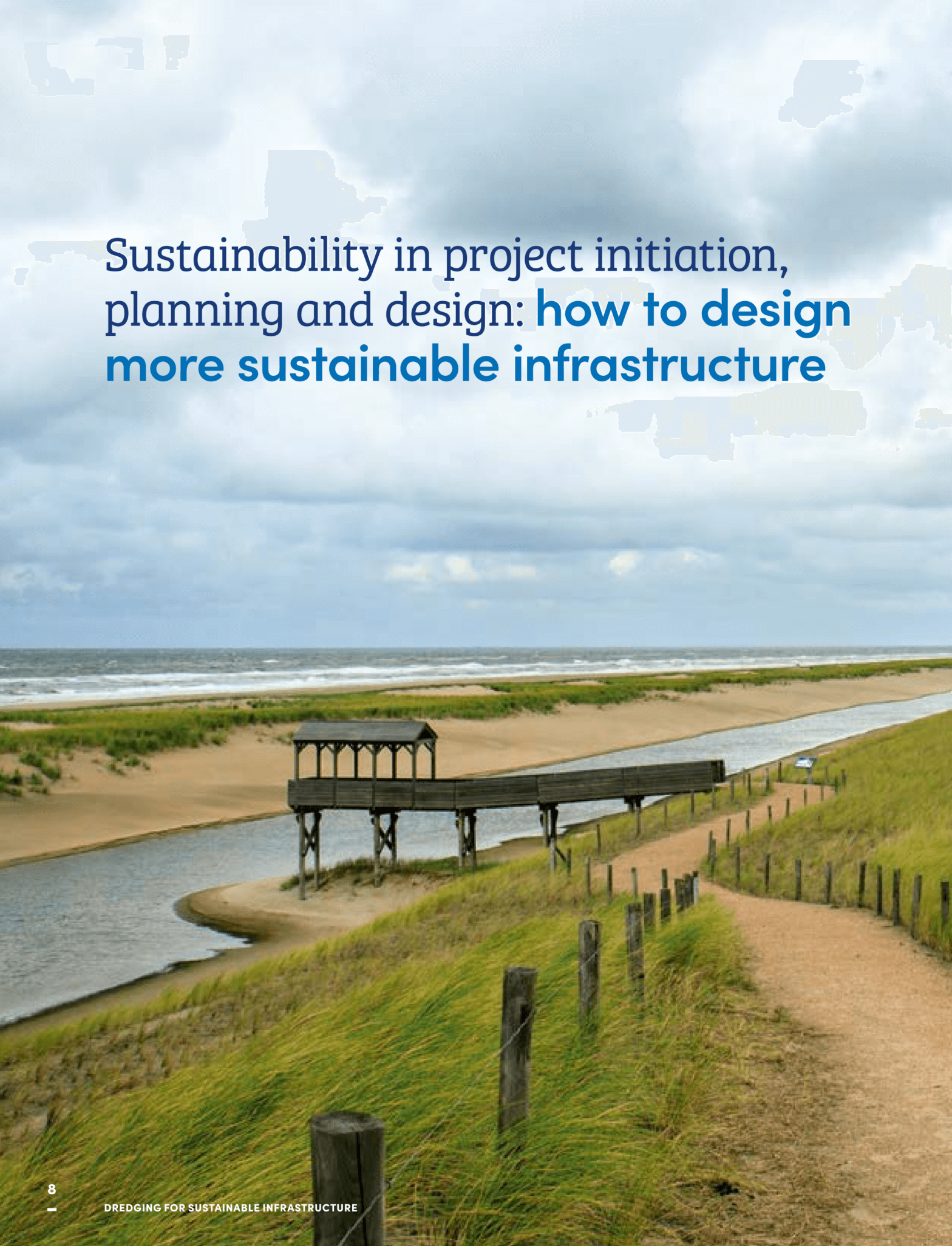
Sustainability in project initiation, planning and design: how to design more sustainable infrastructure
In the first DFSI Magazine, the concept of sustainability in relation to dredging projects was explained. How to integrate this concept in project design is the focus of this article, adapted from the third chapter of Dredging for Sustainable Infrastructure (2018), and provides the theme for this issue.
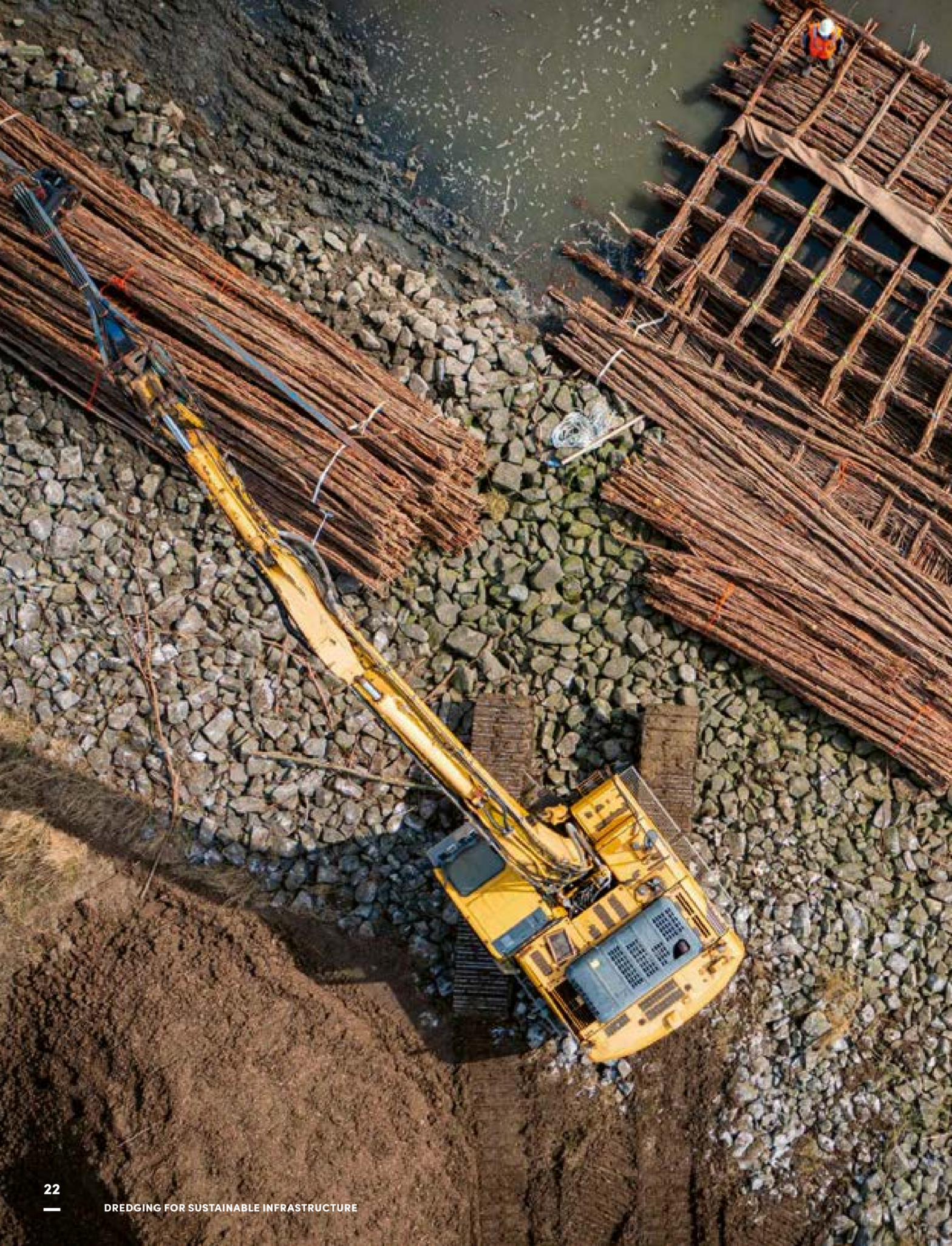
Bankbusters: Ecosystem-based riverbank management
Estuarine tidal wetlands offer vital ecosystem services, including flood protection, erosion control and water purification. However, these estuarine ecosystems actually face significant pressures caused by both human activities and natural forces, leading to habitat and ecosystem degradation and loss. The Bankbusters project adressess these issues by reusing soft dredged sediments to restore tidal marshes and mudflats as natural riverbank systems. As such, this initiative promotes biodiversity, enhances flood resilience and supports sustainable economic growth through innovative, eco-friendly and resilient solutions in the Scheldt estuary.
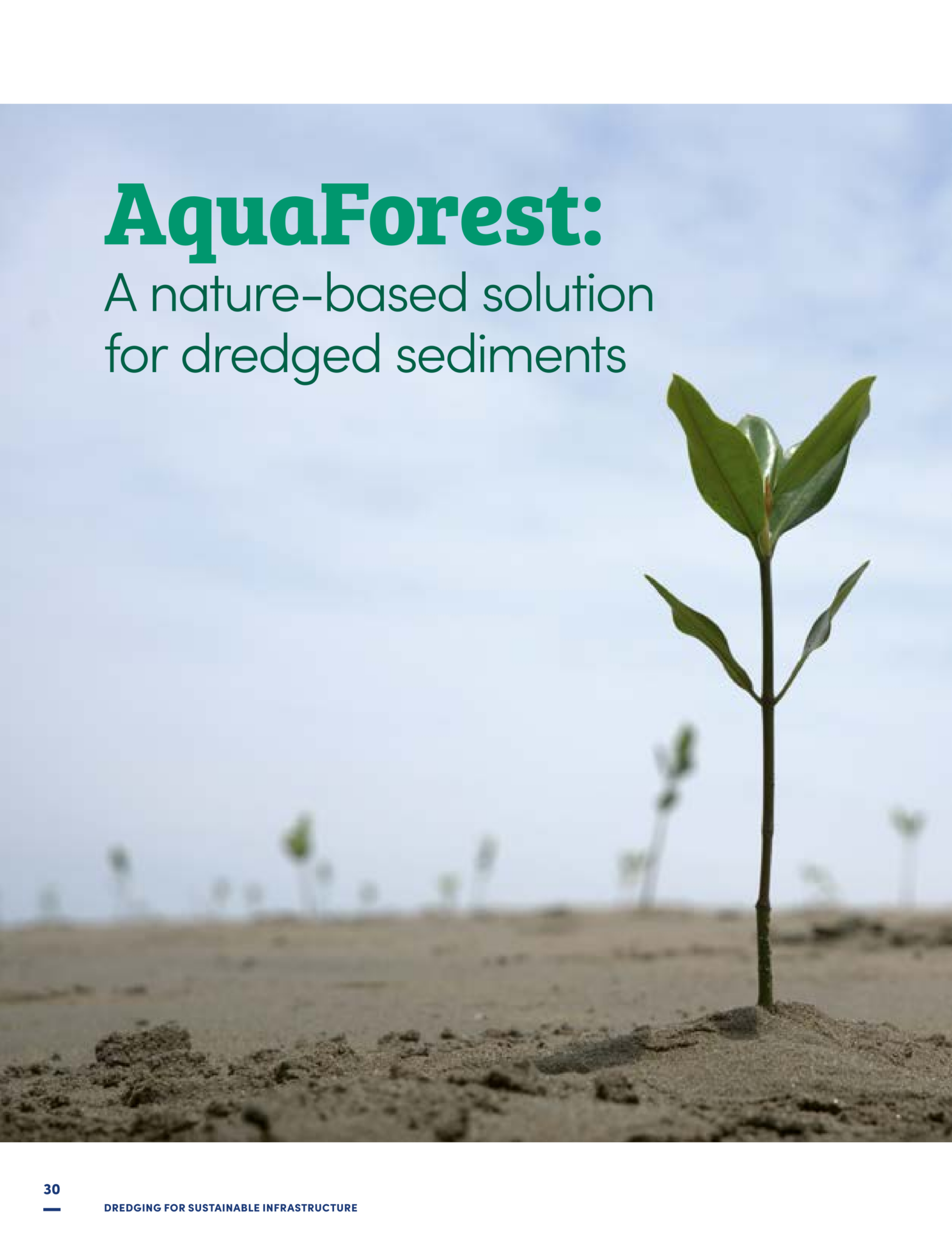
AquaForest: A nature-based solution for dredged sediments
AquaForest is a demonstration project led by Jan De Nul showcasing a green-grey approach, where dredged sediments are being reused to create 50 hectares of mangrove habitat in the Guayas Delta, Ecuador. The project aimed to advance knowledge on the conceptual design and eco-engineering approaches of mangrove habitats, while strengthening local engagement and generating diversified income opportunities for local communities. A new mangrove island was built in the end of 2024 and is currently being monitored to quantify the provision of ecosystem services over time with the aim of future upscaling of this type of nature-based solutions.

RESTORING OYSTER REEFS with nature inclusive marine infrastructure
While essential to coastal development and maritime industries, dredging and marine construction activities can unintentionally disrupt marine ecosystems. At Van Oord, we aim to deliver solutions for marine infrastructural developments that protect and enhance habitats and biodiversity. Over the past few years, we have explored how nature-inclusive designs can transform traditional marine infrastructure into ecosystem-supporting assets. The reintroduction of the European flat oyster to the North Sea is a key example.