


RESTORING OYSTER REEFS with nature inclusive marine infrastructure
While essential to coastal development and maritime industries, dredging and marine construction activities can unintentionally disrupt marine ecosystems. At Van Oord, we aim to deliver solutions for marine infrastructural developments that protect and enhance habitats and biodiversity. Over the past few years, we have explored how nature-inclusive designs can transform traditional marine infrastructure into ecosystem-supporting assets. The reintroduction of the European flat oyster to the North Sea is a key example.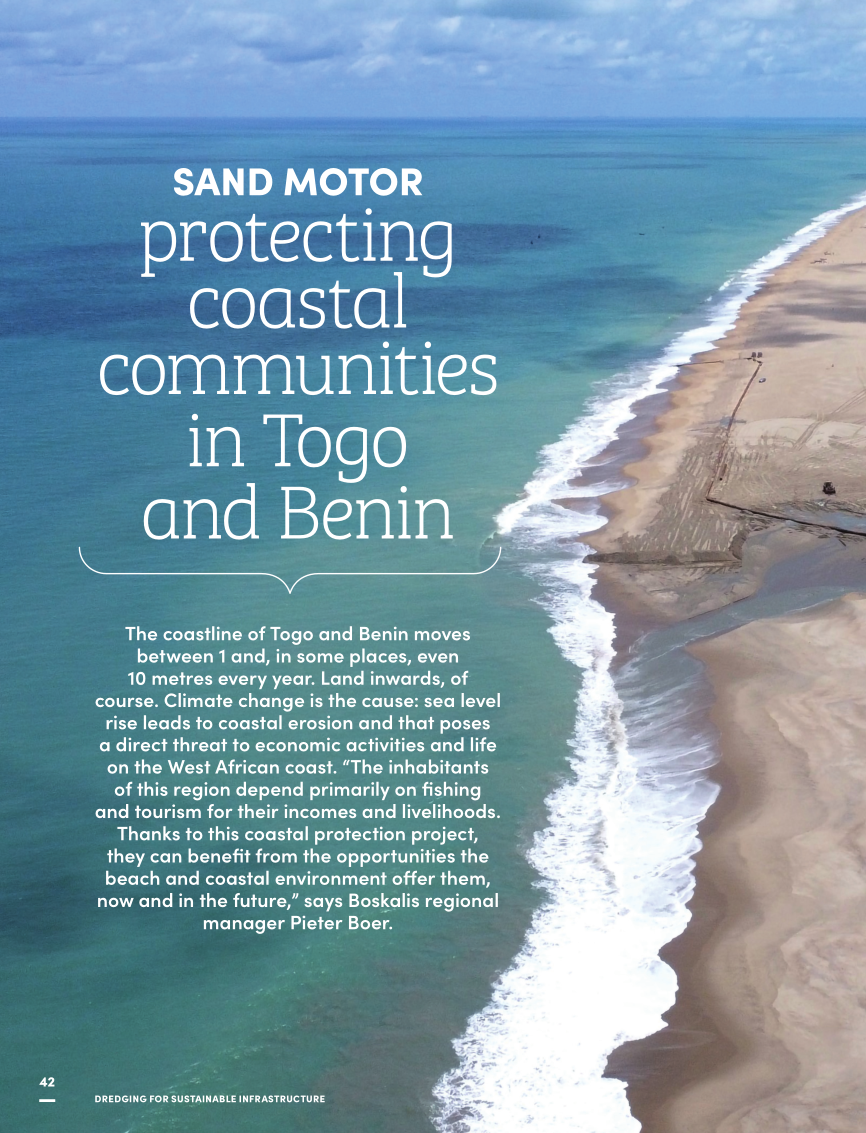
SAND MOTOR PROTECTING COASTAL COMMUNITIES IN TOGO AND BENIN
The coastline of Togo and Benin moves between 1 and, in some places, even 10 metres every year. Land inwards, of course. Climate change is the cause: sea level rise leads to coastal erosion and that poses a direct threat to economic activities and life on the West African coast. “The inhabitants of this region depend primarily on fishing and tourism for their incomes and livelihoods. Thanks to this coastal protection project, they can benefit from the opportunities the beach and coastal environment offer them, now and in the future,” says Boskalis regional manager Pieter Boer.
SENEGAL, NDAYANE PORT CREATING A COMMUNITY-BASED SUSTAINABLE IMPACT
How can we balance the economic benefits of a large port development with measures that protect society and the environment? The deep-water port of Ndayane, 50 kilometres south of Dakar, is a practical example. Developed by DP World, with dredging and reclamation works being done by Jan De Nul, this port facility aims to boost trade and drive economic growth in Senegal, while also showing how major infrastructure projects involving challenging dredging and reclamation activities can create added value for local communities and the surrounding environment.
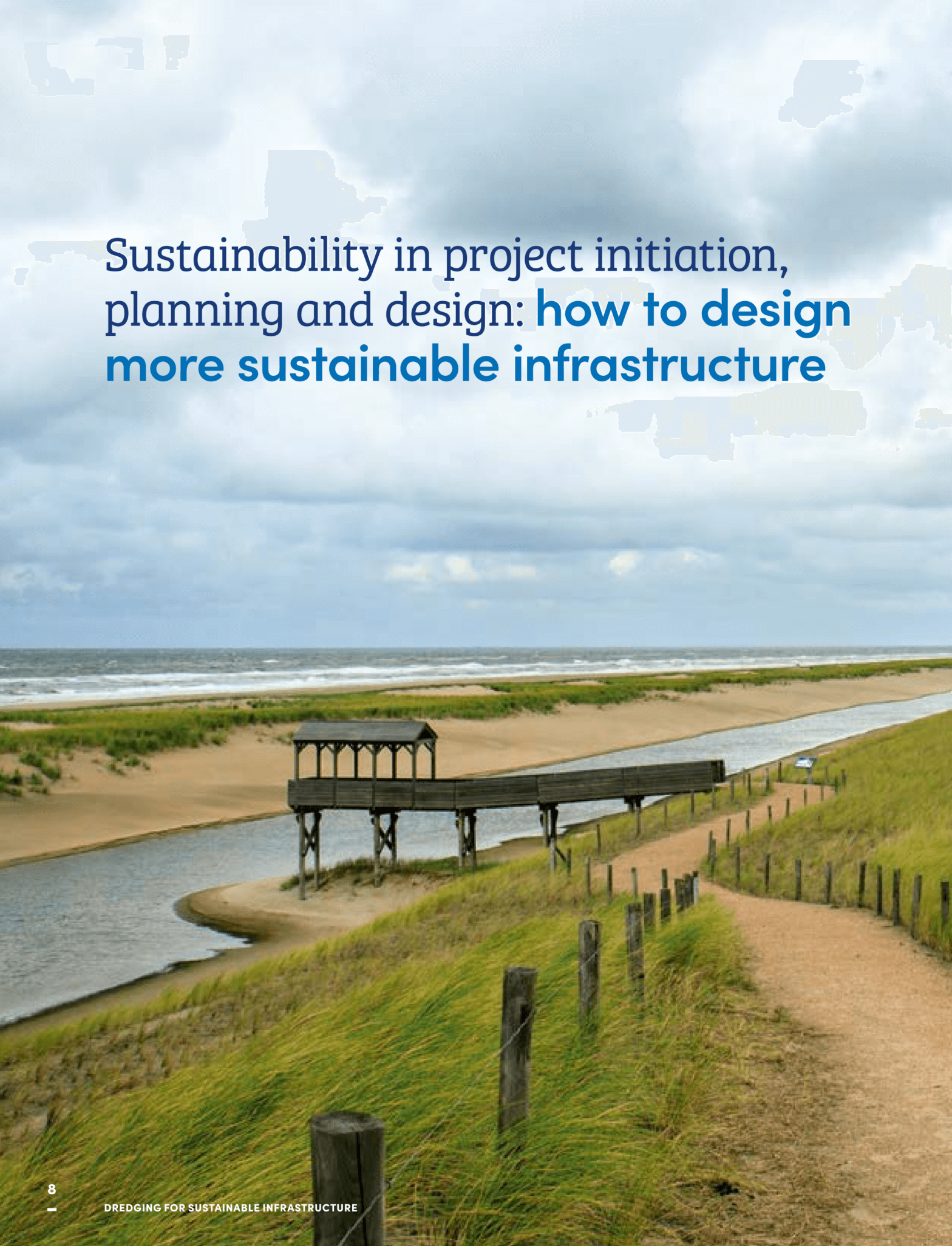
Sustainability in project initiation, planning and design: how to design more sustainable infrastructure
In the first DFSI Magazine, the concept of sustainability in relation to dredging projects was explained. How to integrate this concept in project design is the focus of this article, adapted from the third chapter of Dredging for Sustainable Infrastructure (2018), and provides the theme for this issue.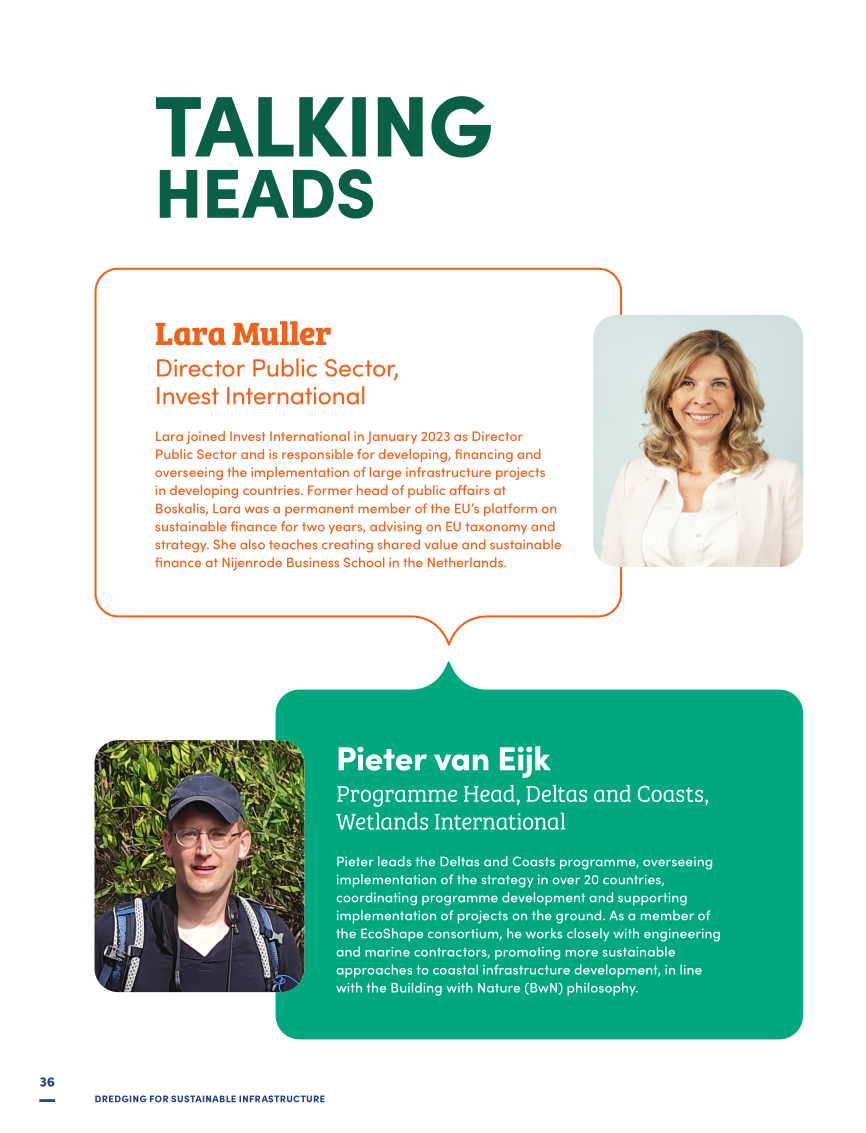
TALKING HEADS
Lara Muller (Invest International) and Pieter van Eijk (Wetlands International), discuss the role investors and NGOs can play in driving demand for nature-based solutions.