Production related aspects
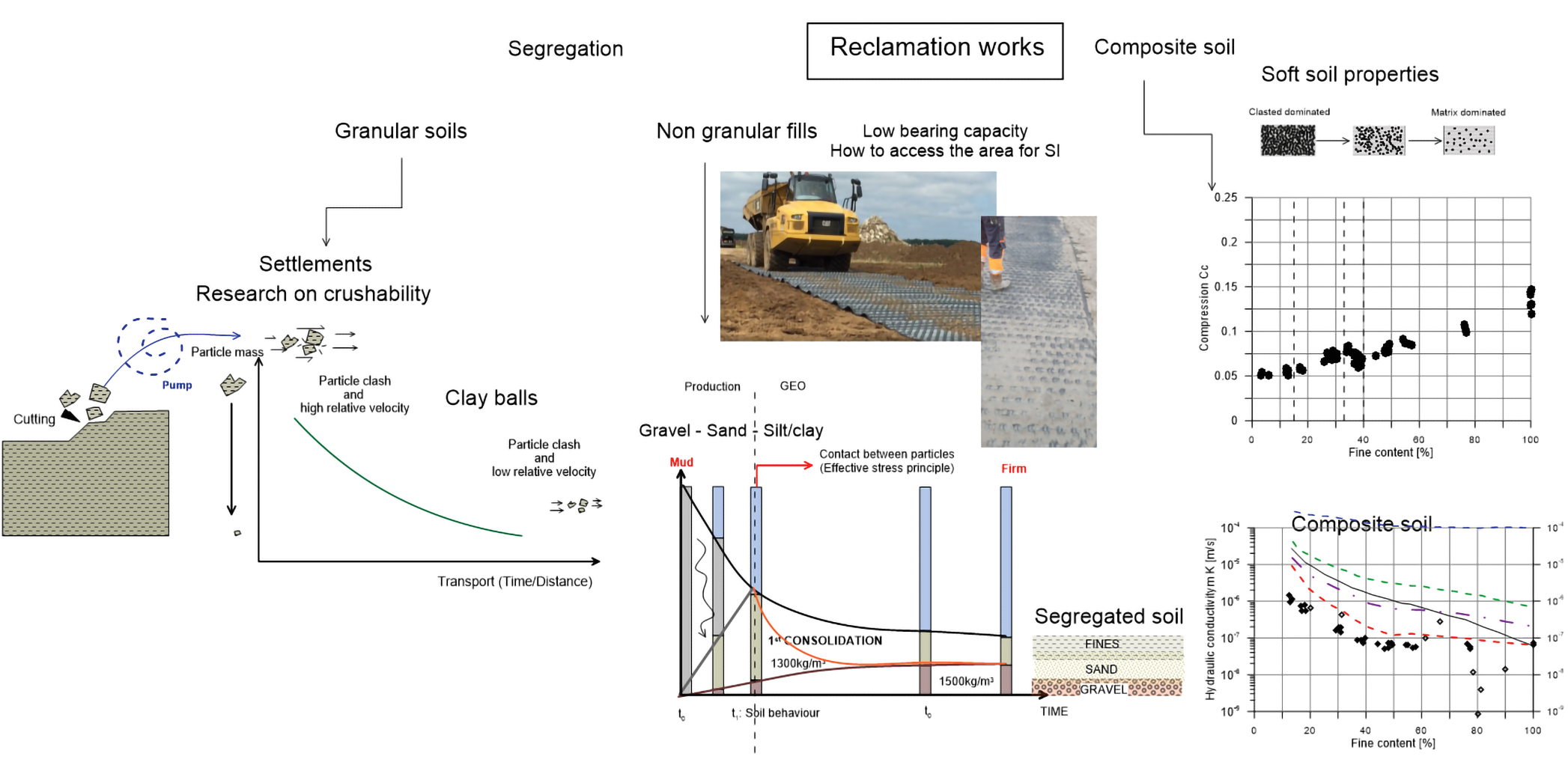
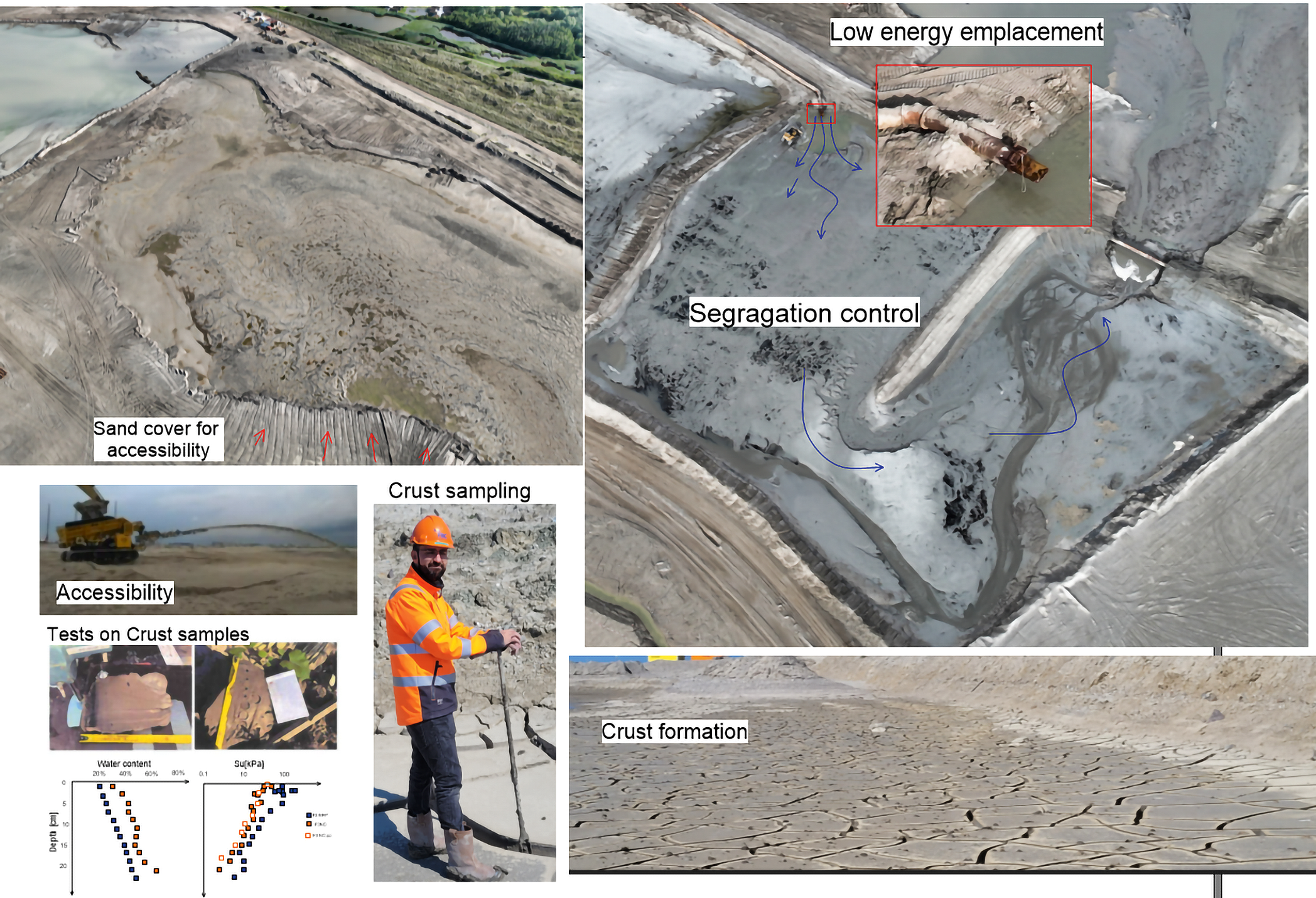
From the production perspective, aspects like
the production rate, production duration and
production costs are to be considered for the
two main dredging work methods: hydraulic
and mechanical dredging. Hydraulic dredging
is often considered to be the fastest and
cheapest dredging method. However, the
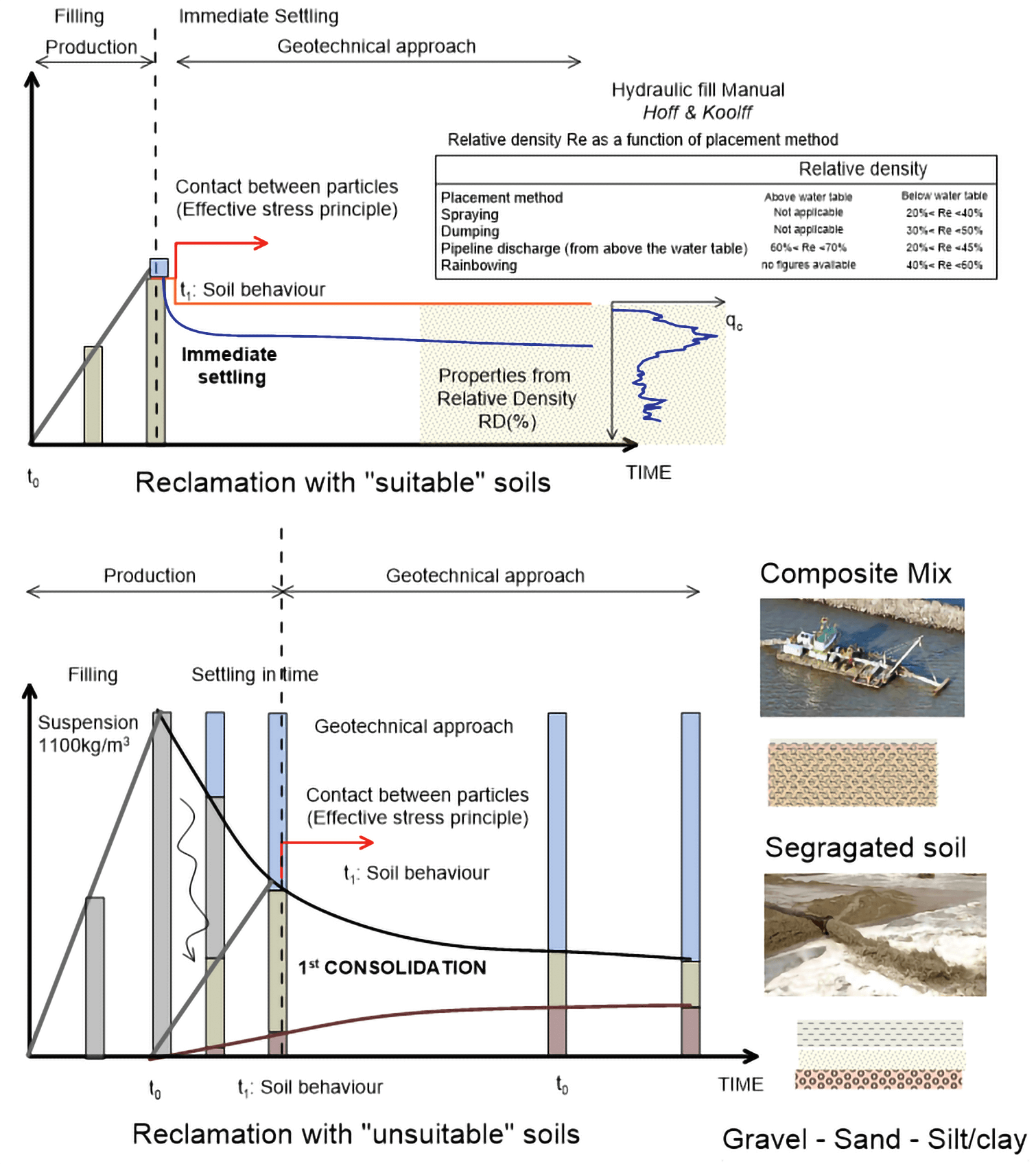
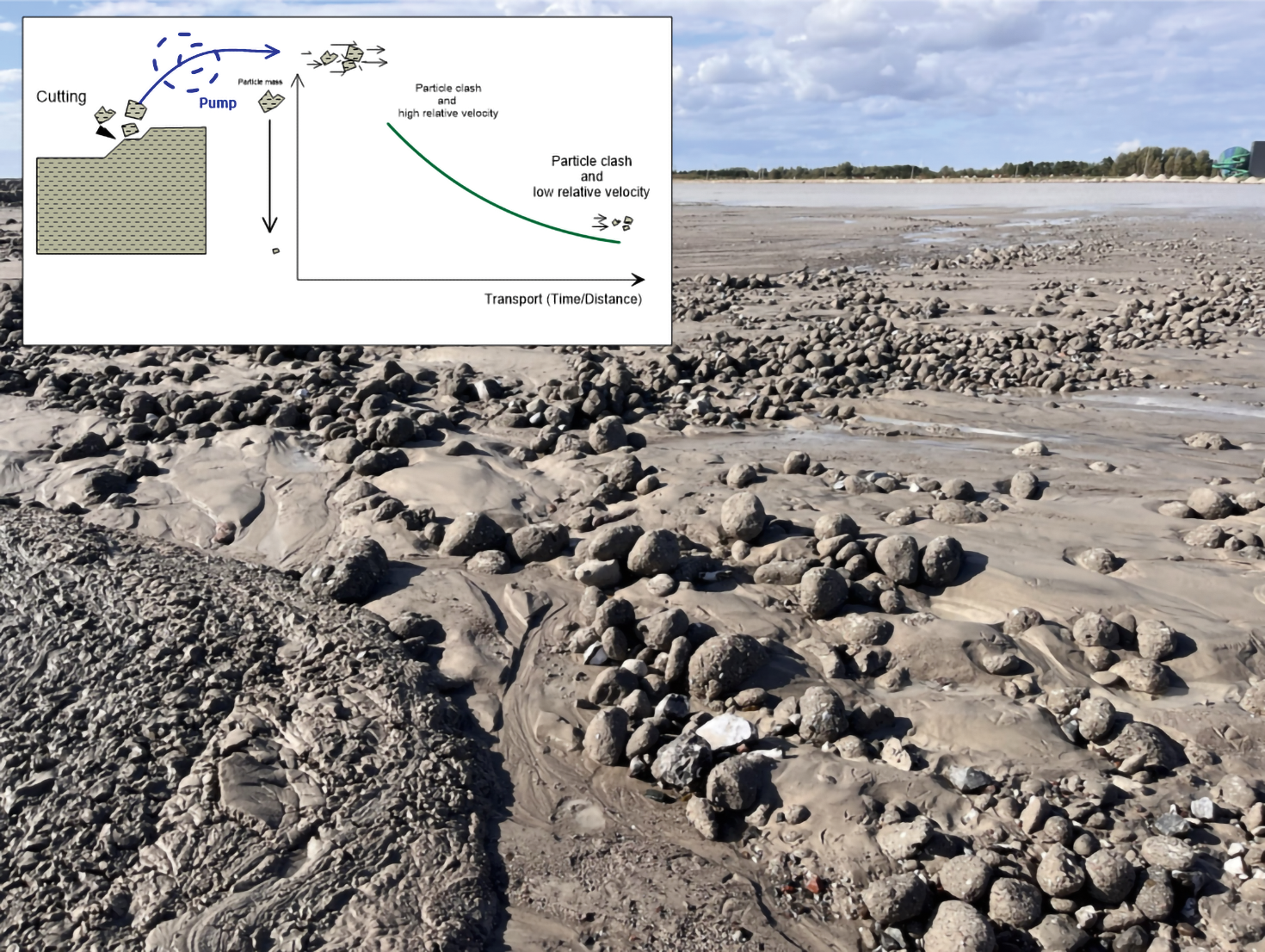
counterpart is that the dredged soil is placed
with a significant amount of water resulting in
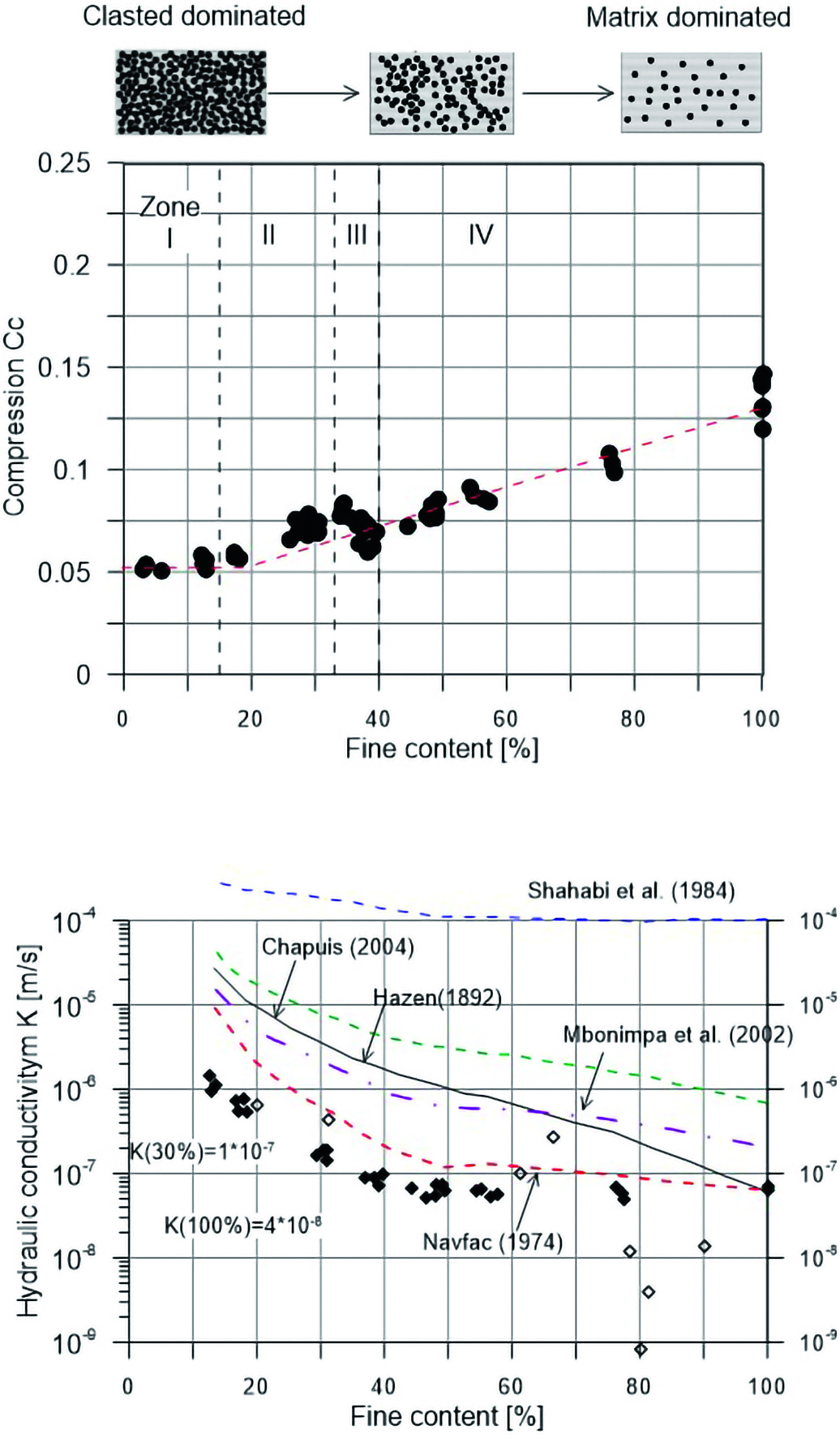
a fill material characterised by low hydraulic
conductivity and high compressibility.
The consequence of this is that the fill will
require a long consolidation time or a costly
ground improvement method in order to
meet the design requirements. Another
aspect of hydraulic dredging of soft soils is
the high bulking factor.
Mechanical dredging is often considered to
be more expensive and more time consuming
than hydraulic dredging. However, the
advantage of the mechanical method is that it
preserves more the in-situ properties of the
soil. This is because the material is excavated
from the seabed by the bucket and a minimum
of water is added. The resulting fill material is
characterised by a lower water content, a higher
density, a lower compressibility and higher
bearing capacity compared to the material
produced by hydraulic dredging. This will lead to
relatively shorter consolidation times and a
reduction in the amount of ground improvement
required to meet the design requirements.
Bulking factors are also much lower.
The above considerations of the different
dredging methods illustrate that the fastest
and cheapest dredging method may not
necessarily lead to the fastest and cheapest
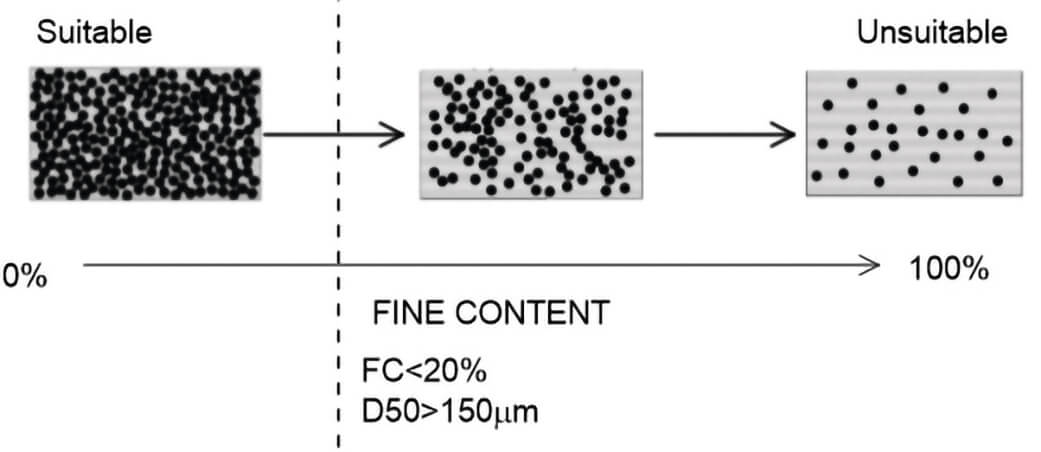
consolidation phase, especially when using
soils with high fine content. This makes it
evident that a trade-off exists between
total project costs and duration, which is
governed by the chosen dredging work
method. This trade-off element comes
back to the reclamation project when
utilising these materials.
The most efficient dredging work method
is project specific and depends on what
the client and dredging contractor want to
optimise, either the project duration or the
project costs. Despite the project specific
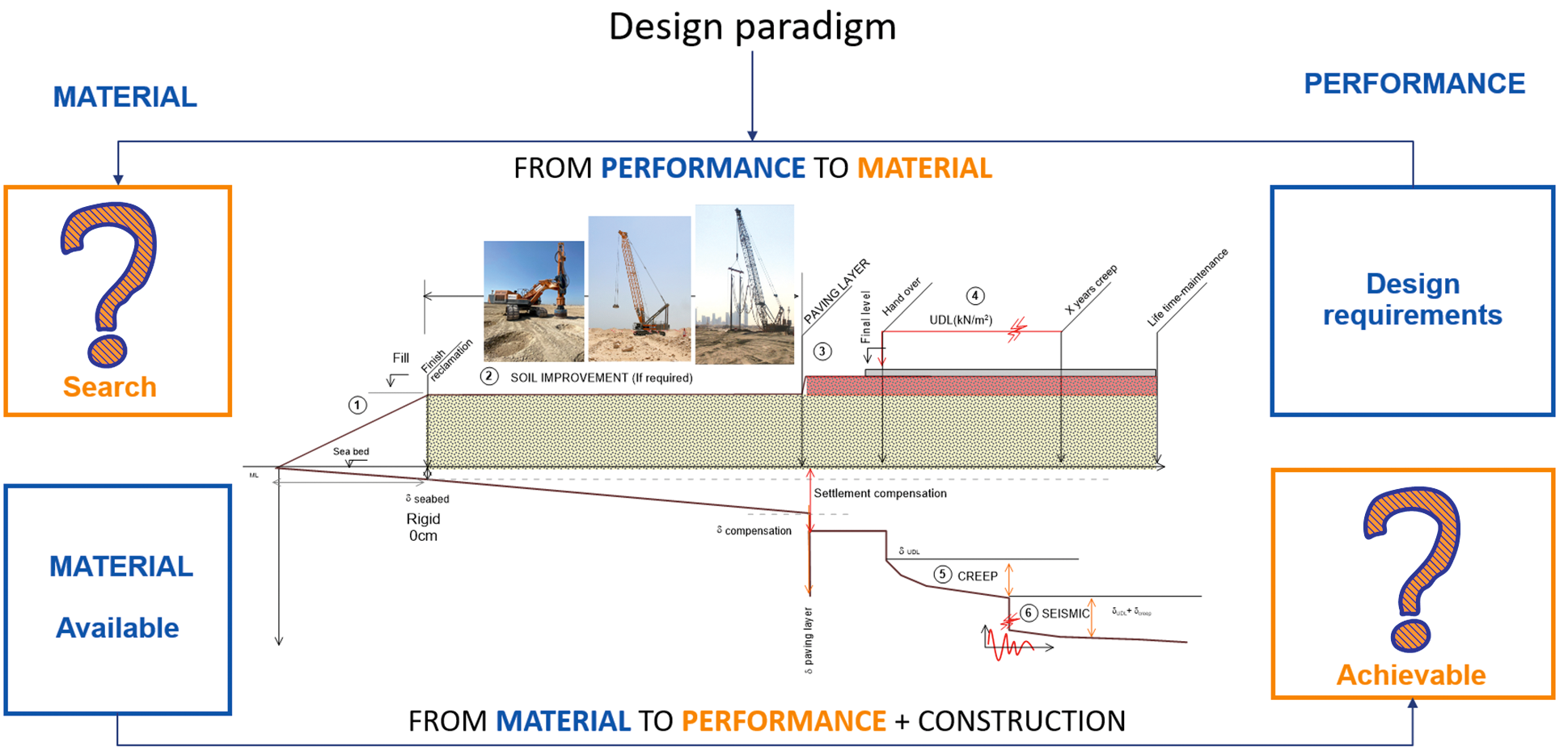
character of the problem, a model is needed
where the production and reclamation
processes can interact and the trade-off
between cost and duration is assessed for
the specific circumstances.
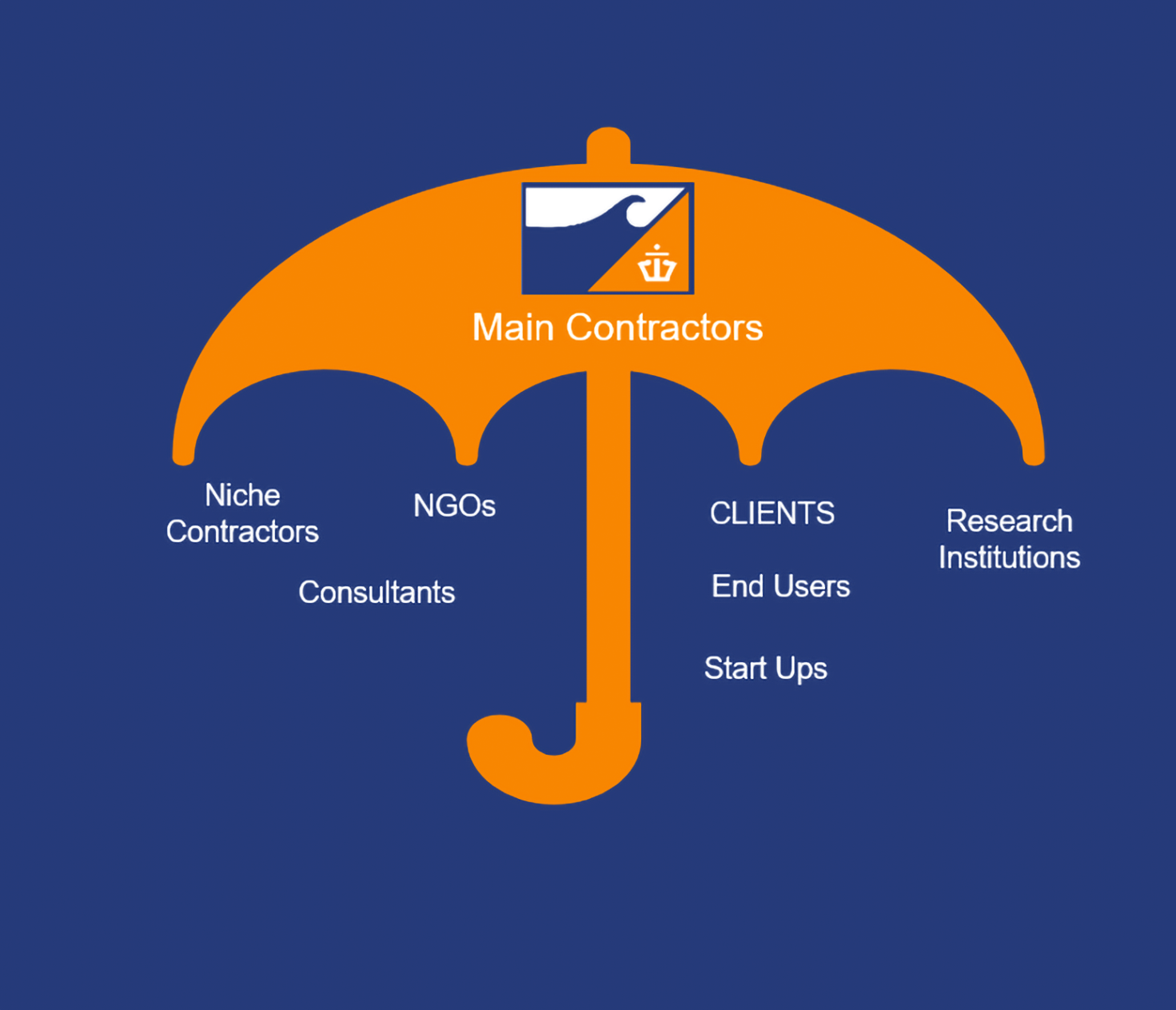
Stakeholders
Stakeholders are recognised to be key players
in the implementation of this mindset change
and for that their involvement is crucial.
Owners and direct users of the reclaimed land
A land reclamation reaches airports, port
developments or housing areas. The direct
users of a land reclamation are affected by the
fact that a land reclamation could enhance
their business opportunities. Changes in the
project duration will have an impact on the
faster or slower return on their investments.
Direct users should then be involved in the
discussion and their feedback considered for
the performance requirements in terms of
need for maintenance, costs associated with
an increase or decrease in the operability and
the overall quality of the end product. The core
value regarding this integrated approach is
to have a reliable product that does not fail.
Environmentalists and NGOs
The creation of new land by reclamation will
potentially affect the current ecosystem,
which in principle is not in favour of the
environmentalists. The involvement of
environmentalists and NGO organisations
will favour the realisation of the project and
produce a positive effect on the local
communities. Introducing solutions like the
Building with Nature programme will favour
the acceptance of the project by the local
communities leading to a better balance
between the needs of the project area.
Increasing the efficiency of project execution
would result in a shorter relative duration of
the construction phase and, as an effect,
reduce its negative impact on the ecosystem
in terms of noise pollution and disturbance by
operations. Choosing the most CO2-neutral
dredging work method makes a more healthy
and sustainable solution possible. Otherwise,
the option for the cheapest work method
would allow for some extra budget to build
compensation elements on the reclamation,
such as new habitats for several species and
more value to society (for example, beaches).
The core responsibility of environmentalists
and NGOs is to be involved in the discussion to
express their opinion on the optimum solution.
The core values regarding this integrated
framework are trust and transparency
regarding the environmental impacts of the
execution method of land reclamation and
the land reclamation itself.
Contractors
Contractors can increase their project's
efficiency in terms of total project costs and
duration. This could enable the contractor
to increase its competitive position in tenders
or increase the profit margin of a project.
The contractor will strengthen its market
position in the long term. The core responsibility
of the contractor is to increase the efficiency
of their operations, deliver reliable assets to
clients and leave a positive impact on the
environment and society. The core values of
this civil engineering (CE) system are quality,
safety, innovation, and financial responsibility.
Government
The government can benefit from the
optimisation of the duration and costs for
the completion of a project. Increased
efficiency in project execution could lead
to cheaper reclamation options, which make
the reclamation of land more attractive for
various public problems, such as housing,
airport expansions and port developments.
It is the responsibility of the government to
complete a project finding the best solution
in terms of sustainability, cost and time.
The core values regarding this CE system
are safety, sustainability, transparency and
public benefit.
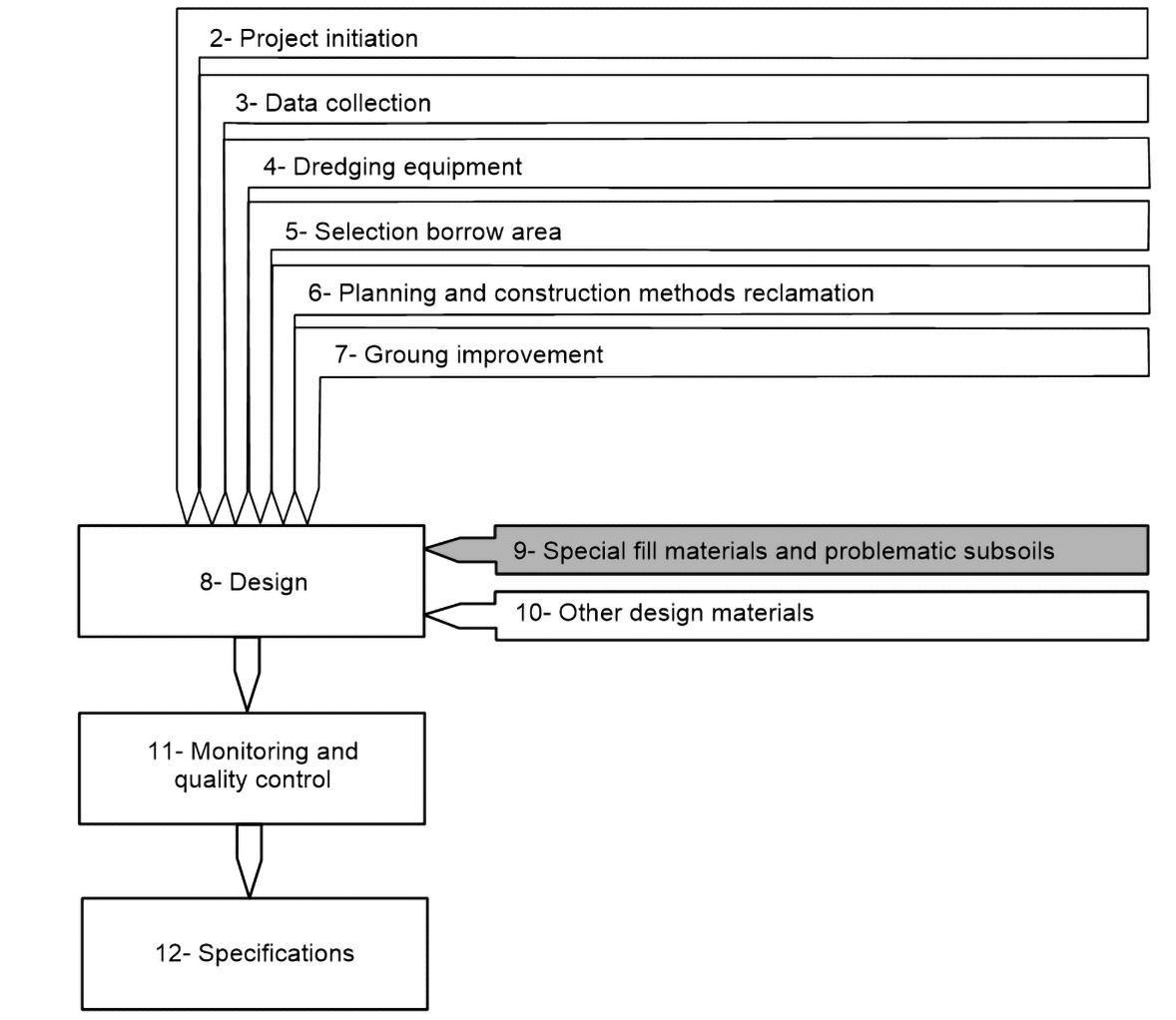
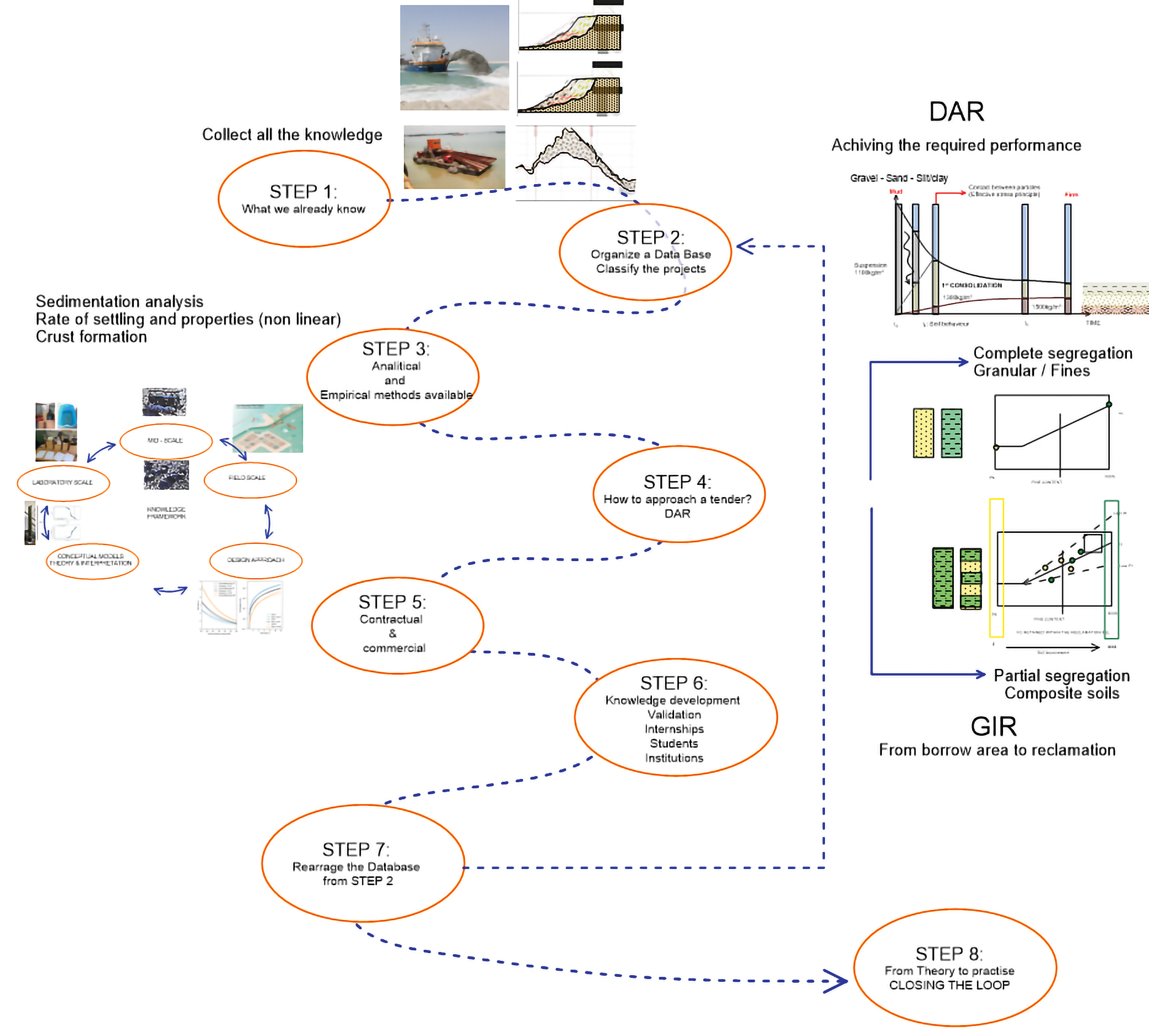
Proposed roadmap
In the process of developing an adequate
framework for the exchange of knowledge
between disciplines and to provide access to
this knowledge to all relevant actors involved
in these kinds of projects, the following steps
are proposed to compose a possible road map
(Figure 13).