
Reservoir sedimentation
A reservoir is defined as an artificial lake
constructed for storing water. Most reservoirs
are formed by constructing dams across rivers.
A reservoir can also be generated from a
natural lake by constructing a dam at its outlet
to control water. Large reservoirs without
dams often present similar challenges as
reservoirs associated with dams for sediment
management and removal processes. Coastal
reservoirs are freshwater reservoirs in the
tidal limits, near the river mouth to capture
sustainable river flow (S.Q. Yang et al., 2005).
Coastal reservoirs can be located inside,
outside or beside the river mouth. In this article,
a reservoir is referred to both artificial and
natural reservoirs including coastal reservoirs.
Reservoirs and lakes form a vital part of the
Earth’s usable and available fresh water supply
system. According to the World Meteorological
Organisation (WMO) report (2021), only 0.5%
of water on Earth is usable and available
freshwater. Based on the current data
published by the International Commission on
Large Dams (ICOLD), the present storage
capacity of reservoirs is about 8,767 km3 of
fresh water. The demand for global fresh water
is steadily increasing and could reach 2-3%
per year over the coming decades (ICOLD).
Water reservoirs also guarantee steady water
supply for irrigation, domestic and industrial
use during droughts and reduce the negative
impacts of floods.
Reservoir sedimentation not only diminishes
its storage capacity but also compromises
the purpose of reservoirs and the safety of
dams. With the challenges of climate crisis,
the planet is experiencing both drought with
reservoirs and lakes drying up, as well as
floods resulting from excessive rainfall as
extreme weather events become more
frequent. Soil erosion and hence reservoir
sedimentation are also accelerating due to
the severity of storms and rains associated
with climate change. Sediment management
and removal strategies need to be developed
urgently to tackle the problems of reservoir
sedimentation as well as the worldwide water
crisis resulting from climate change.
To formulate suitable sediment management
strategies for reservoirs, historic and
current data on dams and reservoirs are
necessary. No complete database of the
world’s reservoirs is available to date.
Lehner and Doll (2004) present a global
database of lakes, reservoirs and wetlands.
This database is superseded by Global
Reservoir and Dam Database (GRandD v1.3)
(Lehner et al., 2011) that records 7,320
reservoirs and associated dams, with a global
reservoir storage of 6,863.5 km3. Based on
ICOLD, the current estimate of large dams is
now around 58,000 worldwide with an
estimated storage capacity of 7,000-8,300
km3. A large dam is a height of 15 metres or
greater from the lowest foundation to the
crest or a dam between 5 m and 15 m
impounding more than 3 million m3 (ICOLD).
There are many more small dams and
impoundments, which are not recorded in
the global databases.
Global Georeferenced Database of Dams
(GOODD, 2020) is a global dataset of more
than 38,000 georeferenced dams. GeoDAR
(2022) presents nearly 25,000 geo-
referenced dam and reservoir data. Other
existing global and regional dam databases
are AQUASTAT and World Resources
Institute (WRI) databases. The Global Dam
Tracker (GDTA, 2018) is a geo-referenced
global dam database of 35,140 dams in all
continents except Antarctica.
Primary information required to develop
effective and sustainable sediment
management and removal strategies for
reservoirs are:
- the location and associated catchment and discharge areas;
- year the reservoir was built;
- current capacity of the reservoir: and
- material characterisation.
Data about present day reservoir capacity is often not available. Numerical modelling techniques assessing the sedimentation rates of reservoirs can be used to estimate the current volume of sediments present in reservoirs (Khorrami and Banihashemi, 2019).
Curative sediment management strategy
Sediment management strategies for
reservoirs can either be “preventive
sediment management strategies” i.e.
adopting measures to reduce the inflow of
sediments in the reservoirs or “curative
sediment management strategies” i.e.
removal of sediments from the reservoirs.
This article discusses only the curative
sediment management strategy of sediment
removal by dredging.
The location and type of reservoirs presents
challenges in terms of selection, transportation
and launching of suitable dredging equipment.
The volume of sediments to be removed from
reservoirs is significant when compared to
the volume of sediments removed from annual
maintenance dredging works. Availability of
a suitable disposal area for such volumes
of sediments is often challenging. With
contaminated sediments, disposal and
encapsulation methodologies require carefully
designed processes. While developing
sediment management and removal strategies
for reservoirs, emphasis should be given to
circular economy and beneficial uses of the
dredged sediments.
Most reservoirs have multiple users leading
to competition and potential conflicts among
user groups. Reservoirs are associated
with complex and sensitive ecosystems.
The timing of dredging and the rate of
dredging activity should be such that it
minimises the disturbance to the associated
ecosystems (Sarkar, 2013). The sediment
management and restoration of reservoirs
often involves public resources. All these
challenges increase the risks associated
with any reservoir dredging activities.
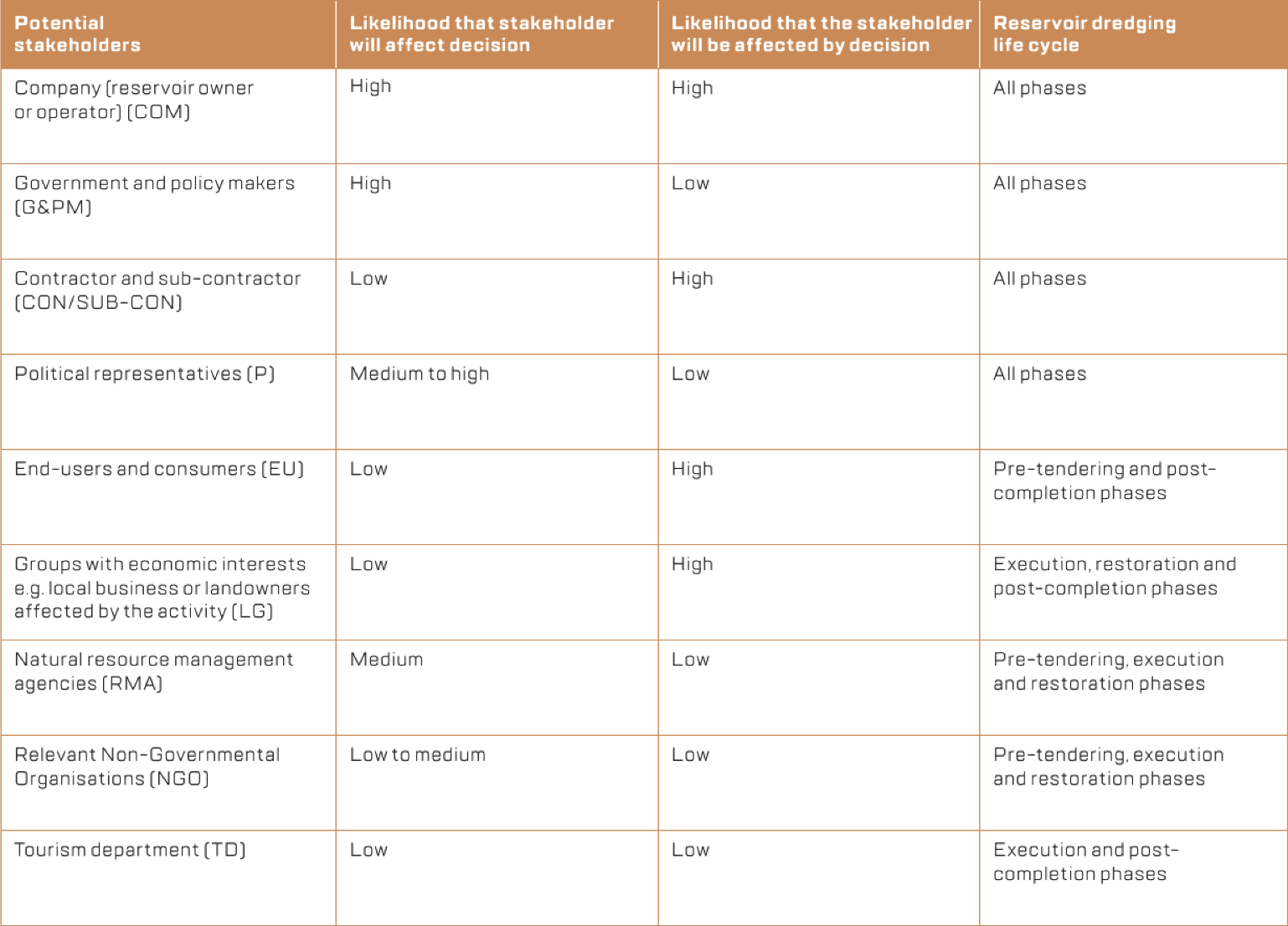
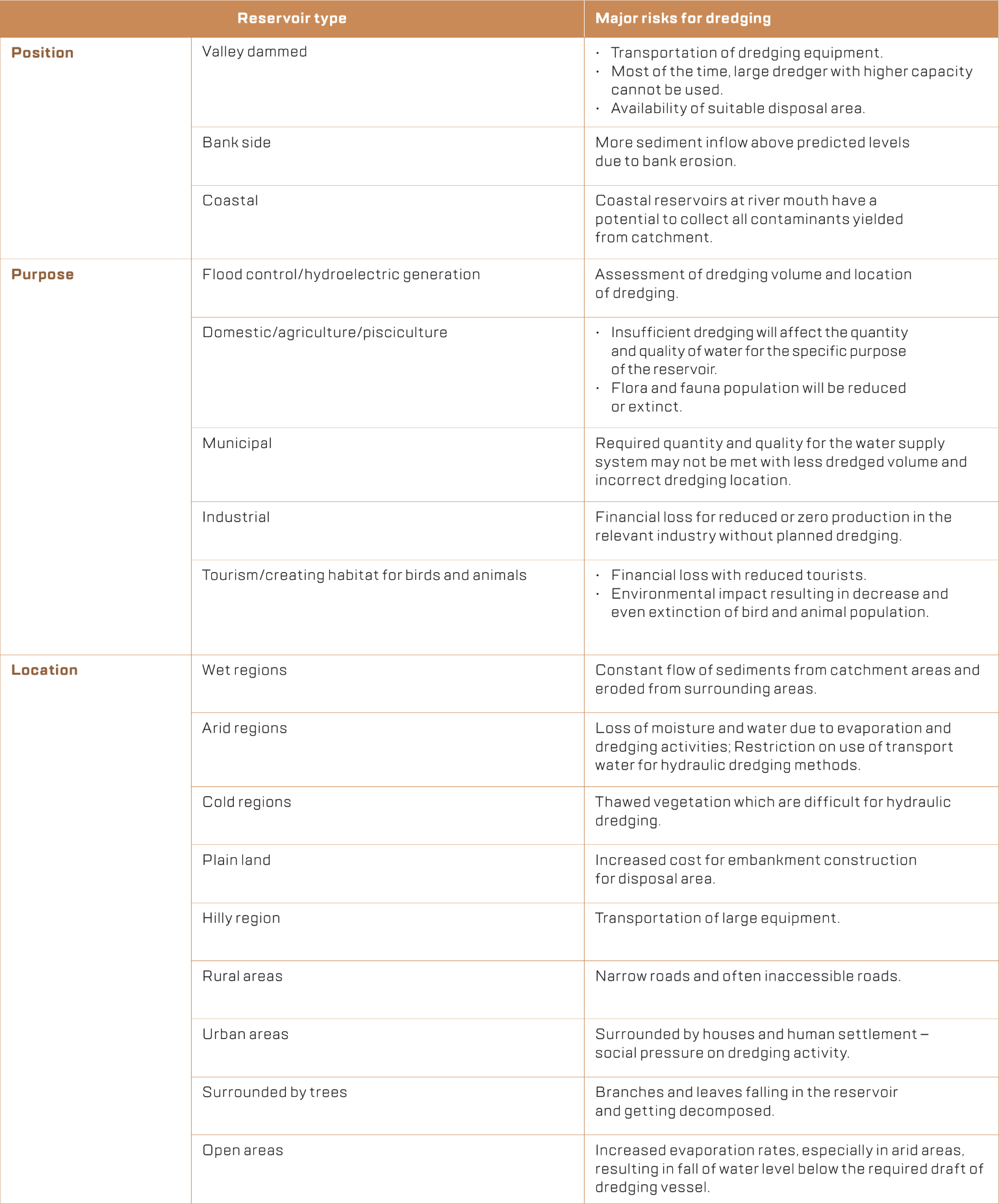
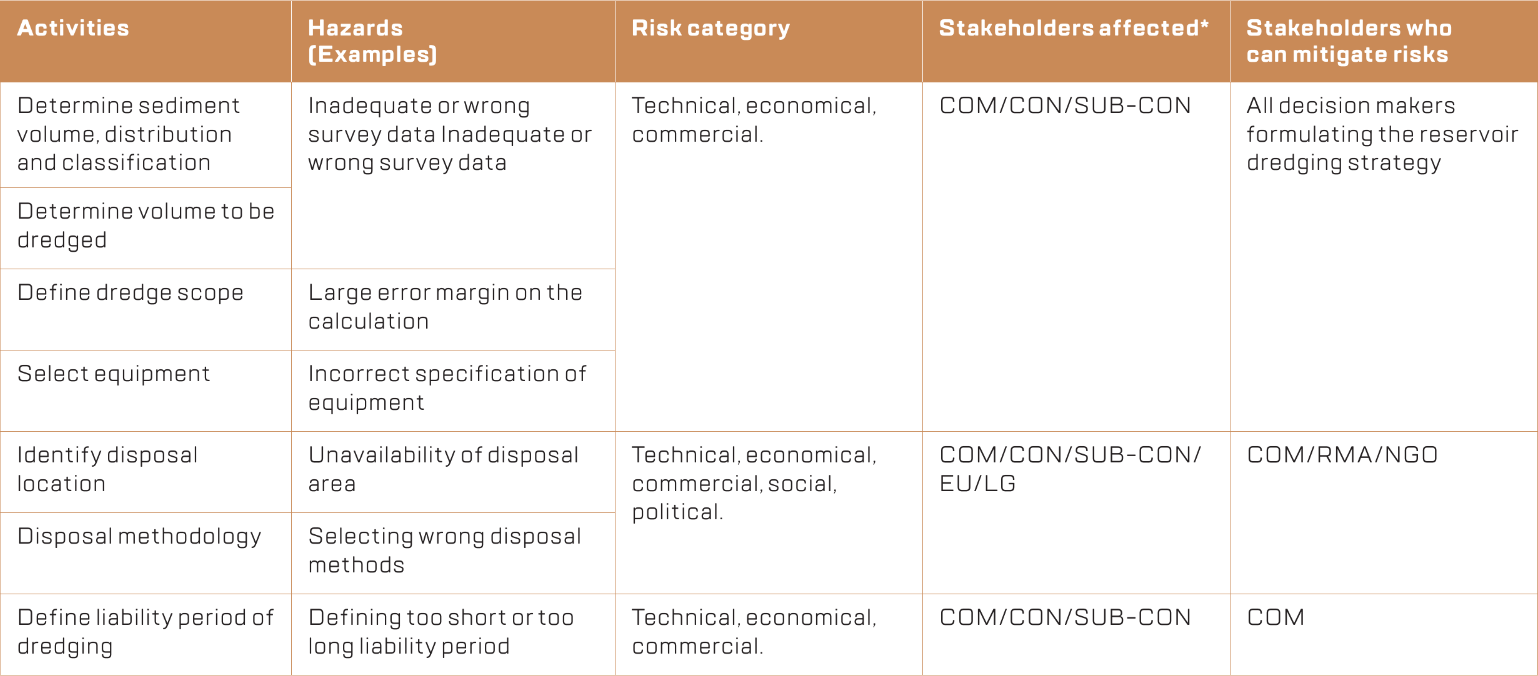
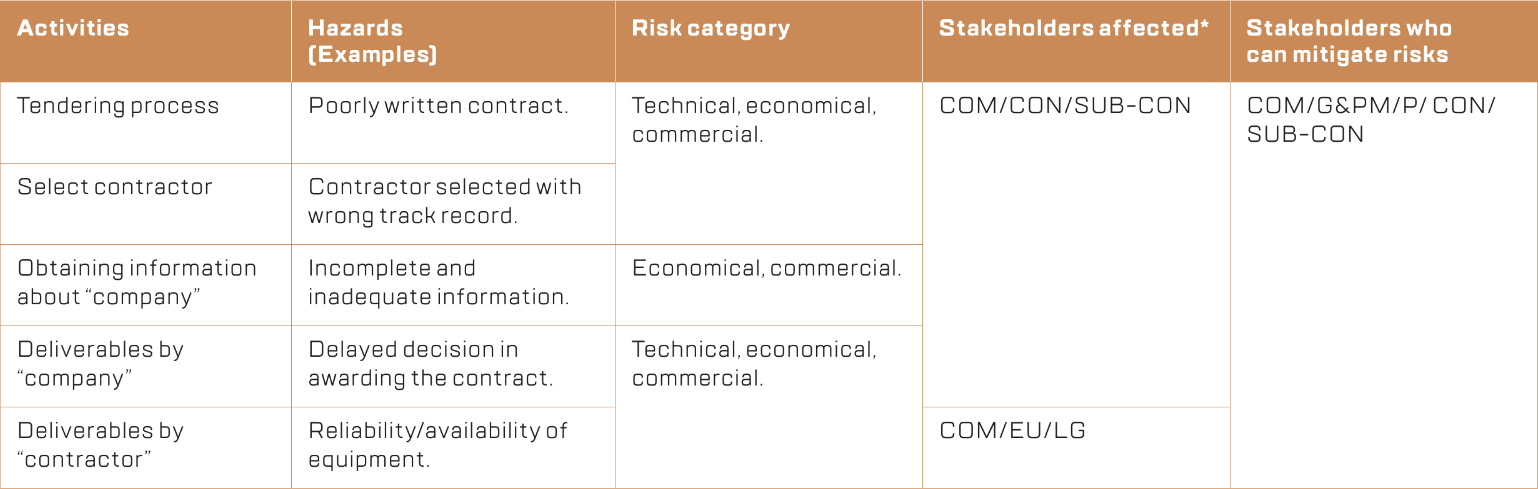
This article discusses the importance of
adopting a risk-based approach for reservoir
dredging activity by identifying the major risks
associated with different types of reservoirs
and with various phases of the reservoir
dredging life cycle (Sarkar and Sarkar, 2024).
Identification of stakeholders and decision
makers from the planning phase as well as
early stakeholder involvement will result in a
stakeholder driven process, which is effective
in identifying, managing and mitigating
reservoir dredging risks.
The recognised industry standards for risk
assessments are ISO 45001:2018 and
ISO 14001. ISO 45001 replaced the BS
OHSAS, the globally recognised standard for
occupational health and safety management.
ISO 45001 includes bidding on contract,
especially internationally, commitment to
social sustainability (ESG benchmarking)
commitment to UN SDGs (United Nations
Sustainable Development Goals), and
providing safe and healthy workplace free
from injury and disease. ISO 14001 is the
environmental management system standard
that also needs to be considered.
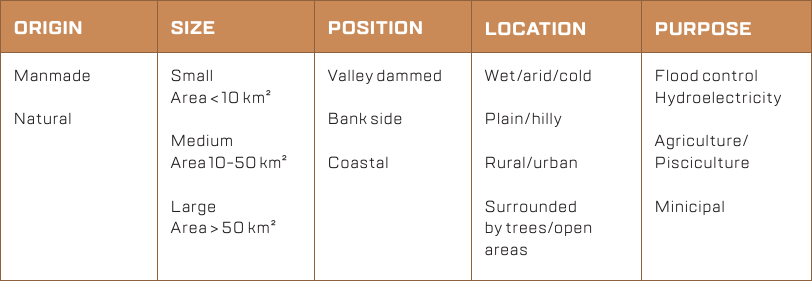
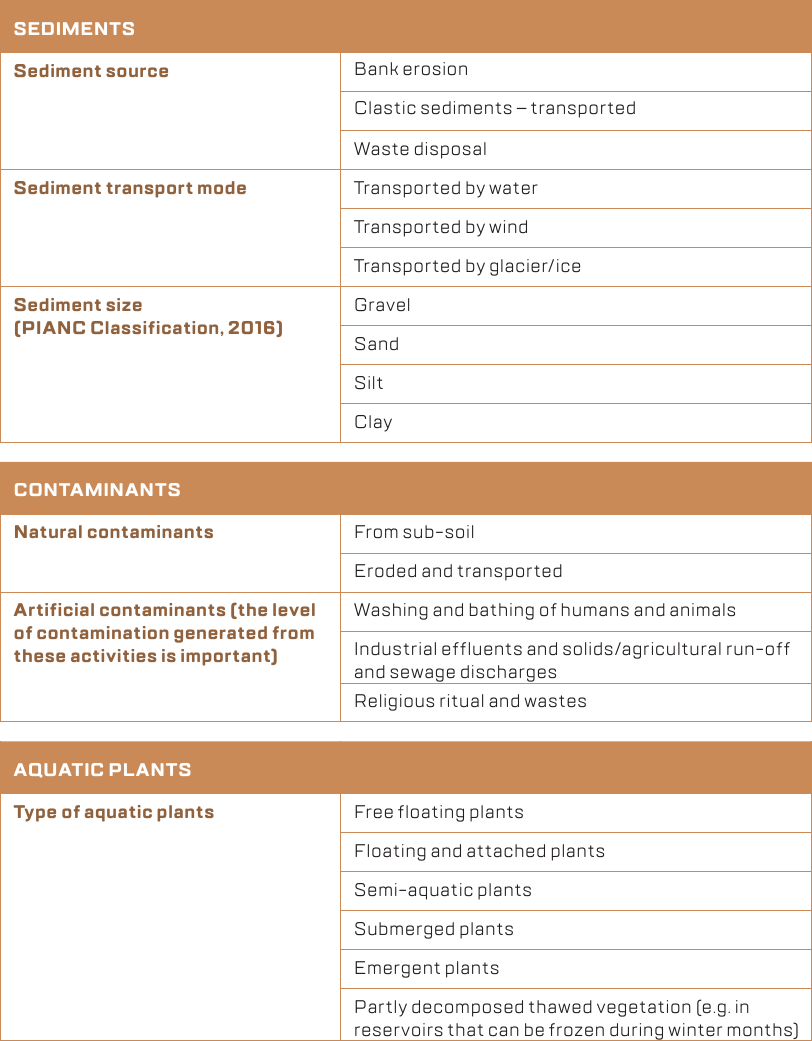
Reservoir sediment management
The type of reservoir determines the morphological, hydrological and material (sediment, contaminants and aquatic plants) characteristics of any reservoir. Reservoirs can be classified based on their origin, size/storage volume, position, location and purpose of the reservoir. A simplified classification scheme for reservoirs is presented in Figure 1.