Reservoirs are critical elements of global water infrastructure, supporting water supply, flood protection, hydropower generation and ecological functions. Their long-term performance, however, is increasingly undermined by sedimentation – a slow and often overlooked process that reduces storage capacity and disrupts natural sediment continuity along river systems. This article examines sedimentation as a key sustainability challenge for reservoirs and impounded waters. It outlines the causes and impacts of sediment trapping, from declining reservoir capacity to downstream river and delta erosion, and explains why proactive sediment management is essential. The article concludes by presenting continuous sediment transfer as a sustainable approach to maintaining reservoir functionality while restoring sediment continuity.

Sedimentation and the silent loss of water storage

While reservoirs are vital for water management, their greatest long-term challenge is sedimentation, which threatens both infrastructure and ecosystems.

Dams and reservoirs are crucial infrastructure. They secure drinking water supplies, provide retention volume for flood protection, enable hydropower generation and allow for the regulation of water levels. Beyond these primary functions, reservoirs often serve as habitats for fish, birds and other species, and are frequently used for recreation.

However, the impoundment of rivers fundamentally alters natural flow and sediment dynamics. When a river is dammed, flow velocities decrease significantly as the water body widens upon entering the reservoir. Sediment that was previously transported downstream begins to settle, with deposition typically starting at the head of the reservoir. As a result, reservoirs act as sediment traps, interrupting the natural sediment continuity of the river system.

The retention of sediment has far-reaching consequences downstream. A deficit of sediment in the tailwater can alter river morphology, degrade wetlands and delta regions, and compromise the stability of riverbanks, hydraulic structures and other infrastructure. At the same time, ongoing sedimentation within the reservoir progressively reduces its useful storage capacity. Over time, this loss of volume can severely limit the reservoir’s ability to fulfil its core functions, including water supply, flood control and energy generation.

In the initial years following dam construction, sedimentation generally has little impact on operation. As deposition continues, however, the available storage volume decreases rapidly and operational constraints become increasingly severe. Once a critical threshold is reached, the reservoir’s functionality can be fundamentally impaired.

Sedimentation is a global challenge that has largely been postponed rather than systematically addressed. It is estimated that, on average, 1-2% of global reservoir storage capacity is lost each year due to siltation. This loss exceeds the storage capacity added by newly constructed reservoirs, resulting in a net global decline. In Europe, projections suggest that up to 70% of existing reservoir capacity could be silted up by 2060, while in parts of Asia similar conditions are expected as early as 2025 (Perera et al., 2023).

According to the World Bank, the 20th century was the era of large dam construction, whereas the 21st century must focus on preserving the functionality of existing reservoirs. Preventing and managing sedimentation will therefore be one of the key challenges for the water and hydropower sector if reservoirs are to remain operational and economically viable in the long term (see Figure 1).

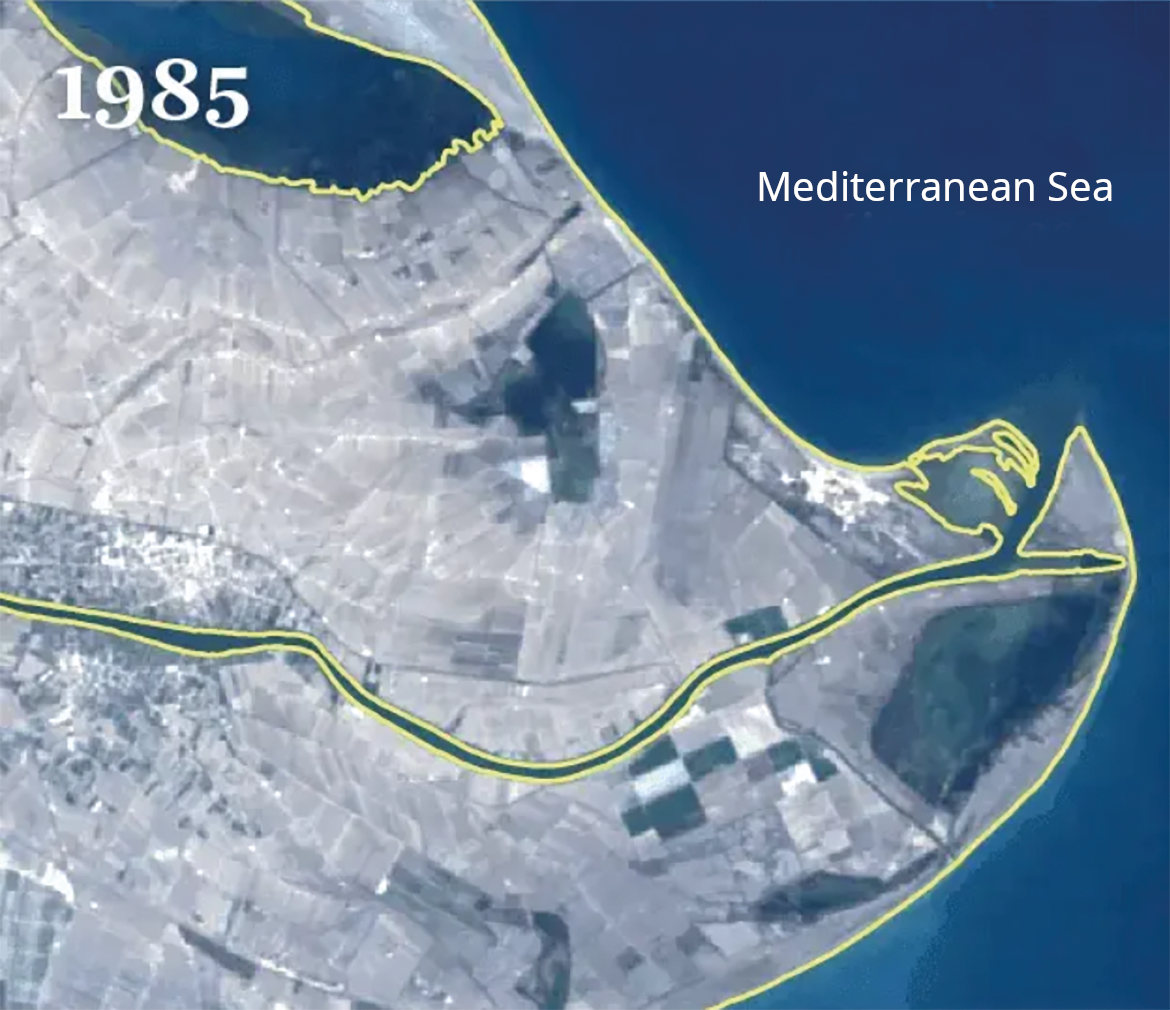
Figure 1

Global loss of capacity due to sedimentation (edited, Jenzer et al., 2006).

Why sediment management is key to reservoir longevity.

Reservoirs are a cornerstone of global water infrastructure, providing reliable water supply, hydropower generation and flood mitigation. Their importance is particularly pronounced in regions with high hydrological variability, where river flows fluctuate strongly on seasonal and interannual timescales. In such settings, large storage volumes are required to bridge dry periods and multi-year droughts, ensuring continuity of water and energy supply.

Sediment accumulation progressively reduces effective storage in reservoirs, directly impairing hydropower production, water supply reliability, irrigation capacity and flood control functions. In addition, altered flow and sediment regimes degrade aquatic habitats. In Run-of-River projects, sediment does not primarily reduce storage but causes abrasion and damage to turbines and hydraulic structures, leading to efficiency losses, increased maintenance and high repair costs. Across all impounded systems, sedimentation is therefore a key limiting factor for operational longevity.

Reservoirs are a cornerstone of global water infrastructure, providing reliable water supply, hydropower generation and flood mitigation.

Historically, dams have been designed according to a fixed “design life” concept. This approach estimates sediment inflow and trap efficiency and allocates a finite sediment storage volume, typically corresponding to 50 or 100 years of operation. Impacts beyond this horizon are often not considered, implicitly accepting reservoir capacity loss and eventual decommissioning. Today, this paradigm is increasingly inadequate. Suitable dam sites are scarce, construction costs are rising and social and environmental constraints strongly limit the feasibility of new reservoirs. At the same time, dam removal or decommissioning can be technically complex and economically prohibitive.

Beyond reservoir boundaries, sediment trapping has downstream consequences. Retention of sediment disrupts sediment continuity, often leading to riverbed erosion, bank instability and ecological degradation downstream. These effects further underline the need to rethink sediment management not only at the reservoir scale but across the entire river system.

As many reservoirs approach or exceed their original design life, operators and owners are increasingly focused on extending functionality rather than replacing infrastructure. This shift requires a transition from passive sediment storage toward active sediment management. The central objective is to manage reservoirs and their catchments in a way that balances sediment inflow and outflow as far as practicable, thereby stabilising storage capacity and enabling a greatly extended- potentially indefinite-operational life.

Climate change reinforces the urgency of this transition. Projections indicate increasing hydrological variability in many regions, with more intense floods and more frequent or prolonged droughts. These trends increase dependence on reservoir storage while simultaneously raising sediment yields due to enhanced erosion. Without effective sediment management, the reliability of reservoirs under future climate conditions will be fundamentally compromised. Ensuring the long-term sustainability of reservoirs and impounded waters therefore requires that sediment management be treated as a core design and operational criterion. New projects must explicitly incorporate long-term sediment strategies, and existing infrastructure should be adapted wherever feasible. This perspective aligns with international efforts such as those promoted by the World Bank to integrate climate resilience and long-term performance into water infrastructure planning and operation. (Annandale et al., 2016)

Figure 2

Erosion of the Ebro Delta (Spain) between 1985 and 2023.

Consequences of sediment trapping for downstream environments

Fine-grained sediments are a fundamental component of river systems and play a key role in maintaining ecological and hydraulic functions. Organic particles in suspension readily attach to fine sediment and are transported with the flow. In this way, fine sediments act as carriers of nutrients that support aquatic flora and fauna. During flood events, these sediments are deposited onto floodplains and riparian forests, supplying nutrients that sustain alluvial ecosystems and contribute significantly to biodiversity.

Fine sediment also has an important water-cleansing function. Suspended particles can bind pollutants and residual substances from wastewater treatment plant discharges, facilitating their transport and gradual removal from the water column. In natural rivers, a dynamic equilibrium exists between erosion and sedimentation, governed by channel morphology and the sediment transport capacity of the flow. When sediment availability is reduced, this balance is disrupted.

A sediment deficit in tailwater areas leads directly to increased erosion of the riverbed and banks. This poses a serious risk to hydraulic structures and infrastructure such as bridge foundations, bank protections and water level gauges. In the absence of sufficient sediment, flow velocities and erosive forces around these structures increase, often resulting in local scour. Over time, this can compromise structural stability and safety.

The effects of sediment deficit are already evident in many large European rivers, including the Elbe, Danube and Ebro (Figure 2), where progressive riverbed incision has been observed. Erosional processes propagate downstream, extending as far as river deltas. Under natural conditions, land subsidence and coastal erosion caused by waves and tides are counterbalanced by the continuous supply of fluvial sediment, particularly fine material. Where this sediment supply is interrupted, however, these compensating processes fail, leading to ongoing land loss and delta retreat.

Riverbed structure also strongly influences oxygen and nutrient exchange. A heterogeneous bed with interstitial voids promotes hyporheic exchange, supporting oxygenation and nutrient cycling. In contrast, an armoured riverbed limits this exchange, creating undersupply conditions that negatively affect benthic habitats and overall biodiversity. As such, sediment deficit in tailwater areas represents not only a geomorphological and structural challenge, but also a critical ecological issue that must be addressed in sustainable river and reservoir management strategies.

Figure 3

Working principle continuous sediment transfer.

The effects of sediment deficit are already evident in many large European rivers.

Erosion of river deltas – lessons from the Ebro and Mississippi

River deltas form where rivers discharge into standing bodies of water, such as seas, lakes or reservoirs. These transition zones are among the most productive and valuable landscapes worldwide, providing high biodiversity, fertile soils for agriculture, carbon storage, natural coastal protection and space for settlement and recreation. The stability and evolution of river deltas are primarily governed by sediment dynamics.

Delta growth or retreat depends on the balance between fluvial sediment supply and sediment removal by waves, tides and marine currents. Where sediment input exceeds removal, deltas prograde. Where sediment supply is insufficient, deltas retreat. This balance has been increasingly disturbed by human activities, such as dam construction, river regulation, water abstraction, sediment mining, land-use change and climate- induced sea-level rise. These pressures reduce sediment delivery while simultaneously increasing erosive forces, resulting in widespread delta degradation (Perera et al., 2022; Edmonds et al., 2023; Speerli et al., 2020).

A prominent European example is the Ebro Delta in Spain. As the largest wetland in the western Mediterranean, it supports extensive rice cultivation, fisheries and diverse bird populations. However, more than 100 dams in the Ebro catchment have reduced fluvial sediment supply by approximately 99%, triggering severe coastal erosion and the loss of roughly 20% of the delta’s original area. Without intervention, rising sea levels and continued sediment starvation are expected to accelerate land loss. Current research emphasises the urgent need for sediment reintroduction, hydrological restoration and adaptive land-use strategies to stabilise the delta (Speerli et al., 2020).

Similar processes can be observed at a much larger scale in the Mississippi Delta. Once one of the most dynamic and sediment-rich deltas globally, it now suffers from extensive land loss due to river regulation, levee construction and more than 6,000 dams in the basin. These interventions have reduced sediment delivery by approximately 80%, resulting in the loss of around 5,000 km² of land since the 1930s. Projections indicate that an additional 4,000 km² could be lost by the year 2100 if sediment supply is not restored. Large-scale sediment diversions, wetland restoration and controlled delta building are therefore considered essential countermeasures (Edmonds et al., 2023).

These examples illustrate that sediment deficits originating far upstream propagate through river systems, affecting tailwater reaches, coastal zones and deltas alike. Delta erosion is thus not an isolated coastal issue, but a downstream symptom of disrupted sediment continuity at the basin scale. Given these escalating risks, innovative sediment management is essential.

Figure 4

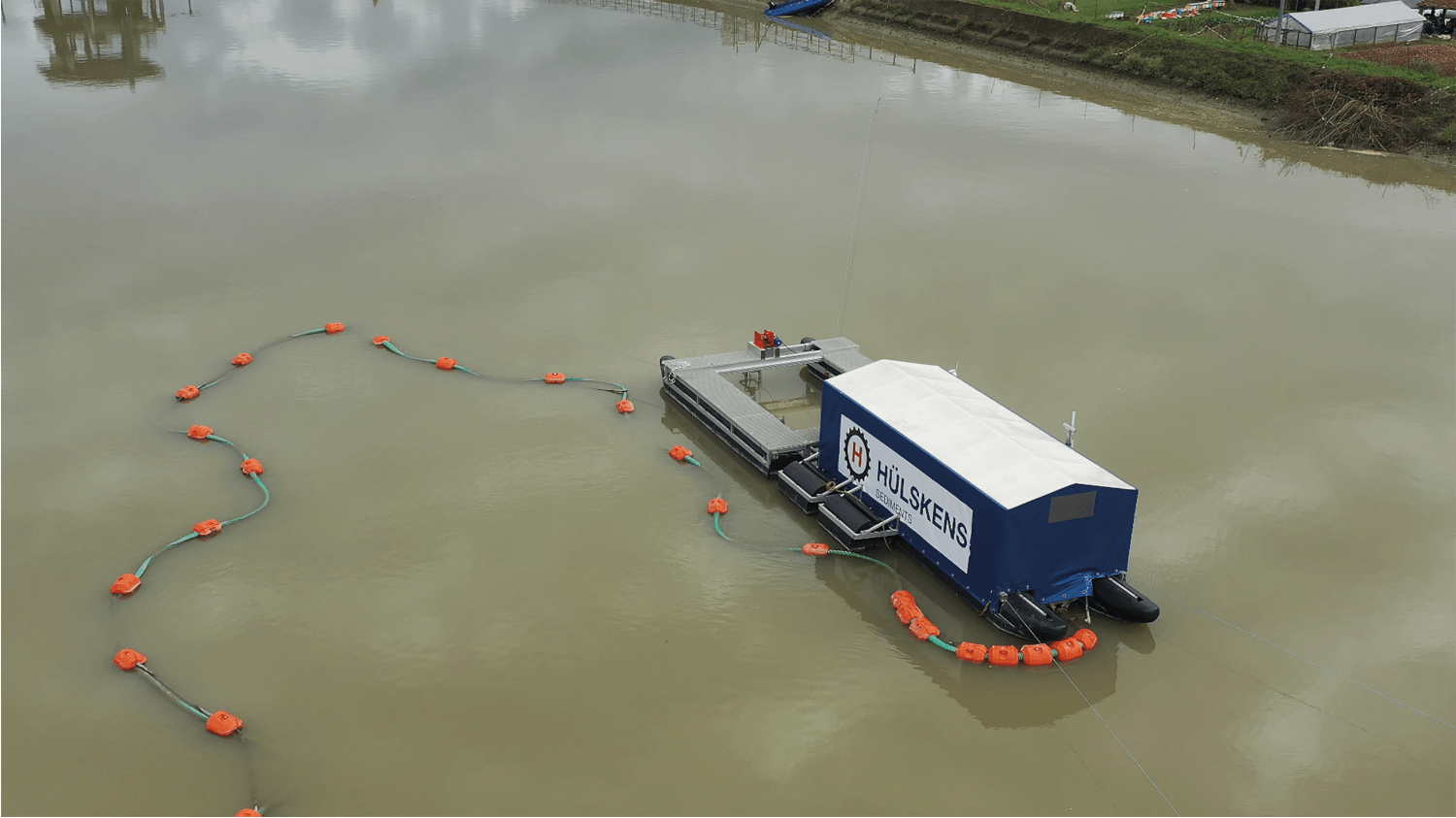
SediMover-130 at a project in Italy during continuous sediment transfer.

A new approach to address two challenges: continuous sediment transfer

Sustainable sediment management in reservoirs must go beyond the mere removal of deposited material. Its primary objective should be the restoration of sediment continuity within the river system. Sediment is a fundamental component of aquatic environments and their associated ecosystems. It must remain available to the natural system to sustain ecological processes. Re-establishing sediment continuity helps compensate for sediment deficits downstream and can significantly reduce or even prevent adverse impacts on river morphology and ecology.

A promising solution to this challenge is continuous sediment transfer. Hülskens Sediments has developed the ConSedTrans® (Continuous Sediment Transfer) system, operated in combination with the SediMover® floating dredging platform. Together, they form a fully monitored, controlled and largely autonomous process that relocates sediment from upstream reservoir areas to downstream reaches, keeping the sediment within the aquatic system rather than removing it entirely. Figure 3 shows the working principle of ConSedTrans. A fully automated small dredging system is installed in the reservoir, where dense sediments are loosened at the bed using mechanical or hydraulic tools, directly suctioned and conveyed downstream.

During operation, key transport parameters, such as sediment density, mass flow and volumetric discharge are continuously measured and evaluated in real time. These data are used to actively control the dredging and pumping process. This parameter-based control ensures that only as much sediment is released downstream as the river’s current transport capacity allows. As a result, excessive colmation or siltation is avoided, while environmental thresholds and hydraulic constraints are respected.

Several transfer pathways are available. Sediment-laden water can be introduced upstream of the turbine intake or directly into the intake itself. In this configuration, the water used for sediment transport simultaneously contributes to power generation, ensuring that hydropower production is not reduced. Alternatively, sediment can be conveyed directly into the tailwater via a bypass system or, where site conditions allow, pumped over the dam crest. These options provide flexibility to adapt the system to site-specific hydraulic, operational and regulatory constraints.

The key advantage of continuous sediment transfer lies in its adaptive control. The process can be adjusted dynamically to changing hydrological conditions, allowing operators to intervene directly and regulate sediment release as needed. This ensures that sediment is transported downstream in a natural manner, remaining available for riverine processes such as bedload transport, channel self-cleansing and the mitigation of erosion.

Compared to conventional sediment management approaches, which often interrupt sediment continuity and exacerbate downstream deficits, continuous sediment transfer represents an active, sustainable and ecosystem-oriented solution. By restoring sediment connectivity, it supports the long-term ecological functionality of rivers while maintaining reservoir storage capacity and hydropower operations.

The key advantage of continuous sediment transfer lies in its adaptive control.

Lessons from the field: Real-world applications of sediment transfer

On a project in Italy 22,000 m³ in total of sediment (solids) could be transferred from an artificial upper basin through the turbine intake and into the downstream reaches. In this case, the SediMover (Figure 4) was operated around the clock at an average delivery rate of 130 m³/h of mixed sediment and water. This parameter-controlled operation continued around the clock and yielded very good results. Before and after the project we conducted a bathymetric survey. With the results of the mass differences, we could testify our monitored sediment transport rates. Using in-between bathymetric survey data, we can update the basin model to optimise the sediment transfer.

In a small pilot project at a pond in southern Germany, we tested the combination of a SediMover-130 to a dewatering system. The MUD unit from Amodes GmbH - a mobile belt filter system for dewatering fine sediments - was fed with material by the fully automated SediMover.

During the project, the SediMover was operated in a semi-manual mode and controlled according to the solids demand of the MUD dewatering unit. In the future, the interface between the dewatering technology and the SediMover will be further developed and increasingly automated, to enable operation with reduced personnel requirements.

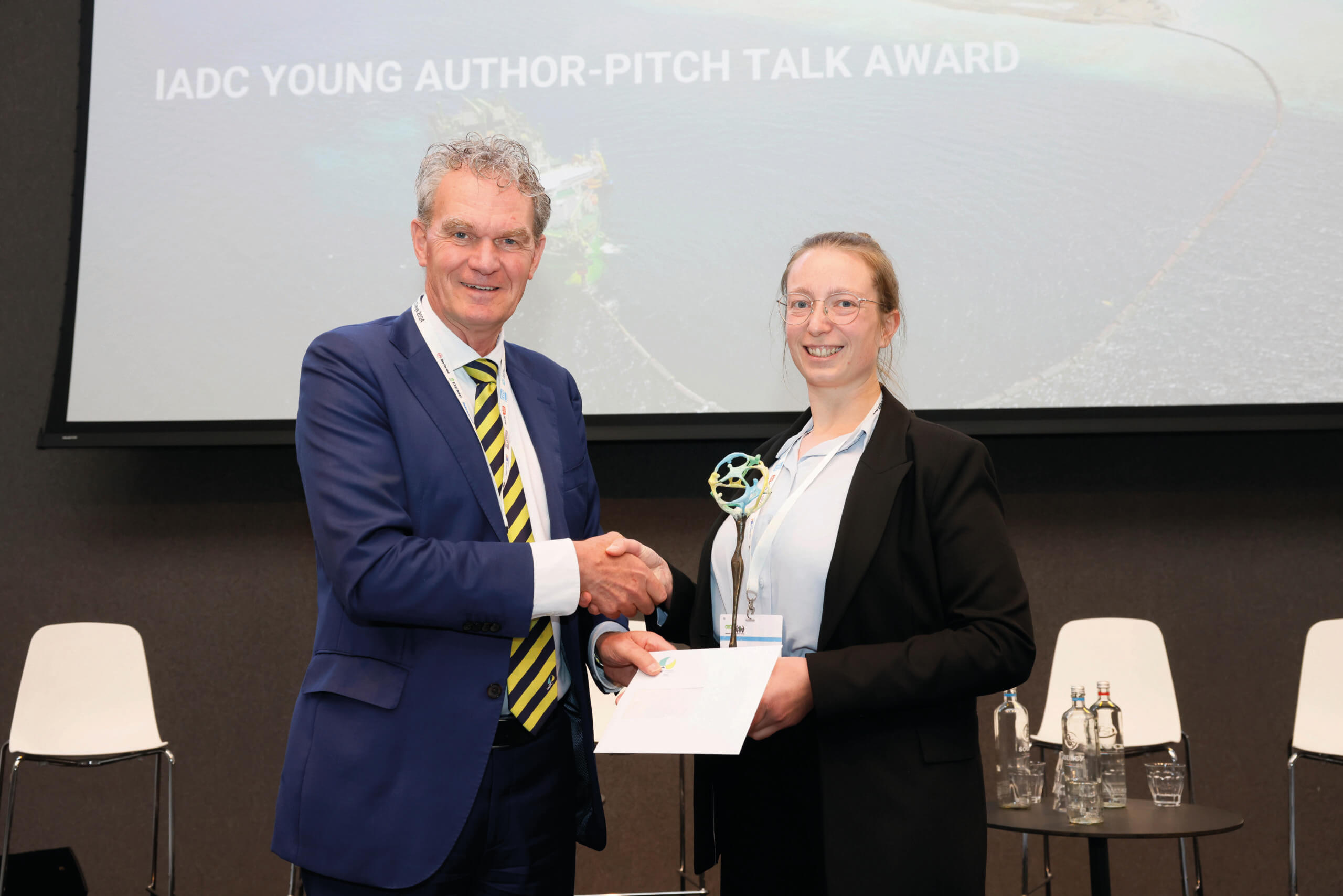
Lara Gehrmann receiving the IADC Young Author Pitch Talk Award from René Kolman (former IADC Secretary General), during the CEDA Dredging Days in Rotterdam, the Netherlands (May 2024).

Next steps: making sediment management a priority

Sediment management is one of the major challenges of the 21st century in dam and reservoir operation, as it is essential for prolonging the lifespan and functionality of these infrastructures. In contrast to conventional dredging methods, which remove sediment from the river ecosystem, continuous sediment transfer supports both the preservation of reservoir storage capacity and the ecological integrity of downstream rivers. This approach employs fully automated, small-scale dredging systems that loosen consolidated sediments from the reservoir bed and transport them downstream in a controlled and parameter- based manner.

To ensure the long-term sustainability of dam and reservoir infrastructure, sediment management must be made a strategic priority in design and operation of dams. Sediment management strategies that restore and maintain sediment continuity are a key enabling technology and must be integrated more widely.

Author

Lara Gehrmann

Lara is a civil engineer and project manager at Hülskens
Sediments GmbH, specialising in sedimentation management
for impounded waters. She has worked in field of sustainable
sediment management since 2021, covering consulting,
planning and implementation of sediment-related projects.
She is an active member of national and international
technical committees on sediment management, including
the DWA working group on reservoir desilting and the ICOLD
Committee on Sedimentation of Reservoirs. In 2024, Lara
was awarded the IADC Young Author Pitch Talk Award for her
presentation on “Sustainable reservoir sediment
management using fully automated dredges”.

OTHER ARTICLES BY THIS AUTHOR

PDF download

Download the PDF version of this article with high resolution pictures and layout.

Single-page view

DOWNLOAD PDF Document | 1,1 MB

Two-page view

DOWNLOAD PDF Document | 1,09 MB