

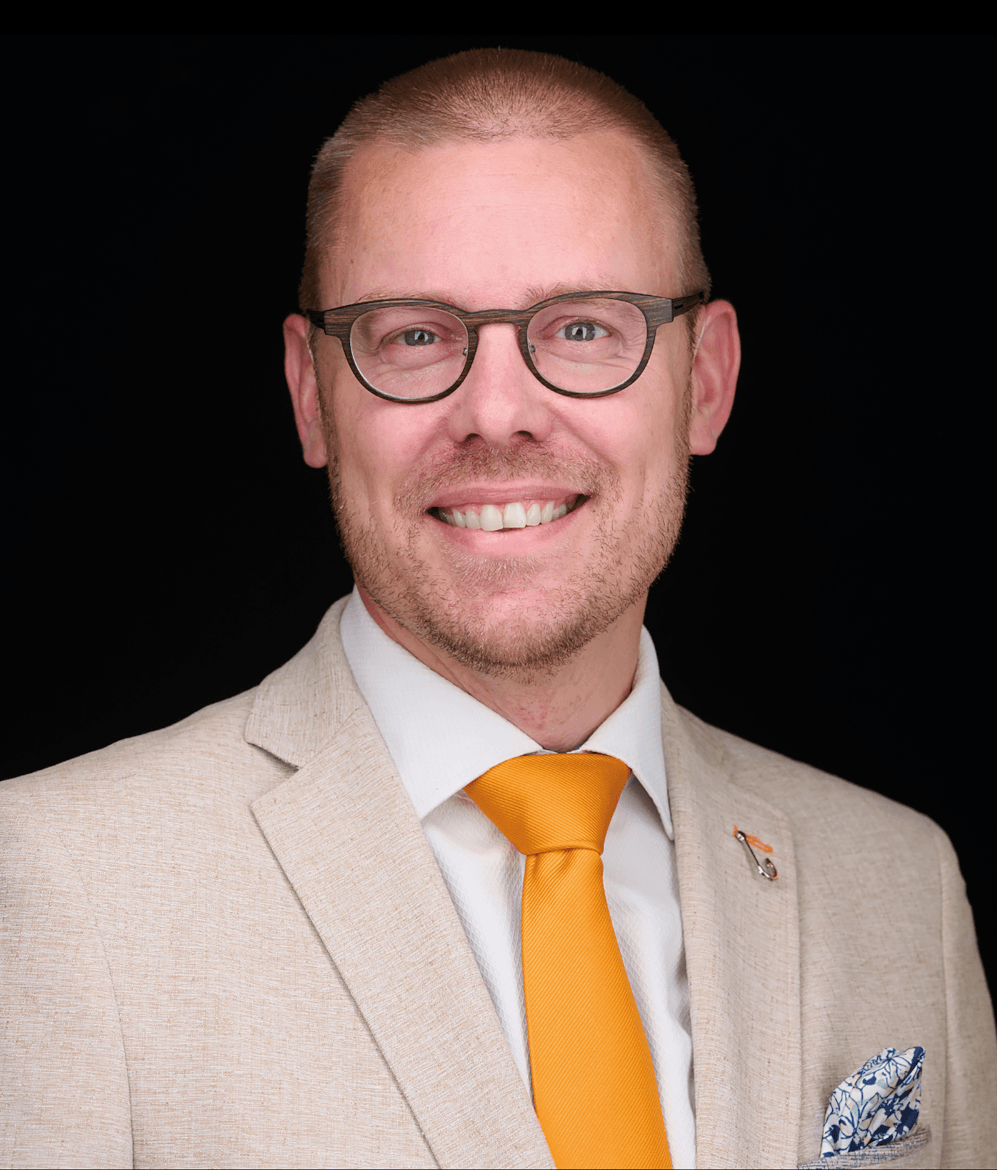
On 1 November 2025, I stepped into the role of Secretary General of the International Association of Dredging Companies (IADC). In many ways, it felt like the natural continuation of a journey that started long before I ever imagined a career in dredging. My fascination with water, the maritime world, engineering and, above all, teamwork has shaped every decision I have made, from my earliest days in the Sea Scouts to becoming a naval architect and, later, an association professional. Looking back, each chapter prepared me for this new responsibility: helping guide an industry that shapes coastlines, protects communities and keeps global trade moving. This article reflects on that journey and shares my perspective on where our industry is headed. It is also the story of how I found myself “stuck in the mud,” why I am grateful for it and why I believe dredging is more essential than ever.
Early currents: Discovering the maritime world
My maritime story began long before my professional life, during weekends spent with the Sea Scouts. I spent countless days on the water, learning to read wind and weather, navigating with a crew and developing not just the practical skills of sailing but also a deep connection with the sea. Oddly enough, I have never enjoyed swimming, but sailing a ship, adjusting the sails to squeeze out every bit of speed, or beating a course against the wind made me feel as if I could command the world.
Then winter came and the ships were hauled ashore. Maintenance was not optional; it was part of the culture. Working on ropes, wood, paint and hulls shaped an early and lasting interest in shipbuilding. When the time came to choose a field of study, naval architecture was the obvious direction. During my studies, I developed a strong foundation in ship design and construction, while gaining a growing appreciation for the practical realities of the maritime industry.
Into the mud: My introduction to dredging
My first job at Royal IHC opened the door to the dredging sector, though I had no idea that it would define my career. On my very first day, a colleague nearing retirement gave me a friendly warning: “Once you get stuck in the mud, you’ll never get out.” I laughed, thinking it was a joke. It turned out to be absolutely true.
Dredging captured me instantly. The complexity of the equipment, the scale of the projects, the fusion of engineering with geology, hydraulics and nature, it was unlike anything else. Compared to a dredger, a container vessel suddenly felt like a shoebox with an engine. A dredger is a world in itself: its design is driven by soil properties, hydraulic transport, excavation forces and constant interaction with the seabed.
During my years at Royal IHC, I learned about sediment behaviour, soil excavation, hydraulic transport, cutting forces and the challenge of translating all of that into reliable onboard systems. I worked with nearly every IADC member and experienced almost every phase of a vessel’s lifecycle, from R&D and design to commissioning, sea trials and dredgers in operation.
Even in those early years, I gained a deep respect for the practicalities of production, the realities of operation and the need to design equipment that creates real value for the end user. Over the course of 12 years, I progressed from technical roles to leadership positions, ultimately managing an engineering department of 350 professionals.
Cutters, rock and real lessons
Some of the most influential experiences of my engineering career involved cutter suction dredgers (CSDs), by far my favourite type of dredger. CSDs concentrate technology, precision and raw force into a single vessel. Their seamless integration of mechanical cutting and hydraulic suction creates a continuous operation capable of handling everything from soft sediments to hard rock - capabilities unmatched by other dredger types.
One of the highlights of my career was contributing to the development of simulation software that combined vessel motions in waves with the rock cutting process. This allowed us to better understand and predict forces on the hull and spud carriage, and provided crucial input for tuning the flexible spud carriage system during commissioning of a large self-propelled CSD.
Yet it was in the field, during a measurement campaign to validate these predicted forces, that I learned the most. I spent two and a half weeks on board that CSD working in rocky soil, expanding a harbour in the Middle East. There, theory met reality. The seabed pushed back. The vessel vibrated under full load. Hard spots sheared off cutter teeth or triggered a sudden roll that could throw you off balance. The calculations were correct, but the biggest lesson was human. We discovered that the crew needed more training and clearer instructions to harness the new system’s full potential. Even as automation advances, people remain at the heart of every operation. Their expertise, intuition and adaptability are – and will remain – irreplaceable.
Standing on a cutter under load teaches you more than any simulation ever can. It teaches respect, for the forces of nature, for technological ingenuity and for the teamwork that makes dredging possible.
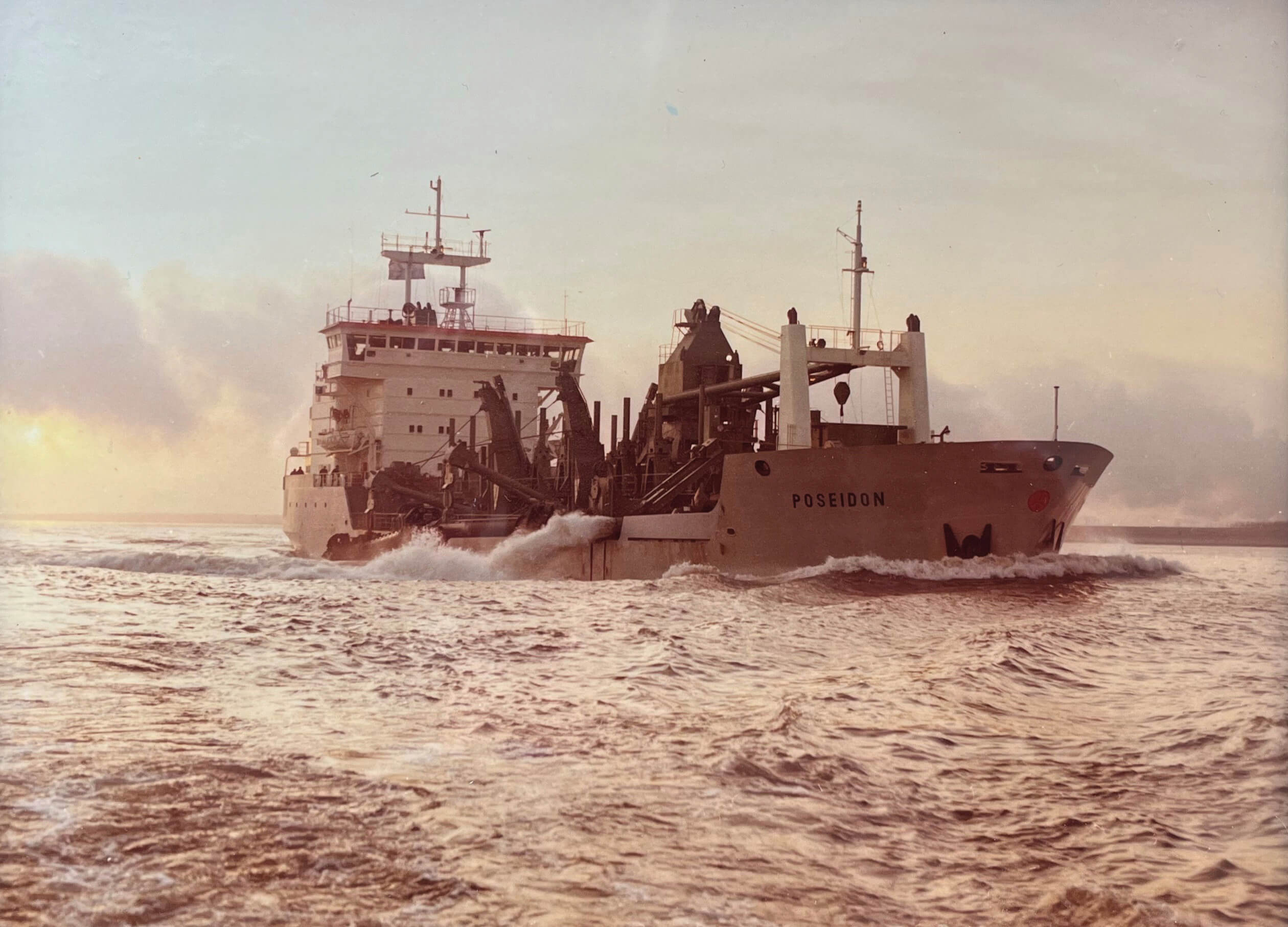
As a boy in the Sea Scouts, I was drawn to the sea without knowing that one day, like my grandfather, I’d be drawn into dredging. The Poseidon was part of his story – proof that some tides run in the blood.
From engineering to advocacy: A new chapter
Over the years, I found myself increasingly drawn to roles that connect people, ideas and disciplines. Whether through complex engineering projects or industry-wide collaborations, I discovered that I enjoy building bridges just as much as I do building systems.
In 2016, I joined the Dutch Association of Shipyards and Maritime Equipment Suppliers, now Maritime & Offshore NL. There, I helped shape the conditions enabling members to excel – advocating for a level international playing field, contributing to sound rules and regulations, supporting sector wide innovation projects, securing appropriate subsidy programmes and promoting the industry through guest lectures and conference presentations.
I eventually became responsible for organising the association’s advocacy on national, European and international levels, covering a wide spectrum of topics. What fascinated me most was the power of the collective voice. As the saying goes, “If you want to go fast, go alone. If you want to go far, go together.” In an association, competitors collaborate for the greater good because meaningful impact requires shared commitment.
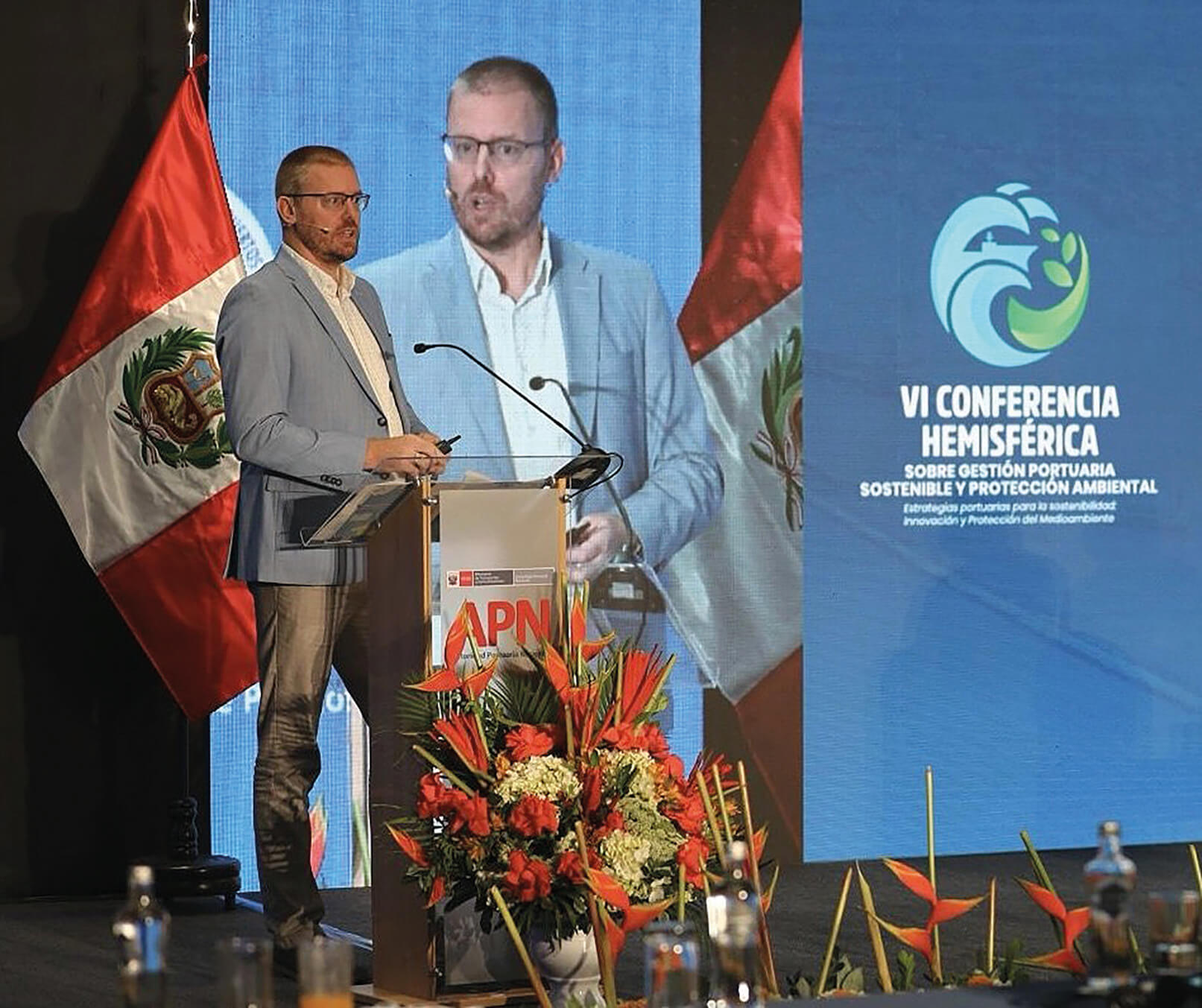
Speaking at the 6th Hemispheric Conference on Sustainable Port Management in Lima, Peru (Sept 2025), on how dredging supports long-term port sustainability.
Coming full circle: Joining IADC
In early 2025, the opportunity arose to apply for the role of Secretary General at IADC, a position that drew together my passion for dredging, my technical background and my experience in association leadership. When the Board offered me the position, I felt honoured and deeply motivated.
The dredging industry plays an essential, often invisible role in society: keeping ports open and global trade flowing; protecting coastlines from erosion and rising sea levels; creating new land for growing populations; restoring wetlands and natural environments; and enabling the infrastructure of energy and critical raw materials.
These activities shape economies, protect communities and create opportunities for future generations. As an engineer, I was always driven by designing solutions. As Secretary General, I am driven by enabling the industry to tackle its greatest challenges and create impact on a large scale.
Key themes for the years ahead
As I take on this role, several priorities guide my focus. Above all, I aim to strengthen the dredging industry by working with and for our members, ensuring the sector thrives through collaboration and shared expertise.
1. Climate adaptation and resilience
The shift from climate mitigation to adaptation
is accelerating. Rising sea levels demand more
coastal protection. Geopolitical shifts make
energy infrastructure and access to ports
strategic priorities. Every country should have
a National Adaptation Plan and dredging
activities should be a central component.
Cleaner, quieter and more responsible dredging
technologies must continue to evolve, not only
because regulations require it, but because our
responsibility to future generations demands it.
2. Innovation and digital transformation
Digitalisation, monitoring, real time data and
automation are transforming many industries.
Artificial intelligence (AI) will accelerate this
shift even further. Yet technology is only an
enabler, potentially increasing efficiency and
reducing costs, but people remain the heart
of dredging operations.
3. Knowledge sharing and next generation
engagement
Just as large maritime structures once
inspired me, we must inspire future
engineers, sailors and technicians. Their
talent and creativity are essential for the
industry’s future.
4. Global collaboration
Climate challenges are international by nature.
Our solutions must be too. With members
across the globe, IADC is uniquely positioned
to bring together stakeholders across borders,
fostering shared insights and promoting best
practices worldwide.
First steps in the role
During my first months, I focused on strengthening visibility, collaboration and knowledge sharing by:
- presenting the Dredging for Sustainable Infrastructure philosophy and the Sand as a Resource paper at the 24th World Dredging Congress & Exposition (WODCON XXIV) in San Diego;
- awarding the IADC Young Author Award to encourage fresh insights from the next generation;
- inviting external speakers to IADC Committees to stimulate discussion and support the formation of industry positions;
- increasing the association’s visibility among stakeholders through targeted social media outreach; and
- adapting the Young Management Programme to include reflections on the opportunities and threats of digitalisation and AI.
These actions are just the beginning, reflecting IADC’s outward-looking, future- focused approach and its commitment to strengthening the global dredging community.
Life between flights
Travelling to share the work of IADC is a vital part of my role as Secretary General. Visiting members, attending conferences and meeting partners around the world helps ensure our industry’s voice is heard and our knowledge is shared. Those conversations spark collaboration and support innovation across the dredging community. I find the constant exchange of ideas, cultures and perspectives both energising and inspiring. Outside work, I enjoy travelling just as much, taking time to explore new places at a slower pace, experience local cultures and connect with family and friends along the way.
Grateful to be stuck in the mud
More than 20 years after hearing that memorable warning on my very first day, I can confidently say, “I did get stuck in the mud and I’m very grateful I did!” Those muddy boots are a reminder of the hands-on experience, challenges and lessons that shaped my understanding of dredging - an extraordinary industry that is driven by purpose, innovation and people.
I am honoured to serve as IADC’s Secretary General and am committed to guiding the sector, strengthening the global community around it and helping shape the resilient coasts and waterways of tomorrow.
PDF download
Download the PDF version of this article with high resolution pictures and layout.
Single-page view

Two-page view
