


Community-based ecological mangrove restoration IN QUELIMANE, MOZAMBIQUE
The Quelimane Mangrove Restoration (QMaR) initiative, led by Van Oord, demonstrates a community-based ecological approach to mangrove restoration. Through hydrological interventions and alternative livelihood initiatives, 4 hectares of degraded mangrove habitat are being restored. One year after implementation, seedlings have established and grown well, especially near natural water sources. Over 100 community members have participated in an alternative livelihood programme, reducing dependence on mangrove logging and improving household incomes. Some even made investments such as purchasing property, demonstrating enhanced economic stability. These results highlight the critical role of integrating ecological restoration with community empowerment and livelihood support in achieving sustainable mangrove restoration.
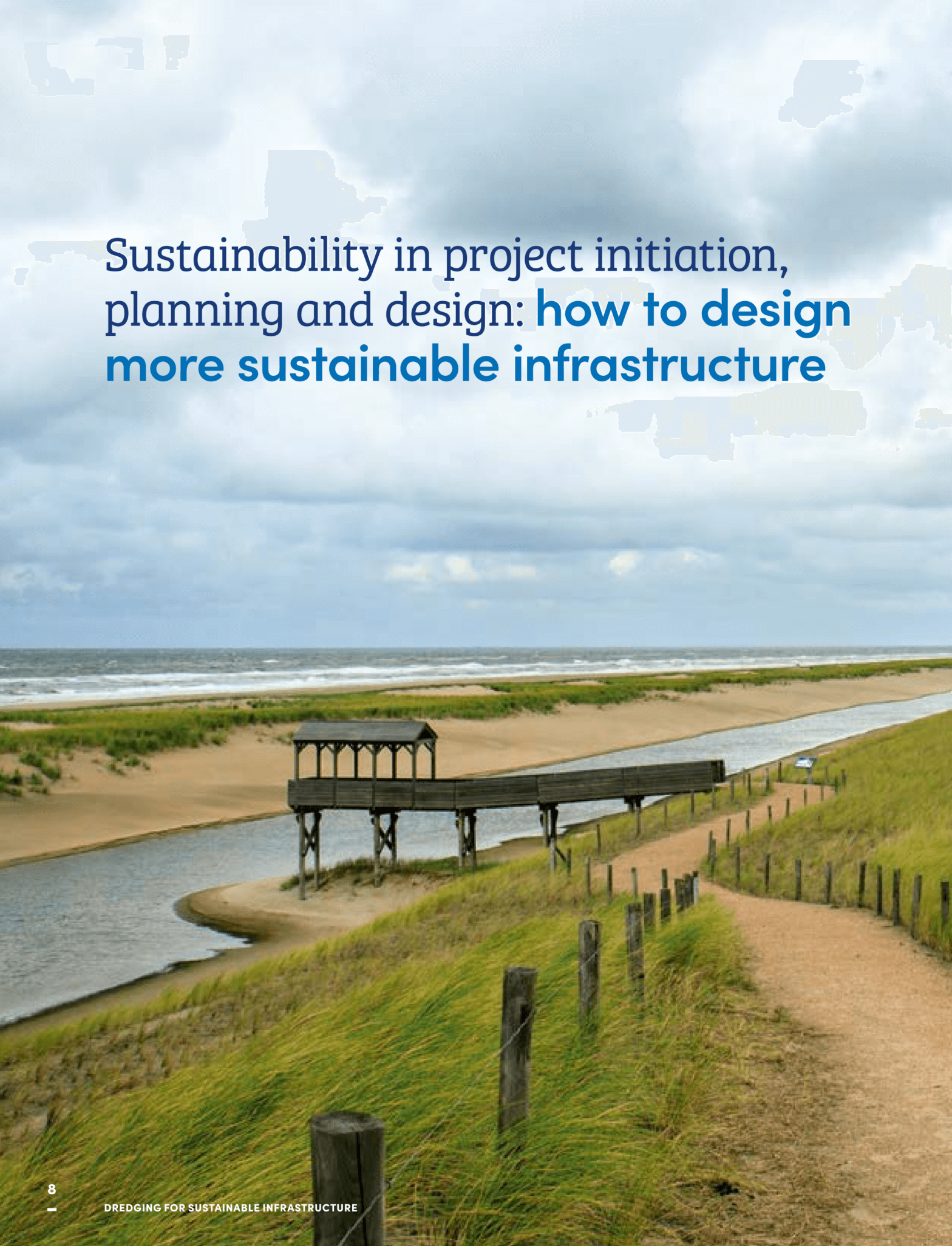
Sustainability in project initiation, planning and design: how to design more sustainable infrastructure
In the first DFSI Magazine, the concept of sustainability in relation to dredging projects was explained. How to integrate this concept in project design is the focus of this article, adapted from the third chapter of Dredging for Sustainable Infrastructure (2018), and provides the theme for this issue.
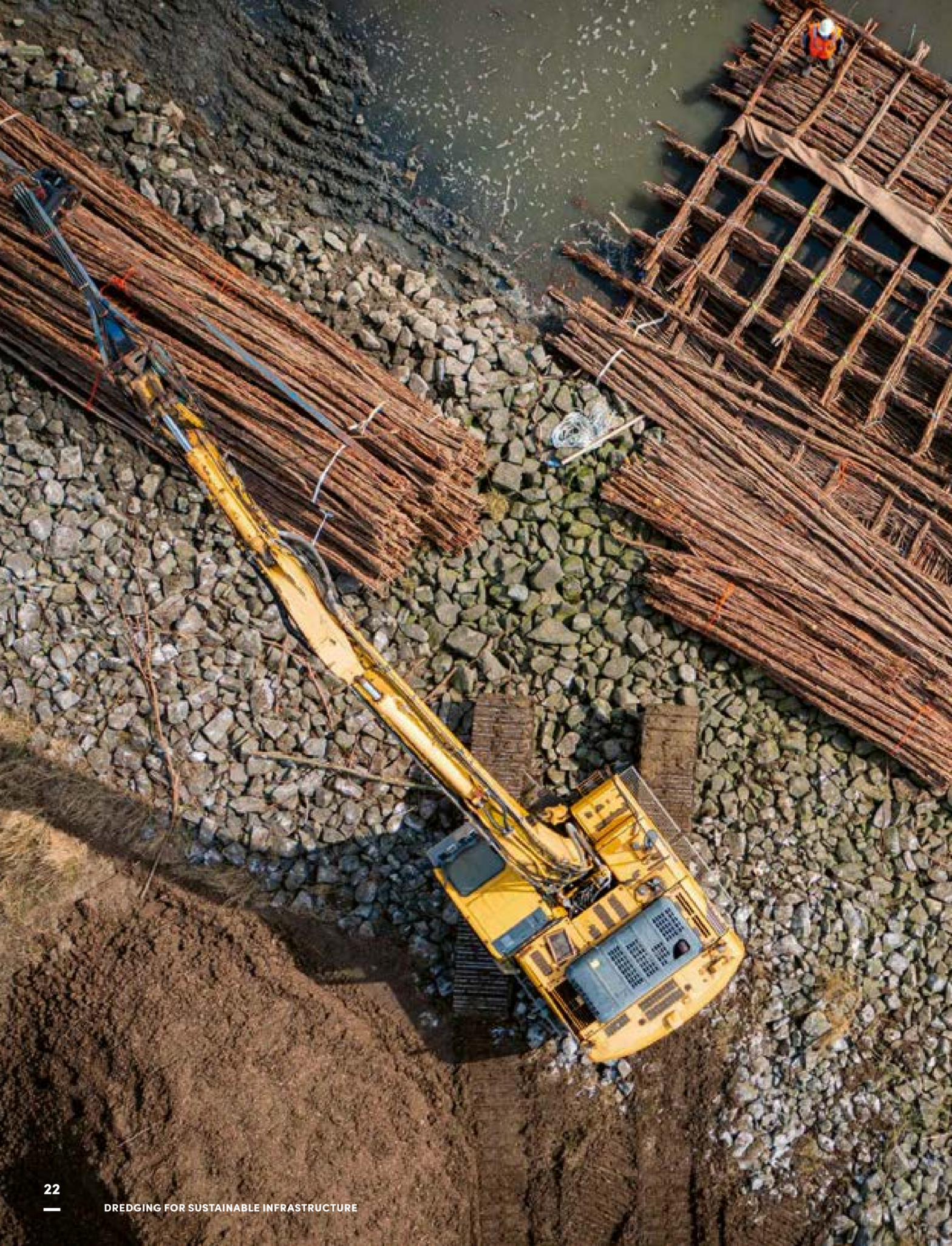
Bankbusters: Ecosystem-based riverbank management
Estuarine tidal wetlands offer vital ecosystem services, including flood protection, erosion control and water purification. However, these estuarine ecosystems actually face significant pressures caused by both human activities and natural forces, leading to habitat and ecosystem degradation and loss. The Bankbusters project adressess these issues by reusing soft dredged sediments to restore tidal marshes and mudflats as natural riverbank systems. As such, this initiative promotes biodiversity, enhances flood resilience and supports sustainable economic growth through innovative, eco-friendly and resilient solutions in the Scheldt estuary.
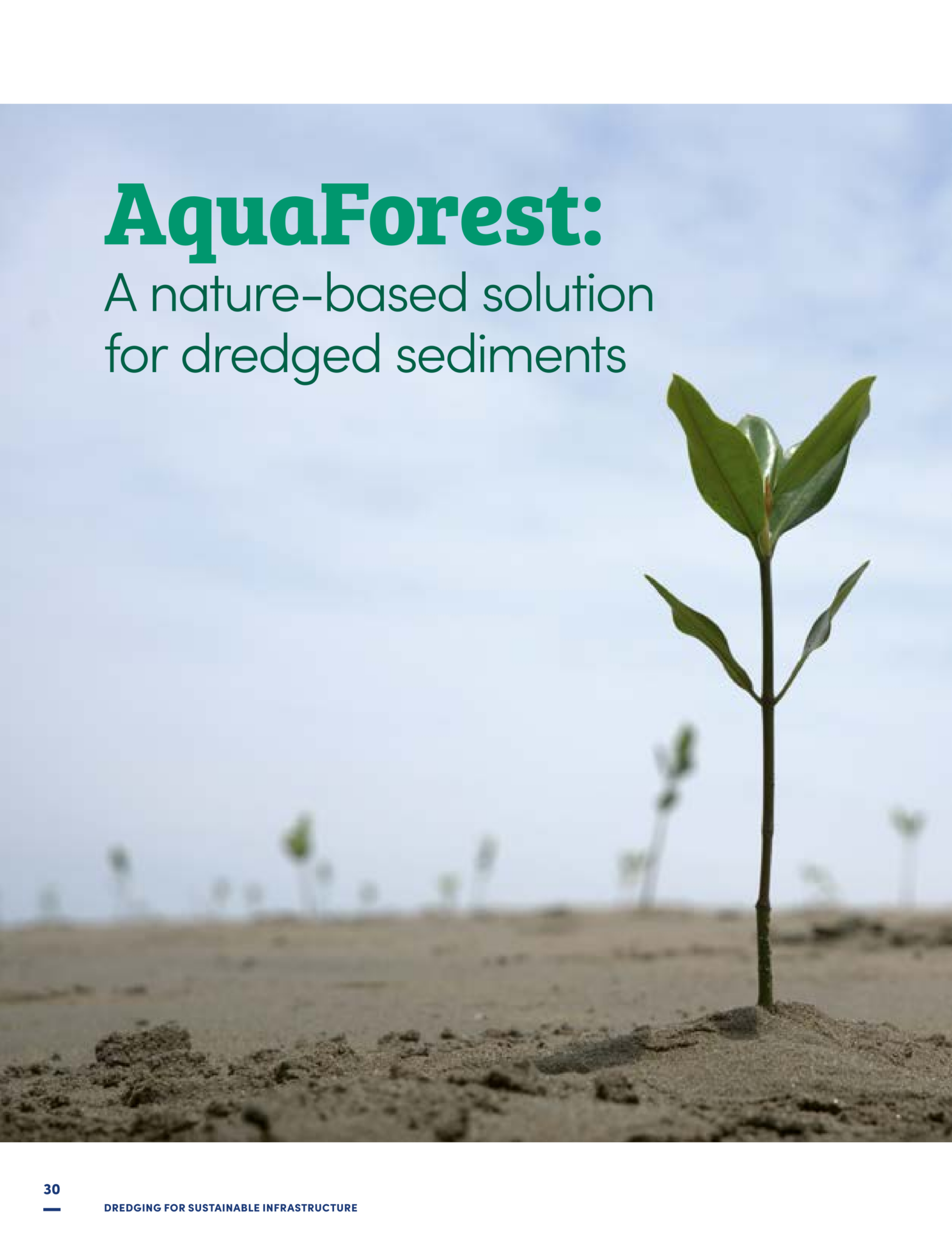
AquaForest: A nature-based solution for dredged sediments
AquaForest is a demonstration project led by Jan De Nul showcasing a green-grey approach, where dredged sediments are being reused to create 50 hectares of mangrove habitat in the Guayas Delta, Ecuador. The project aimed to advance knowledge on the conceptual design and eco-engineering approaches of mangrove habitats, while strengthening local engagement and generating diversified income opportunities for local communities. A new mangrove island was built in the end of 2024 and is currently being monitored to quantify the provision of ecosystem services over time with the aim of future upscaling of this type of nature-based solutions.

RESTORING OYSTER REEFS with nature inclusive marine infrastructure
While essential to coastal development and maritime industries, dredging and marine construction activities can unintentionally disrupt marine ecosystems. At Van Oord, we aim to deliver solutions for marine infrastructural developments that protect and enhance habitats and biodiversity. Over the past few years, we have explored how nature-inclusive designs can transform traditional marine infrastructure into ecosystem-supporting assets. The reintroduction of the European flat oyster to the North Sea is a key example.
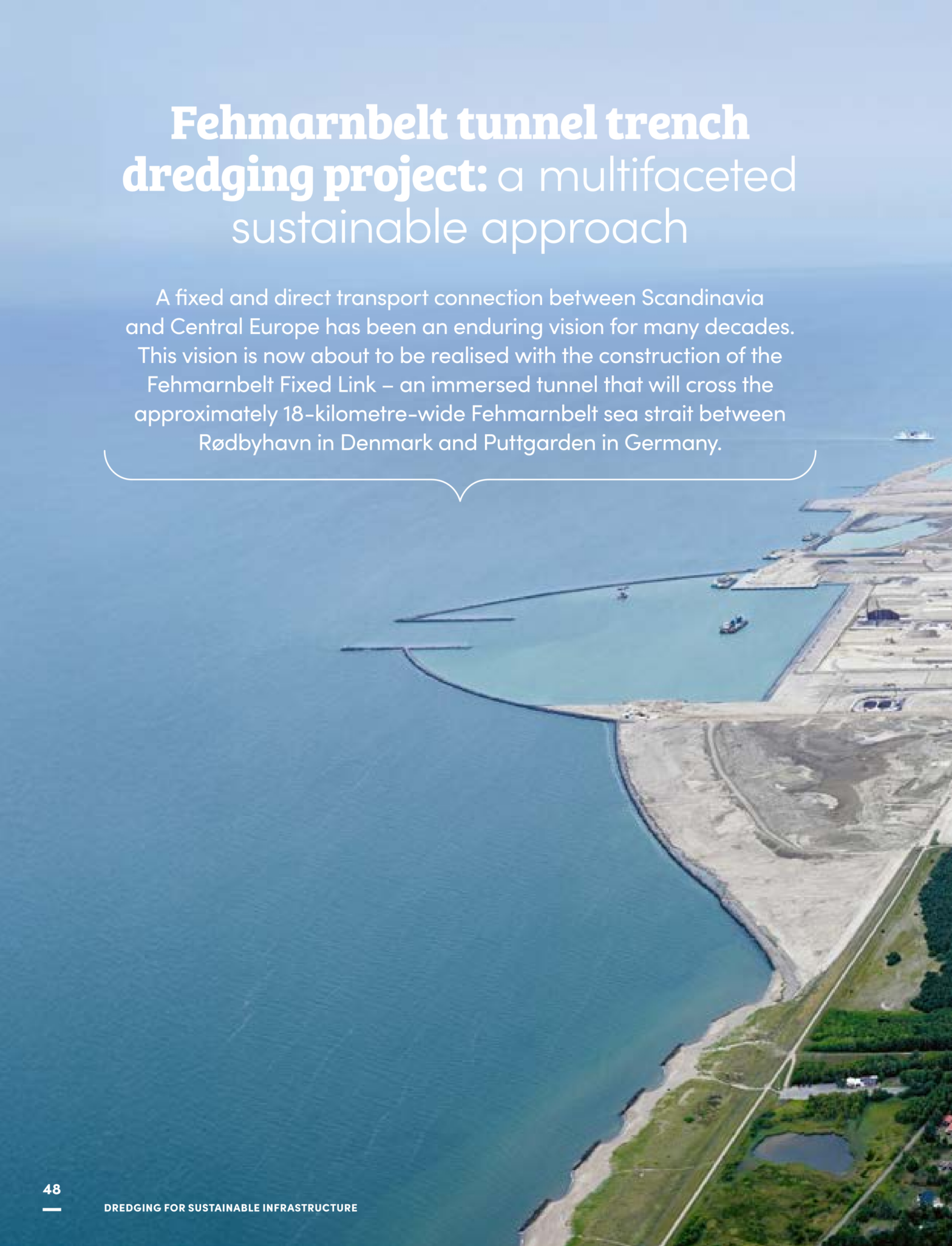
Fehmarnbelt tunnel trench dredging project: a multifaceted sustainable approach
A fixed and direct transport connection between Scandinavia and Central Europe has been an enduring vision for many decades. This vision is now about to be realised with the construction of the Fehmarnbelt Fixed Link – an immersed tunnel that will cross the approximately 18-kilometre-wide Fehmarnbelt sea strait between Rødbyhavn in Denmark and Puttgarden in Germany.

Optimising real-time dredge monitoring systems with acoustic sensors
Driven by an increasing population, global maritime trade activity is at an all-time high. To keep up with demand, larger vessels and expanded port facilities are being built. Larger vessels, particularly container vessels, often require multiple expansion projects, such as expanding turning basins, widening shipping channels and digging deeper berths. These port expansion projects often require dredging to ensure the upgraded facilities can handle vessels of any size. However, dredging in the maritime industry is continuous, expensive and resource intensive. To meet evolving demands while remaining economically viable, tools that increase dredging efficiency need to be evaluated and incorporated into dredging operations.

Balancing project progress and limited system knowledge in Amatique Bay
The development of a new marine project demands a system approach in which all aspects, including technical, economic, environmental and social, are considered and integrated equally and at an early stage. While insufficient information may be available to make informed decisions, choices need to be made to progress a project, assess impacts and risks, and engage stakeholders. This article explores the case of a new port terminal in Amatique Bay, Guatemala. A method was developed to assess, at an early stage, the potential negative impacts on seagrass habitats from the disposal of dredged material at different locations, while having limited real-time and location-specific information at hand.