


Rick van de Wetering wins the IADC Young Author Award 2025
IADC bestowed the Young Author Award 2024 to Juan Cruz Andrini. The award is given annually to “stimulate the promotion of new ideas and encourage younger men and women in the dredging industry”.

Upscaling seagrass restoration with insights from seed-sediment dynamics
Seagrass restoration is increasingly recognised for its potential to enhance biodiversity and contribute to carbon sequestration. However, planting methods are largely based on manual techniques, posing challenges for upscaling and implementation as nature-based solutions (NbS) within the dredging industry. To address this, techniques to combine sediment nourishments with seed-based seagrass restoration are explored. Seed settlement behaviour is investigated via laboratory experiments, analysing seed settling velocities and distribution in various sediment concentrations, revealing the importance of grain size and sediment dynamics. These findings lay the groundwork for innovative, large-scale restoration techniques leveraging traditional dredging methods, with pilot projects planned for 2025.
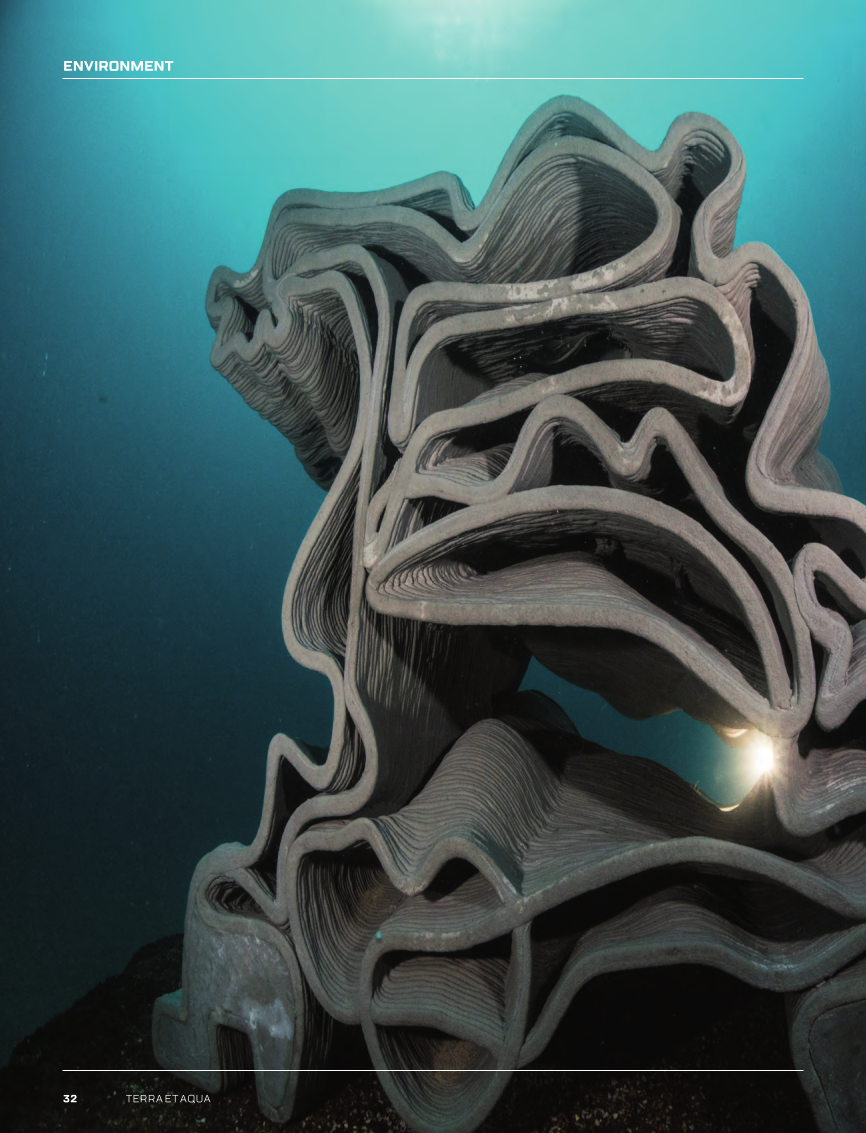
Artificial reefs in the uae coastline: a sustainable solution for marine bio-diversity
Dredging and reclamation projects have played an important role in the UAE’s rapid development, meanwhile efforts are continuously made to balance progress with marine ecosystem conservation. This paper explores the development of fish domes and 3D-printed artificial reefs, highlighting their role in providing marine habitats, promoting biodiversity and supporting sustainable development. Case studies from Abu Dhabi region demonstrate the effectiveness in restoring marine environment. By integrating innovative reef structures with sustainability goals, the UAE ensures that economic growth aligns with environmental conservation, fostering a resilient marine ecosystem for future generations.
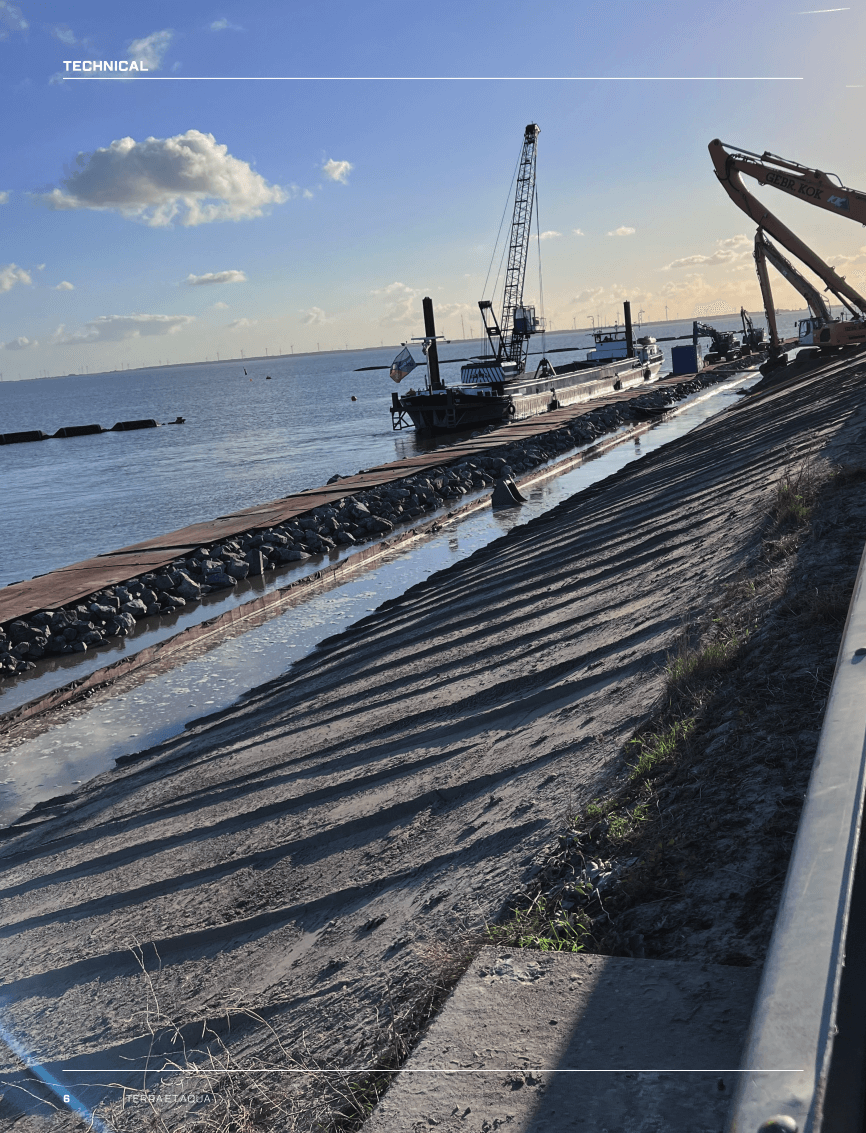
The erodibility of trisoplast and clay
The Netherlands has almost 4,000 km of dykes. Over the past decades, a significant amount of clay has been used within these dykes for reinforcement. This layer of clay is essential as water barrier and to prevent the construction from collapsing due to erosion. Clay of the right quality is becoming less and less available, particularly because the usage requires a minimum thickness of 1.0 to 2.0 metres. Therefore, alternative materials such as Trisoplast are being researched as a suitable replacement for clay.
IADC appoints Arnold de Bruijn as successor to Secretary-General René Kolman
IADC appoints Arnold de Bruijn as successor to Secretary-General René Kolman
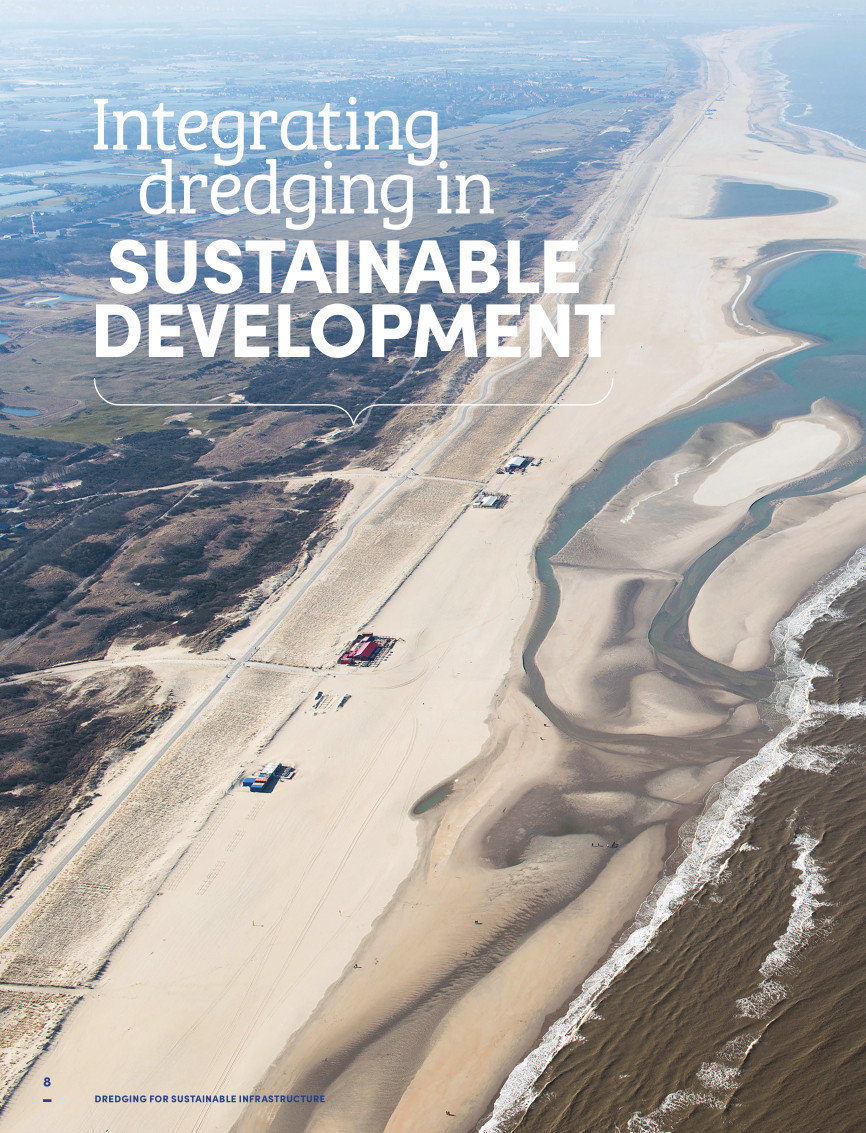
INTEGRATING DREDGING IN SUSTAINABLE DEVELOPMENT
Adapted from the second chapter of Dredging for Sustainable Infrastructure (2018), this article forms the foundation for this first issue and presents the concept of sustainability in relation to dredging projects. It describes the approaches and practices that are key to creating more sustainable solutions and infrastructure – a modern way of thinking about dredging.
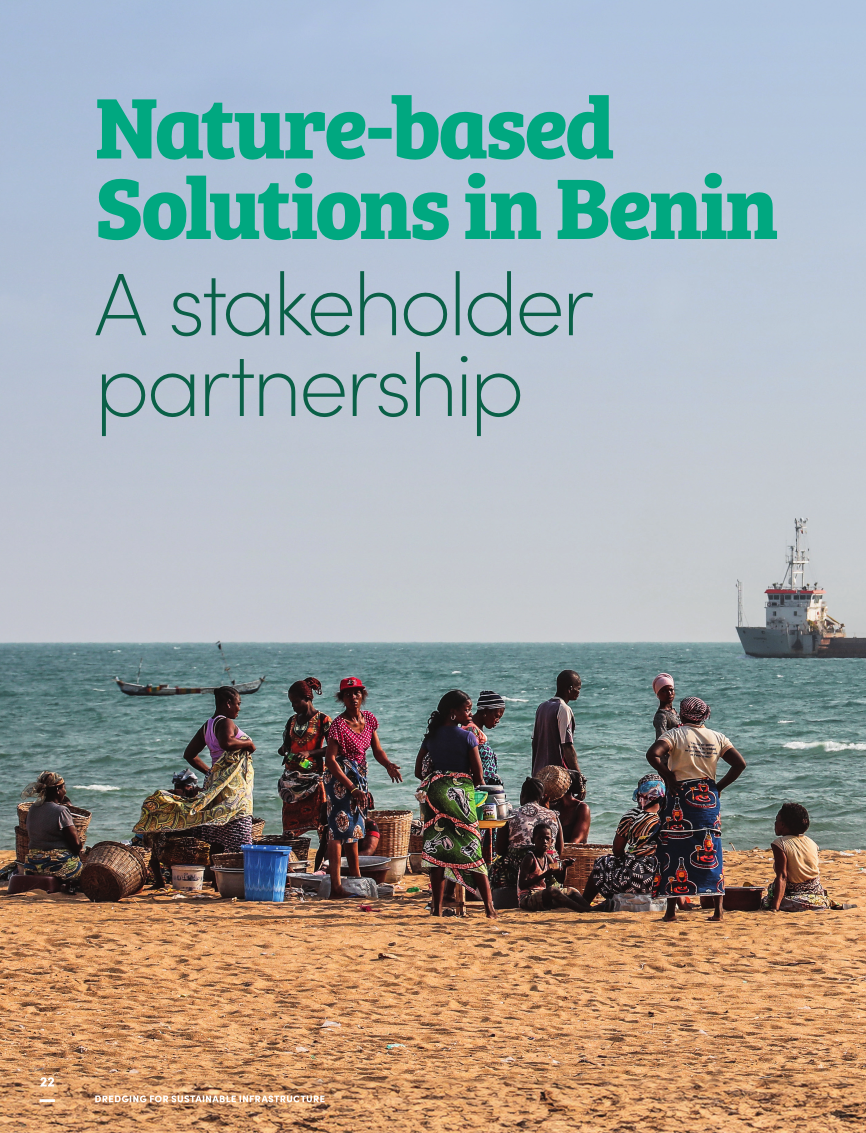
NATURE-BASED SOLUTIONS IN BENIN
In early 2018, the Government of the Republic of Benin awarded Jan De Nul a design and build contract to protect a 5-kilometre-long stretch of coastline near the town of Avlékété. The project fits into the government’s plan to turn the local coastal zone, which includes a lagoon, sandspit and beaches, into tourist hotspots. Yet the persistent oceanic swell and chronic erosion required an intervention. This is the perfect starting point for a nature- based structure that offers multiple ecosystem services. Its long-term effectiveness, however, hinges on the support of its end users. Stakeholder engagement was therefore central to the project.
TALKING HEADS
Lara Muller (Invest International) and Pieter van Eijk (Wetlands International), discuss the role investors and NGOs can play in driving demand for nature-based solutions.