
Reservoirs are large natural or artificial lakes created by constructing a dam to store fresh water. Sedimentation in a reservoir both diminishes its storage capacity and compromises its purpose and safety. Reservoir dredging is a curative sediment management strategy, which, if planned effectively, is a sustainable solution. Most reservoirs have multiple users leading to competition and potential conflicts among user groups. Reservoirs are associated with complex and sensitive ecosystems and large volume of sediments that need to be removed. A risk-based approach for reservoir dredging involving all stakeholders from an early stage will help to identify and mitigate risks with minimal damage to the associated ecosystems.

Reservoir sedimentation

A reservoir is defined as an artificial lake constructed for storing water. Most reservoirs are formed by constructing dams across rivers. A reservoir can also be generated from a natural lake by constructing a dam at its outlet to control water. Large reservoirs without dams often present similar challenges as reservoirs associated with dams for sediment management and removal processes. Coastal reservoirs are freshwater reservoirs in the tidal limits, near the river mouth to capture sustainable river flow (S.Q. Yang et al., 2005). Coastal reservoirs can be located inside, outside or beside the river mouth. In this article, a reservoir is referred to both artificial and natural reservoirs including coastal reservoirs.

Reservoirs and lakes form a vital part of the Earth’s usable and available fresh water supply system. According to the World Meteorological Organisation (WMO) report (2021), only 0.5% of water on Earth is usable and available freshwater. Based on the current data published by the International Commission on Large Dams (ICOLD), the present storage capacity of reservoirs is about 8,767 km3 of fresh water. The demand for global fresh water is steadily increasing and could reach 2-3% per year over the coming decades (ICOLD). Water reservoirs also guarantee steady water supply for irrigation, domestic and industrial use during droughts and reduce the negative impacts of floods.

Reservoir sedimentation not only diminishes its storage capacity but also compromises the purpose of reservoirs and the safety of dams. With the challenges of climate crisis, the planet is experiencing both drought with reservoirs and lakes drying up, as well as floods resulting from excessive rainfall as extreme weather events become more frequent. Soil erosion and hence reservoir sedimentation are also accelerating due to the severity of storms and rains associated with climate change. Sediment management and removal strategies need to be developed urgently to tackle the problems of reservoir sedimentation as well as the worldwide water crisis resulting from climate change.

To formulate suitable sediment management strategies for reservoirs, historic and current data on dams and reservoirs are necessary. No complete database of the world’s reservoirs is available to date. Lehner and Doll (2004) present a global database of lakes, reservoirs and wetlands. This database is superseded by Global Reservoir and Dam Database (GRandD v1.3) (Lehner et al., 2011) that records 7,320 reservoirs and associated dams, with a global reservoir storage of 6,863.5 km3. Based on ICOLD, the current estimate of large dams is now around 58,000 worldwide with an estimated storage capacity of 7,000-8,300 km3. A large dam is a height of 15 metres or greater from the lowest foundation to the crest or a dam between 5 m and 15 m impounding more than 3 million m3 (ICOLD). There are many more small dams and impoundments, which are not recorded in the global databases.

Global Georeferenced Database of Dams (GOODD, 2020) is a global dataset of more than 38,000 georeferenced dams. GeoDAR (2022) presents nearly 25,000 geo- referenced dam and reservoir data. Other existing global and regional dam databases are AQUASTAT and World Resources Institute (WRI) databases. The Global Dam Tracker (GDTA, 2018) is a geo-referenced global dam database of 35,140 dams in all continents except Antarctica.

Primary information required to develop effective and sustainable sediment management and removal strategies for reservoirs are:

  • the location and associated catchment and discharge areas;
  • year the reservoir was built;
  • current capacity of the reservoir: and
  • material characterisation.


Data about present day reservoir capacity is often not available. Numerical modelling techniques assessing the sedimentation rates of reservoirs can be used to estimate the current volume of sediments present in reservoirs (Khorrami and Banihashemi, 2019).

Curative sediment management strategy

Sediment management strategies for reservoirs can either be “preventive sediment management strategies” i.e. adopting measures to reduce the inflow of sediments in the reservoirs or “curative sediment management strategies” i.e. removal of sediments from the reservoirs. This article discusses only the curative sediment management strategy of sediment removal by dredging.

The location and type of reservoirs presents challenges in terms of selection, transportation and launching of suitable dredging equipment. The volume of sediments to be removed from reservoirs is significant when compared to the volume of sediments removed from annual maintenance dredging works. Availability of a suitable disposal area for such volumes of sediments is often challenging. With contaminated sediments, disposal and encapsulation methodologies require carefully designed processes. While developing sediment management and removal strategies for reservoirs, emphasis should be given to circular economy and beneficial uses of the dredged sediments.

Most reservoirs have multiple users leading to competition and potential conflicts among user groups. Reservoirs are associated with complex and sensitive ecosystems. The timing of dredging and the rate of dredging activity should be such that it minimises the disturbance to the associated ecosystems (Sarkar, 2013). The sediment management and restoration of reservoirs often involves public resources. All these challenges increase the risks associated with any reservoir dredging activities.

This article discusses the importance of adopting a risk-based approach for reservoir dredging activity by identifying the major risks associated with different types of reservoirs and with various phases of the reservoir dredging life cycle (Sarkar and Sarkar, 2024). Identification of stakeholders and decision makers from the planning phase as well as early stakeholder involvement will result in a stakeholder driven process, which is effective in identifying, managing and mitigating reservoir dredging risks.

The recognised industry standards for risk assessments are ISO 45001:2018 and ISO 14001. ISO 45001 replaced the BS OHSAS, the globally recognised standard for occupational health and safety management. ISO 45001 includes bidding on contract, especially internationally, commitment to social sustainability (ESG benchmarking) commitment to UN SDGs (United Nations Sustainable Development Goals), and providing safe and healthy workplace free from injury and disease. ISO 14001 is the environmental management system standard that also needs to be considered.

Reservoir sediment management

The type of reservoir determines the morphological, hydrological and material (sediment, contaminants and aquatic plants) characteristics of any reservoir. Reservoirs can be classified based on their origin, size/storage volume, position, location and purpose of the reservoir. A simplified classification scheme for reservoirs is presented in Figure 1.
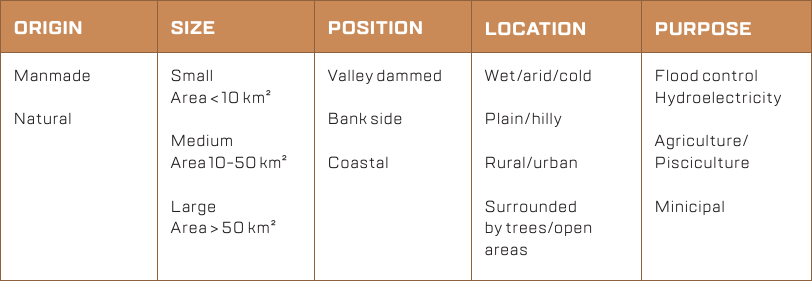
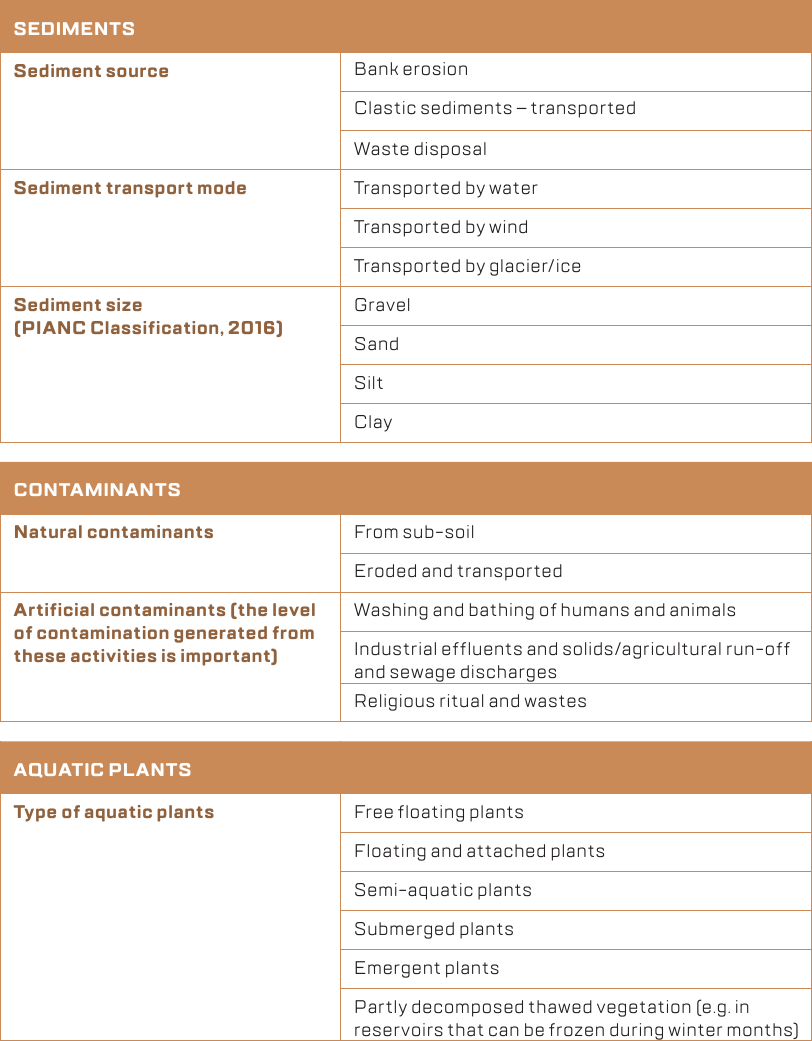
FIGURE 1

Classification of reservoirs.

Extensive research and literature is available on morphology and hydrology of reservoirs, and is therefore not discussed in this article. Material characterisation is very important for developing sediment management and removal strategies, and selection of suitable dredging equipment. Material present in reservoirs can be grouped into three categories, i.e. sediments, contaminants and aquatic plants (see Table 1).

TABLE 1

Material characterisation within reservoirs (Sarkar and Sarkar, 2024).

The type and volume of sediments are determined by the source of the sediment, sediment transportation mode, prevailing climate controlling the rate of precipitation and evaporation in the area. The rate of seepage through the bed rock/soil also impacts the type and volume of sediments present in the reservoir.

The sediment management strategies can be preventive sediment management strategies by sediment control at the source (e.g. construction of embankments, sediment traps and afforestation measures) and sediment control during transportation (e.g. construction of pre-settling structures/ weirs/dams/barrages in the upstream or construction of silt traps). The type (natural or artificial) and amount of contaminants present in the reservoir needs to be assessed for defining sediment management strategies. The curative sediment management strategies include dry excavation where the reservoir is dry during the excavation process or dredging where the reservoir cannot be dried up. Surface floating mechanical or hydraulic dredgers can be used for shallow reservoirs. For deep-water reservoirs, submersible tracked or walking dredgers (Sarkar, 2007) and submersible floating dredgers (Sarkar, 2012) can be used. Specially designed submersible pumps can also be used for deep-water reservoirs.

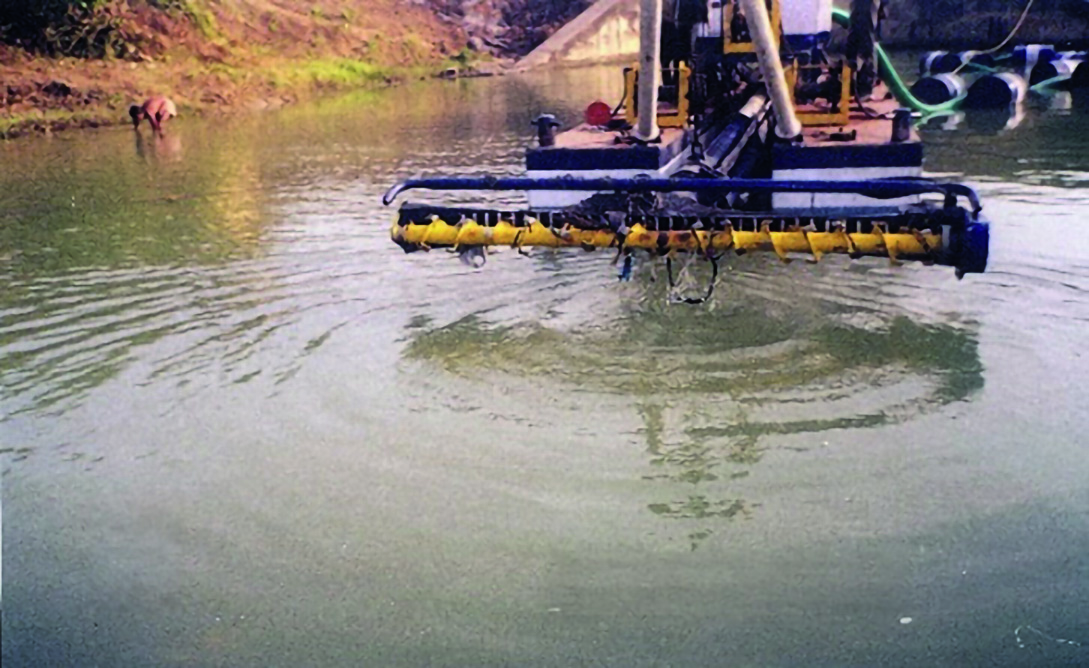
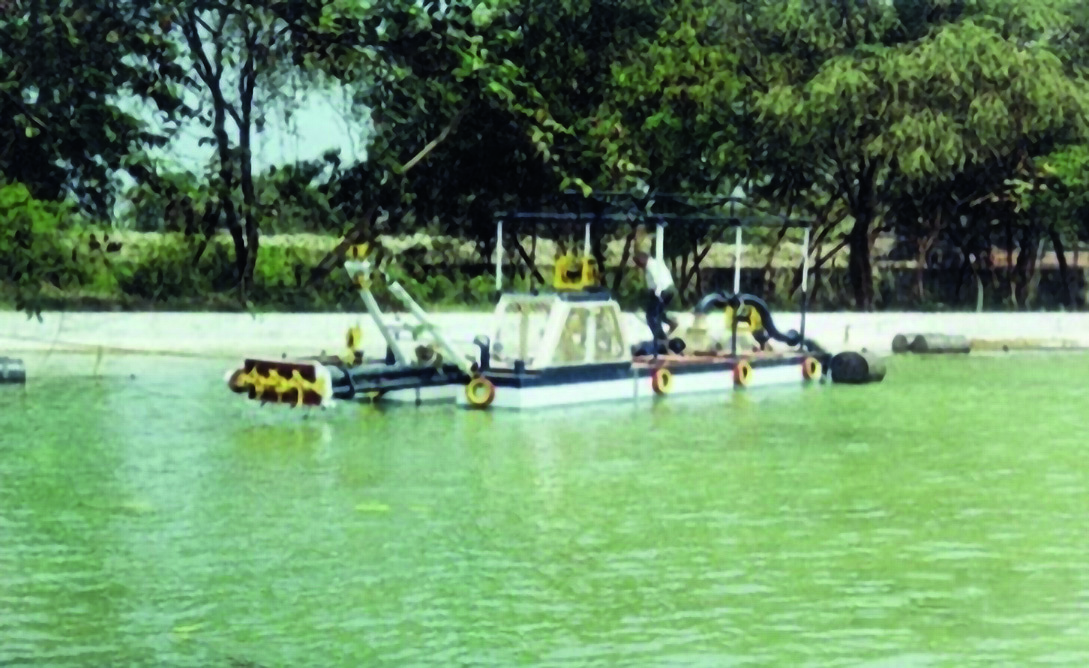
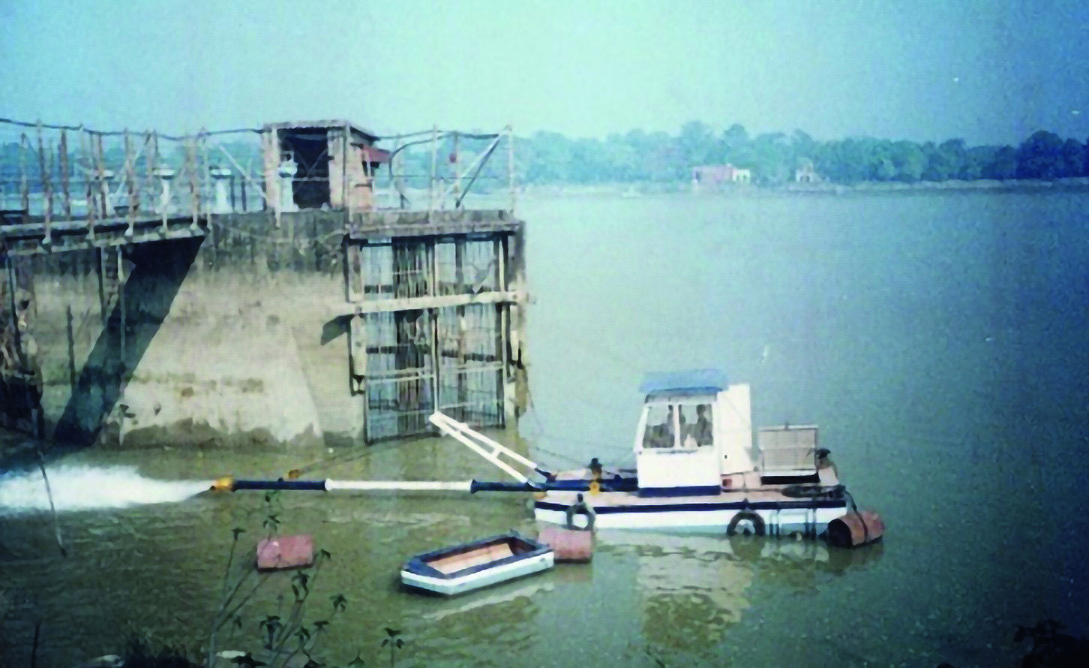
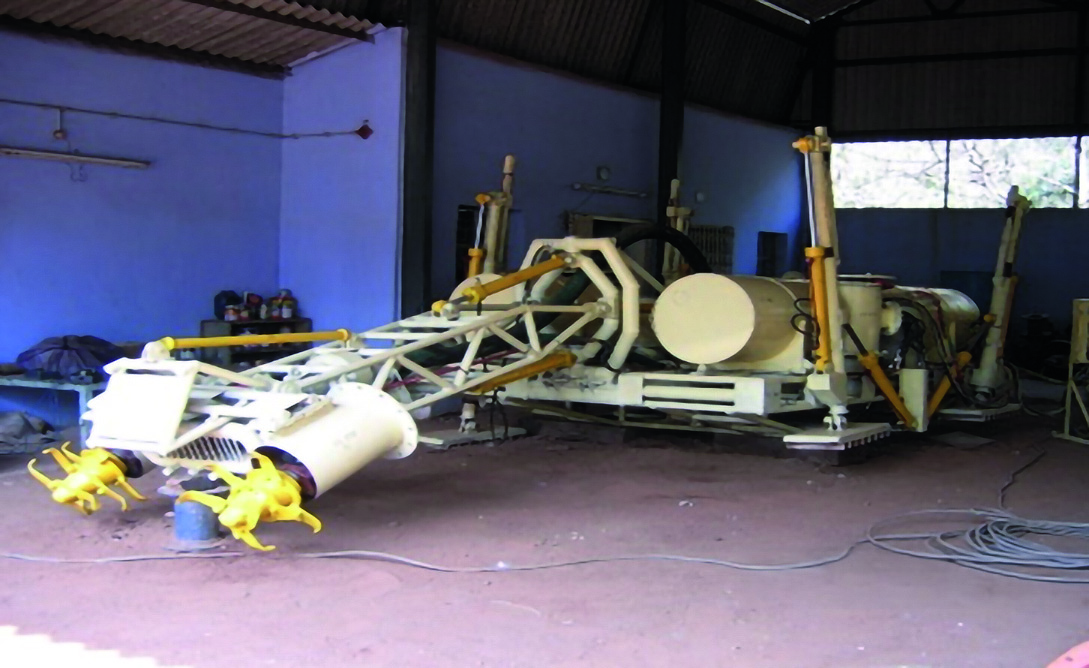
Figure 2 shows small scale dredgers with specialised cutters for aquatic plants and contaminated sediments present in small reservoirs. A water injection dredger and a submersible walking dredger suitable for deep-water reservoirs are also shown.

FIGURE 2A

Small reservoir dredging equipment - auger cutter for contaminated sediments

FIGURE 2B

Small reservoir dredging equipmen - rotovator cutter for aquatic weeds

FIGURE 2C

Small reservoir dredging equipment - water injection dredger

FIGURE 2D

Small reservoir dredging equipment - submersible walking dredger

Risk management

Risk can occur at any phase of the reservoir dredging life cycle. A “risk” is an uncertain event, activity or a set of circumstances that, should it occur, has a positive or negative impact on at least one of the reservoir dredging project objectives, i.e. scope, schedule, cost and quality. There can be multiple impacts and one or more stakeholders can be affected. The various phases of the reservoir dredging life cycle are: 1) pre-tendering; 2) tendering; 3) mobilisation; 4) execution; and 5) site restoration and demobilisation. The risk categories that can occur during reservoir dredging life cycle phases are: 1) technical; 2) economic; 3) commercial; 4) organisational; 5) political; and 6) social (nearby residents). Environmental risks will be generated by dredging activities. An Environmental Impact Assessment (EIA) should be performed prior to any dredging activities to provide sufficient knowledge about the associated ecosystems and flora and fauna thriving in the reservoir and surrounding areas.

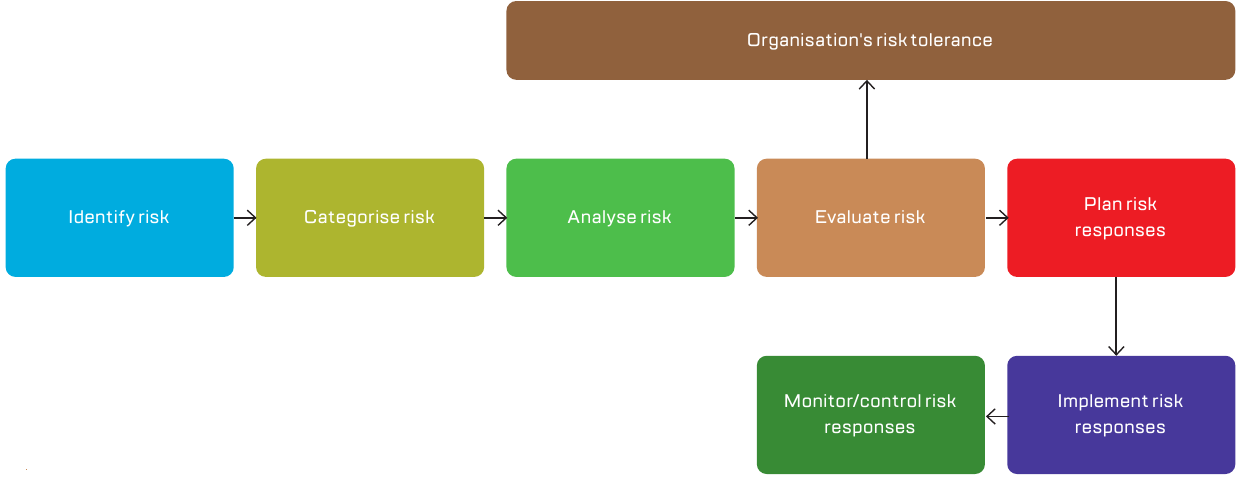
Risk management for reservoir dredging is a continuous process performed throughout the various phases of the reservoir dredging life cycle. For each phase, the steps shown in Figure 3 should be applied to reduce the likelihood of an identified risk occurring and/or to reduce the potential impact of the risk on the reservoir dredging project.

FIGURE 3

Risk management response steps.

To identify, categorise and analyse risks, the hazards associated with activities for each phase of the reservoir dredging life cycle are to be identified. The consequences of a hazard can be on people, equipment, environment and reputation of relevant stakeholders. Risk is calculated as:

Risk = consequence x likelihood [1]

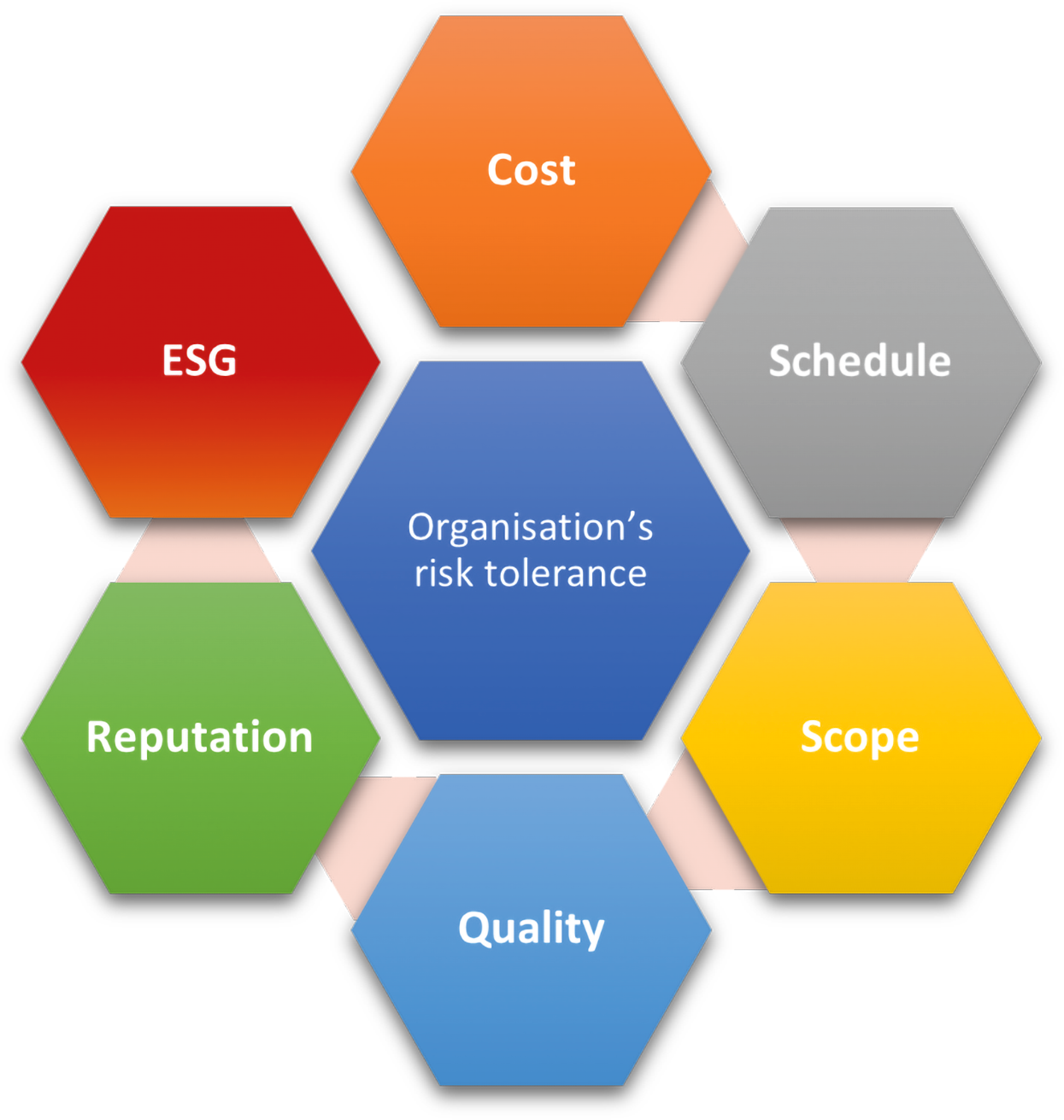
The calculated risk needs to be evaluated with the risk tolerance of an individual organisation. Each organisation has its own unique risk profile based on assets it wants to protect, goals it wants to achieve and its ability and willingness to handle risks. Figure 4 shows the factors considered for calculating the risk tolerance of an organisation.

FIGURE 4

Risk tolerance of an organisation.

Risk response is the action taken to reduce the probability of a hazard arising or to reduce the impact of the hazard if it arises. Standard control and reduction measures are taken to reduce the risk rating (see Equation 1). These are referred to as “proactive responses or mitigations” and are usually funded by the project budget. If “reactive responses or mitigations” are required, then these are funded by the contingency budget. The contingency budget is dependent on the risk tolerance of the relevant organisation.

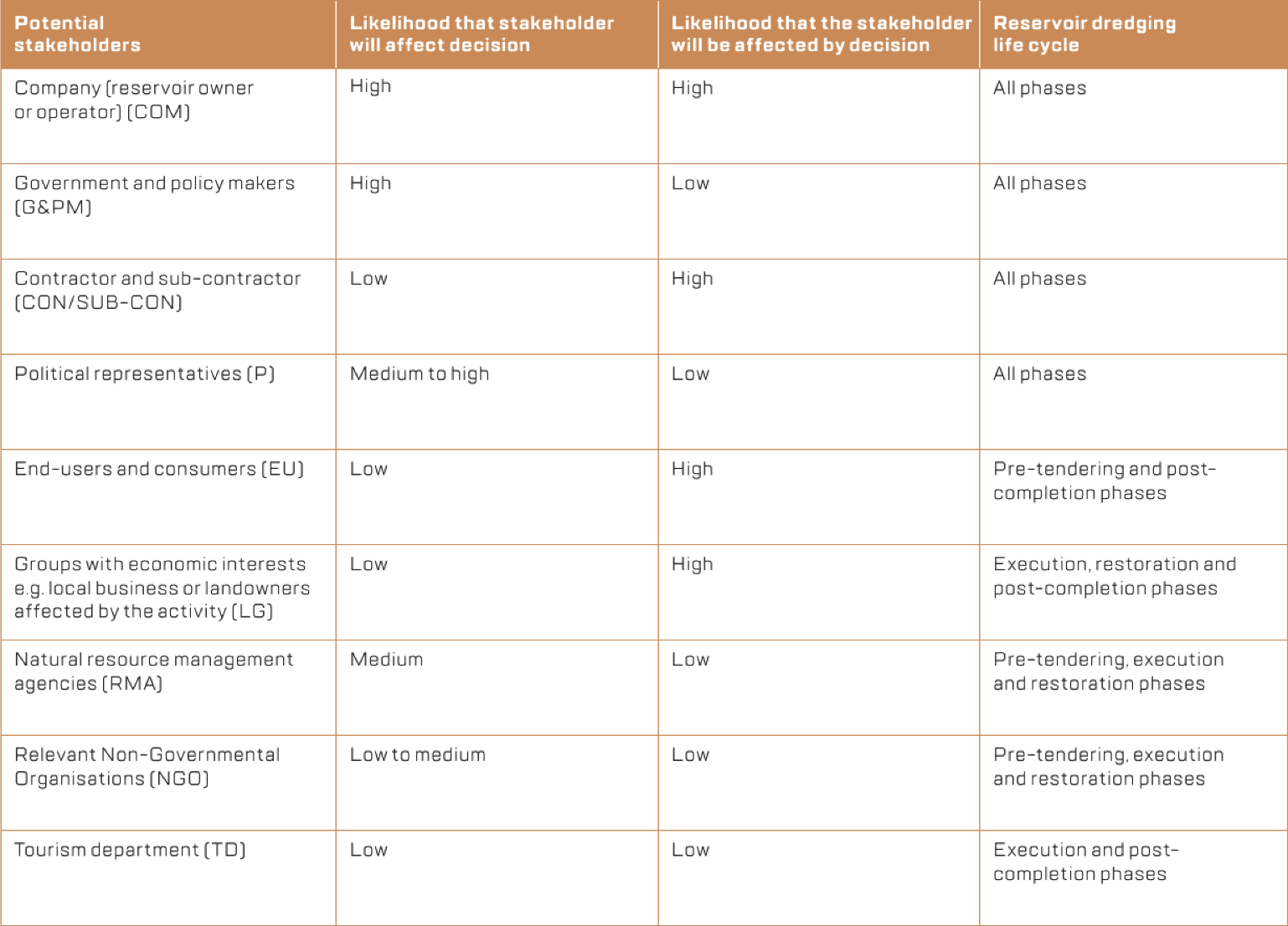
Early identification and involvement of stakeholders and decision makers are necessary in order to mitigate reservoir dredging risks. Stakeholders care about or have a vested interest in the project, while decision makers are legal authorities or groups that have accountability for management action. All decision makers are stakeholders, but not all stakeholders are decision makers. The importance of the stakeholders during various phases of the reservoir dredging life cycle are presented in Table 2.

TABLE 2

Importance of stakeholders versus various phases of reservoir dredging life cycle (Sarkar and Sarkar, 2024).

Risks of reservoir dredging

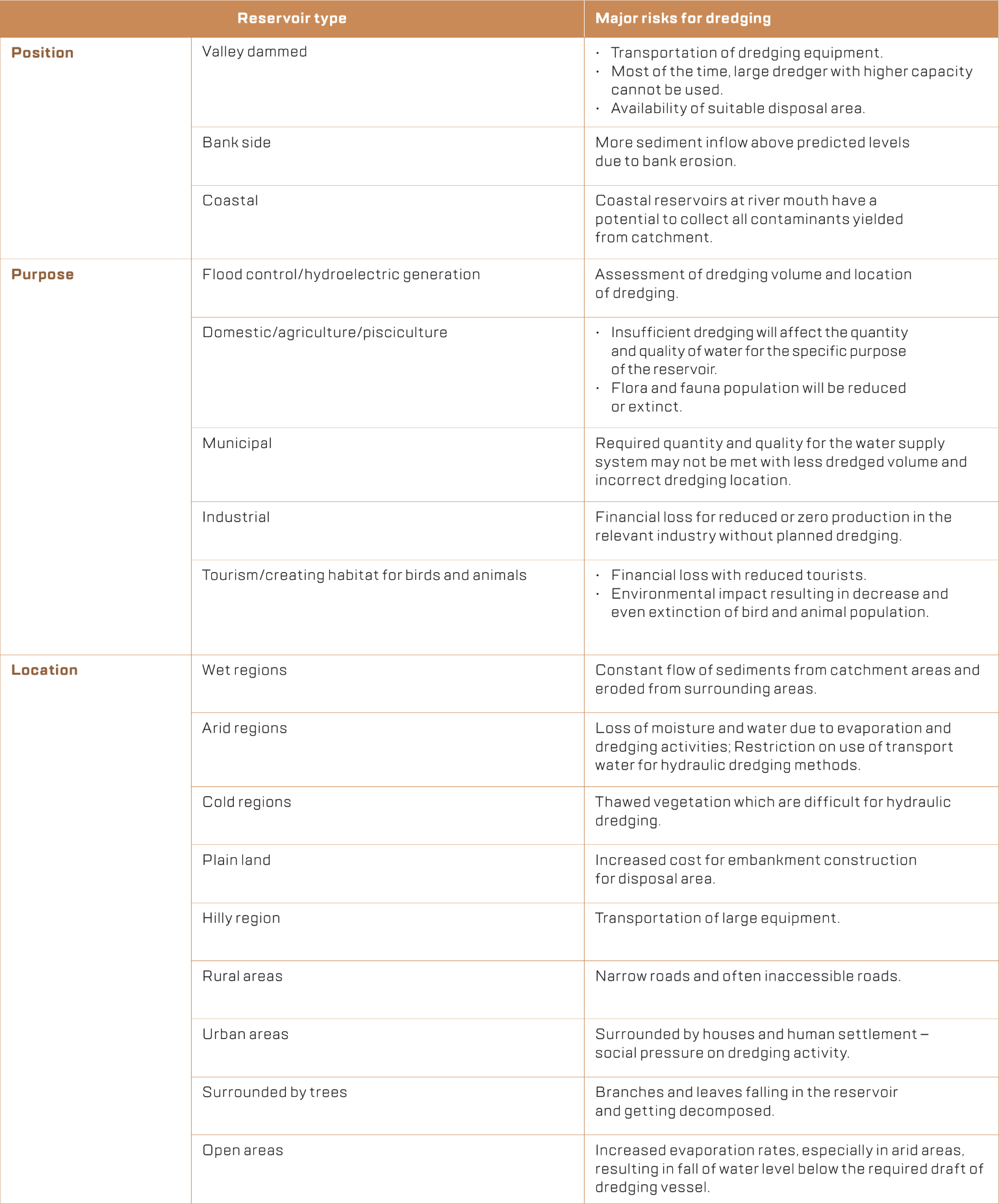
Reservoir classification is presented in Figure 1. There are risks associated with different reservoir types, which can affect the overall risk of reservoir dredging. Major risks associated with dredging each type of reservoir are presented in Table 3.
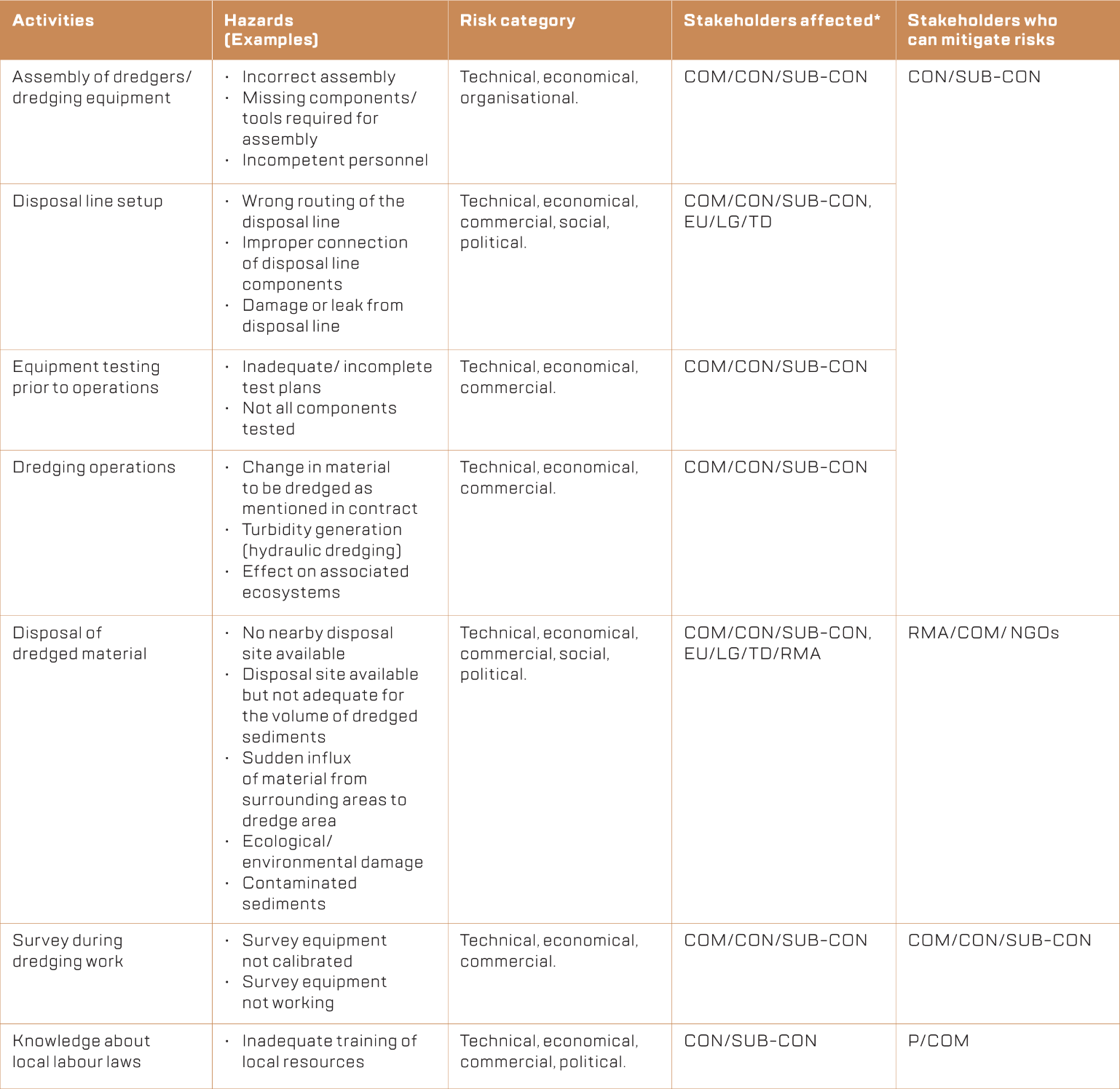
TABLE 3

Major risks of reservoir dredging verses type of reservoirs (Sarkar and Sarkar, 2024).

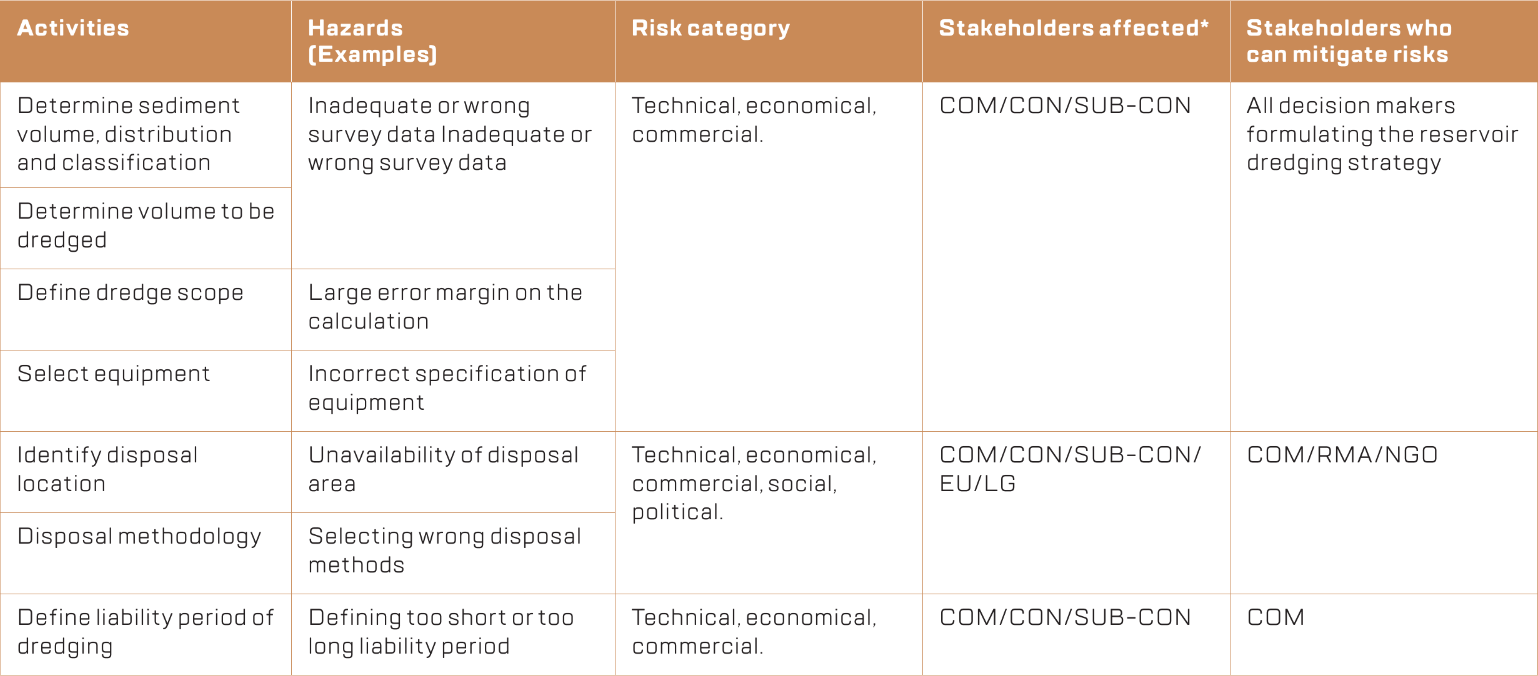
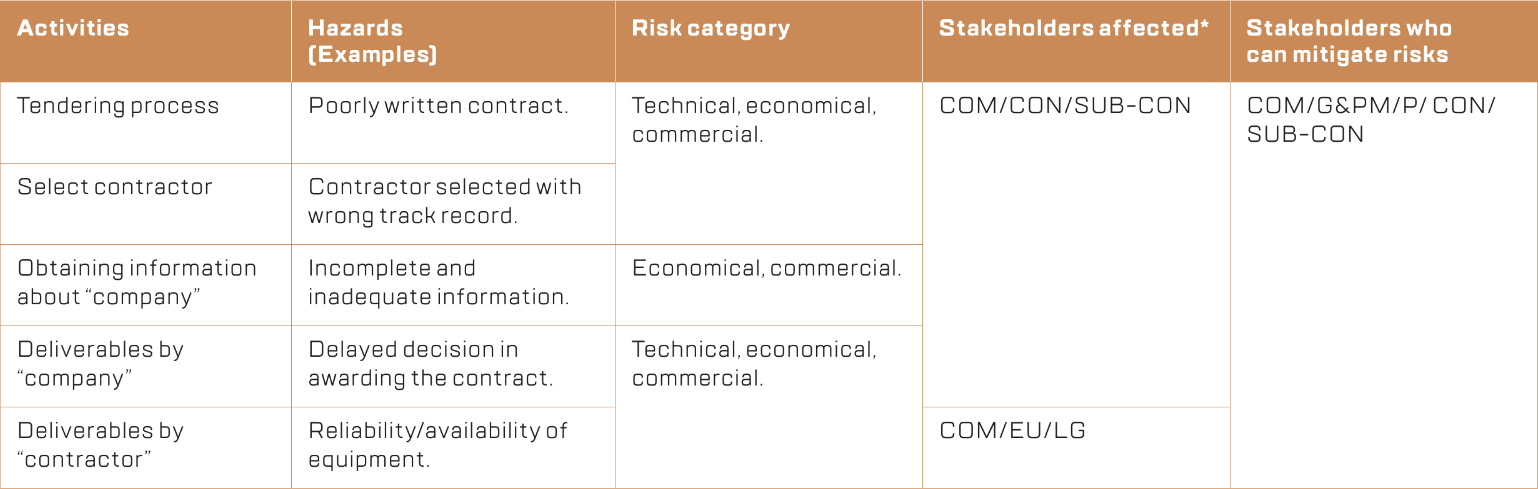
The risks associated with the various phases of the reservoir dredging life cycle are presented next. Risk categorisation and stakeholders affected by the hazard and stakeholders who can mitigate the risks are shown in Tables 4-7.

TABLE 4

Pre-tendering phase – risk categorisation and stakeholders. Note * refer to Table 2.

TABLE 5

Tendering phase – risk categorisation and stakeholders. Note * refer to Table 2.

TABLE 6

Mobilisation and site set-up phase – risk categorisation and stakeholders. Note * refer to Table 2.

TABLE 7

Execution phase – risk categorisation and stakeholders. Note * refer to Table 2.

Risks associated with demobilisation of the dredging equipment are similar to those mentioned for mobilisation activities. However, the risk to the overall project is lower as the works have been completed before demobilisation commences. The main consequences for site restoration are damage to the environment and associated ecosystems. The end users, local business groups and tourism department are affected if the site restoration steps taken are inadequate. During the site restoration phase the following checks are to be performed as a minimum:

  1. Post-dredging monitoring of reservoir water quality and comparison with pre-dredging water quality;
  2. Migration and extinction of any species not identified in the Environmental Impact Assessment, which is usually performed before the execution of any dredging activity;
  3. Timeline for return and resettlement of species either disturbed or moved due to reservoir dredging activity (Sarkar, 2013);
  4. Effect of reservoir dredging on downstream ecosystems and associated flora and fauna;
  5. Dredged material in the designated disposal area is not generating any environmental damage and ecological risks to the local community and existing flora and fauna;
  6. Disposal, encapsulation or further transport of contaminated sediments in not generating any additional risks; and
  7. Any change in landscape of the area surrounding the reservoir to be inspected and brought back to the state as close as possible to the original.

Conclusions

A holistic approach is necessary for reservoir dredging operations by considering the associated water systems and the morphological and hydrological characteristics of the catchment and downstream areas. Identification and early involvement of stakeholders is necessary for a stakeholder driven process, which will help to identify and effectively manage and mitigate risks associated with reservoir dredging. Adequate data should be collected about the reservoir either from existing databases or suitable surveys to develop reservoir sediment management and restoration strategies and methodologies. The sedimentation pattern and material characteristics present within the reservoir is fundamental for any dredging activity. An Environmental Impact Assessment should provide sufficient knowledge about the associated ecosystems and flora and fauna present in the reservoir and surrounding areas. The volume of dredged sediments from the reservoirs can be of significant volume compared to capital dredging. Hence, identification of suitable disposal location, disposal methodology is very important. At planning stages, beneficial uses of dredged material and circular economy should be considered to reduce risks and have minimum impact from the dredged spoil. If contaminated sediments are present, handing and treatment of such material needs to be considered as early as possible.

Summary

According to the World Meteorological Organization (WMO) report published in 2021, only 0.5% of water on Earth is useable and available freshwater, of which reservoirs form a vital part. Sedimentation in reservoirs not only diminishes the storage capacity but also compromises the purpose of a reservoir and safety of a dam. Developing appropriate sediment management strategies for reservoirs is therefore necessary to cope not only with sedimentation problems but to also tackle the water crisis resulting from climate change. This article addresses the risks associated with reservoir dredging activities from planning, execution as well as restoration phases.

Authors

Sritama Sarkar

Sritama is a Chartered Engineer (UK), currently working as a Principal Engineer for ABL Group, London, responsible for managing large and complex oil and gas projects. She is involved with dredging and trenching activities for oil and gas and renewables projects. Sritama holds a bachelor’s and master’s in geology from Calcutta University, India and a master’s in mechanical engineering specialising in dredging technology from Delft University of Technology in the Netherlands. She has a PhD in ocean and naval architecture from Memorial University of Newfoundland, Canada.

OTHER ARTICLES BY THIS AUTHOR
Mridul Kumar Sarkar

Mridul is the Managing Director of Excavation & Equipment Manufacturing (P) Ltd., an inland dredging company in East India. The company, which he founded in 1979, designs, builds and operates small and bespoke mechanical and hydraulic dredgers. Mridul is a mechanical engineer with a professional graduation in aeronautical engineering. He was educated and trained in dredging technology under a Dutch Government Grant for 4 years in India and in the Netherlands. Mridul obtained his PhD in ocean engineering from Australian Maritime College, University of Tasmania, Australia.

OTHER ARTICLES BY THIS AUTHOR

PDF download

Download the PDF version of this article with high resolution pictures and layout.

Single-page view

DOWNLOAD PDF Document | 8,33 MB

Two-page view

DOWNLOAD PDF Document | 8,3 MB

Share this page