


Community-based ecological mangrove restoration IN QUELIMANE, MOZAMBIQUE
The Quelimane Mangrove Restoration (QMaR) initiative, led by Van Oord, demonstrates a community-based ecological approach to mangrove restoration. Through hydrological interventions and alternative livelihood initiatives, 4 hectares of degraded mangrove habitat are being restored. One year after implementation, seedlings have established and grown well, especially near natural water sources. Over 100 community members have participated in an alternative livelihood programme, reducing dependence on mangrove logging and improving household incomes. Some even made investments such as purchasing property, demonstrating enhanced economic stability. These results highlight the critical role of integrating ecological restoration with community empowerment and livelihood support in achieving sustainable mangrove restoration.

Blue carbon – an opportunity for the waterborne transport infrastructure sector
Many ports and harbours operate in and around marine coastal habitats, such as tidal marshes, mangrove forests and seagrasses. Many of these marine coastal habitats are considered blue carbon ecosystems, which play a crucial role in capturing carbon. This article examines how waterborne transport infrastructure impacts blue carbon ecosystems, reviews current mitigation strategies and suggests integrated approaches for sustainable coexistence. We emphasise the importance of collaboration among marine transport authorities, environmental managers, scientists and engineers to protect these essential carbon sinks while supporting the sector's economic contributions.
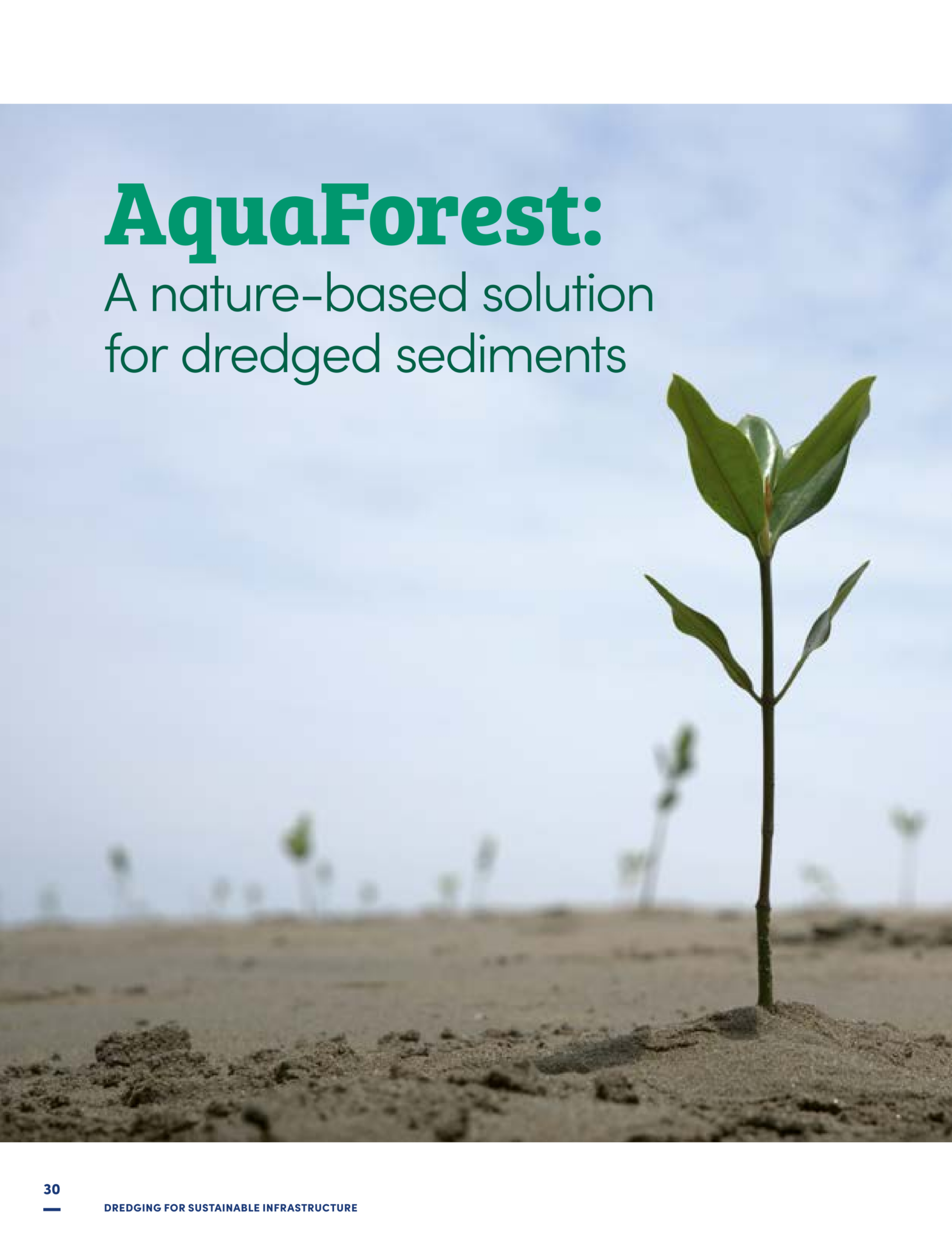
AquaForest: A nature-based solution for dredged sediments
AquaForest is a demonstration project led by Jan De Nul showcasing a green-grey approach, where dredged sediments are being reused to create 50 hectares of mangrove habitat in the Guayas Delta, Ecuador. The project aimed to advance knowledge on the conceptual design and eco-engineering approaches of mangrove habitats, while strengthening local engagement and generating diversified income opportunities for local communities. A new mangrove island was built in the end of 2024 and is currently being monitored to quantify the provision of ecosystem services over time with the aim of future upscaling of this type of nature-based solutions.
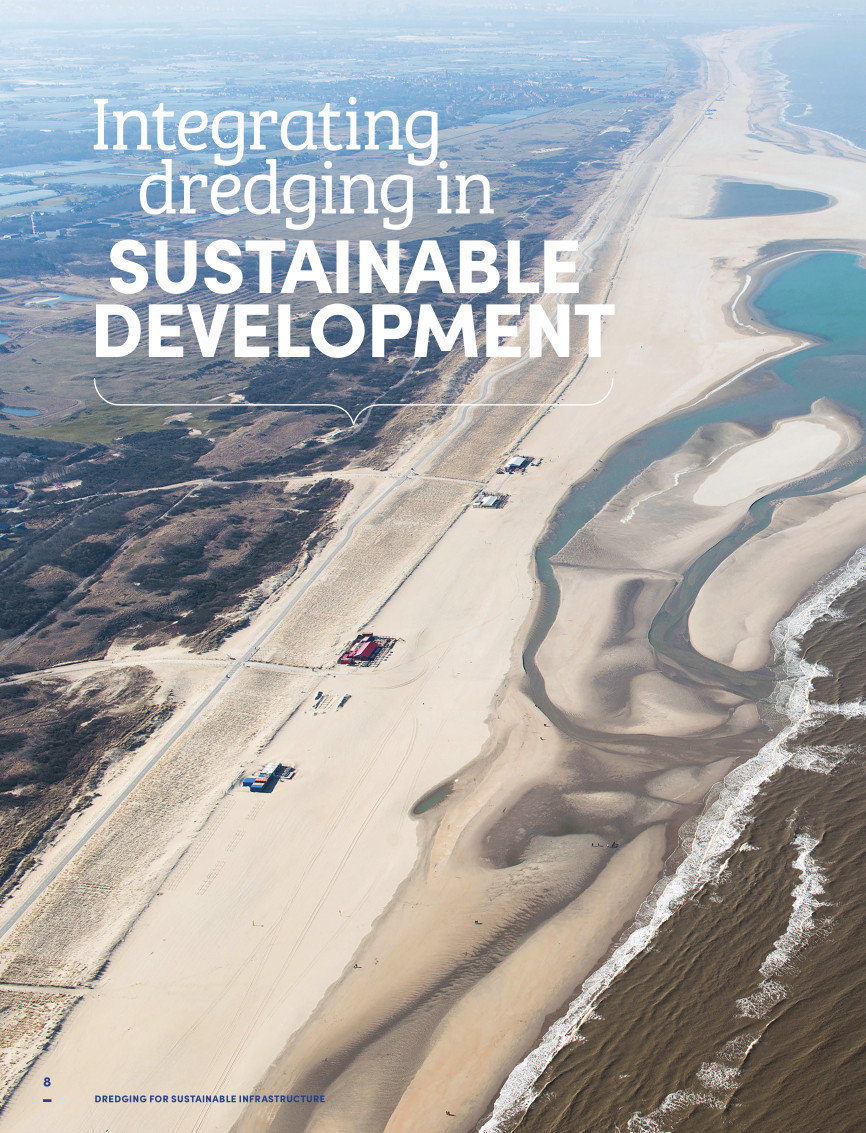
INTEGRATING DREDGING IN SUSTAINABLE DEVELOPMENT
Adapted from the second chapter of Dredging for Sustainable Infrastructure (2018), this article forms the foundation for this first issue and presents the concept of sustainability in relation to dredging projects. It describes the approaches and practices that are key to creating more sustainable solutions and infrastructure – a modern way of thinking about dredging.
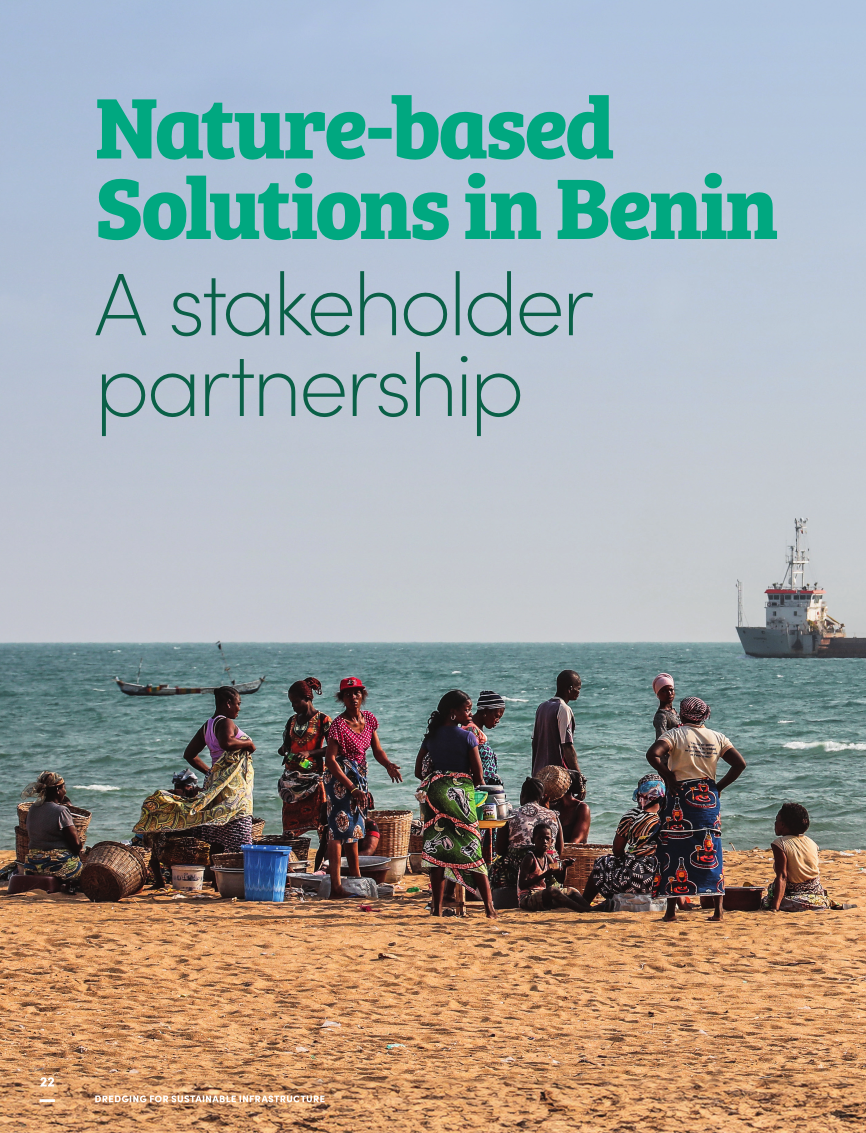
NATURE-BASED SOLUTIONS IN BENIN
In early 2018, the Government of the Republic of Benin awarded Jan De Nul a design and build contract to protect a 5-kilometre-long stretch of coastline near the town of Avlékété. The project fits into the government’s plan to turn the local coastal zone, which includes a lagoon, sandspit and beaches, into tourist hotspots. Yet the persistent oceanic swell and chronic erosion required an intervention. This is the perfect starting point for a nature- based structure that offers multiple ecosystem services. Its long-term effectiveness, however, hinges on the support of its end users. Stakeholder engagement was therefore central to the project.

Integrating dredging in sustainable development
The paper Integrating dredging in sustainable development outlines the philosophy and concepts of sustainability and its application to water infrastructure projects focusing on practical issues for dredging.

IADC presents paper “Sand as a resource: Best practices to conduct responsible dredging projects”.
IADC presents paper “Sand as a resource: Best practices to conduct responsible dredging projects”. It presents best practices for optimal use of scarce sand resources, on both project and operational levels. Every stage of a project presents opportunities to increase the sustainability of sand extraction.

Sand as a Resource
The paper Sand as a resource: Best practices to conduct responsible dredging projects presents best practices for optimal use of scarce sand resources, on both project and operational levels. Every stage of a project presents opportunities to increase the sustainability of sand extraction.