


GULHIFALHU RECLAMATION PROJECT
Environmental and social management in marine infrastructure projects is fast evolving. In Gulhifalhu’s pristine waters, Boskalis delivered one of the Maldives’ most complex dredging and reclamation projects amid sensitive habitats and high stakeholder expectations. Guided by international best practice and close collaboration with partners, robust controls safeguarded marine habitats while enabling development. The result stands as a blueprint for future projects, demonstrating that sustainable marine infrastructure can deliver lasting benefits for nature, communities and economic progress.
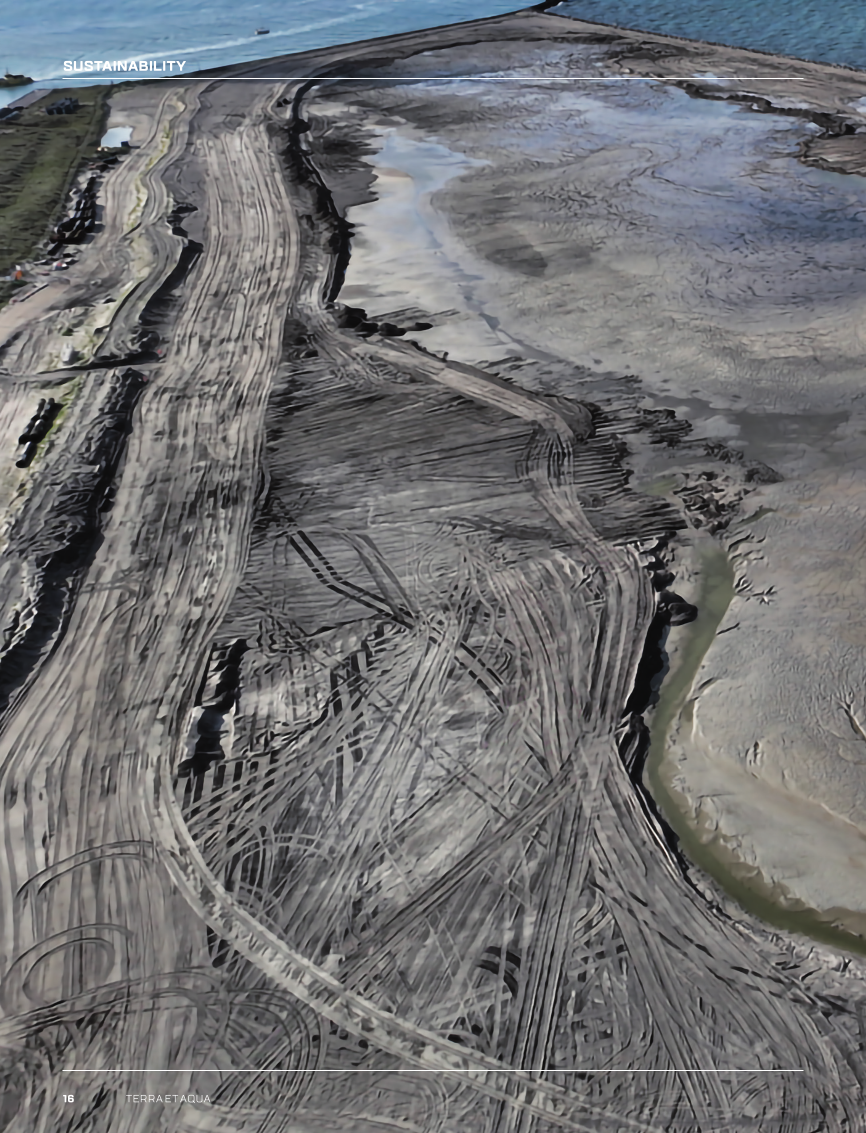
Unsuitable to suitable: a change in the reclamation design paradigm
The availability of suitable sand has become a limiting factor in the development of many ambitious reclamation projects, making the reuse of existing, less suitable materials a critical solution. This subject has been given broader international attention in the past years driven by the shortage of sand resources and by the desire for a more circular society where waste does not exist. So far, only a few examples exist of islands that have been constructed with fine silty or even clayey sediment. In this context, the reclamation with sediments must evolve from an exceptional case requiring special considerations, to a common practice. To favour this practice, an integrated framework is needed where the concepts of suitable and unsuitable are redefined.

Modernisation of the Świnoujście – Szczecin fairway
The idea of a modern maritime access route from the Baltic Sea to the Port of Szczecin in Poland was already born towards the end of 20th century. Quay walls in the neighbouring Port of Police, built in the 80s, were already constructed to accommodate a depth of 12.5 metres and initial modernisation works commenced in the early 90s. On 28 September 2018 the “Modernisation of the Świnoujście – Szczecin Fairway to a depth of 12.5 m” became a reality with the signing of the design and build contract between the Maritime Office Szczecin and the DIVO consortium (Dredging International NV and Van Oord).

Land reclamation: The potential for subsurface freshwater storage
At present too little use is made of the opportunities that the design and construction of land reclamation offer for the underground storage and recovery of fresh water. The managed aquifer recharge systems in the coastal dunes of the Netherlands are a good example of successful subsurface water storage. And it is to be expected that the sandy deposits of land reclamations could serve a similar purpose. This in turn will contribute to a sustainable development of land reclamations.

Land Reclamation
Land reclamation is the process of creating new land by raising the elevation of a waterbed or low-lying land or by pumping water out of muddy morass areas.

Land Reclamation Using Calcium Oxide (CaO) Improved Soil in Japan
An increase in the quantity of dredged material combined with a decrease in available land for disposal has led to extensive research for unusual ways to improve and use the dredged soil.

New Land in the Water: Economically and Socially, Land Reclamation Pays
When expanding populated urban centres, old inner city land or the hinterland is often expensive, uneconomical or unavailable. Building new land in nearby water offers viable opportunities.