

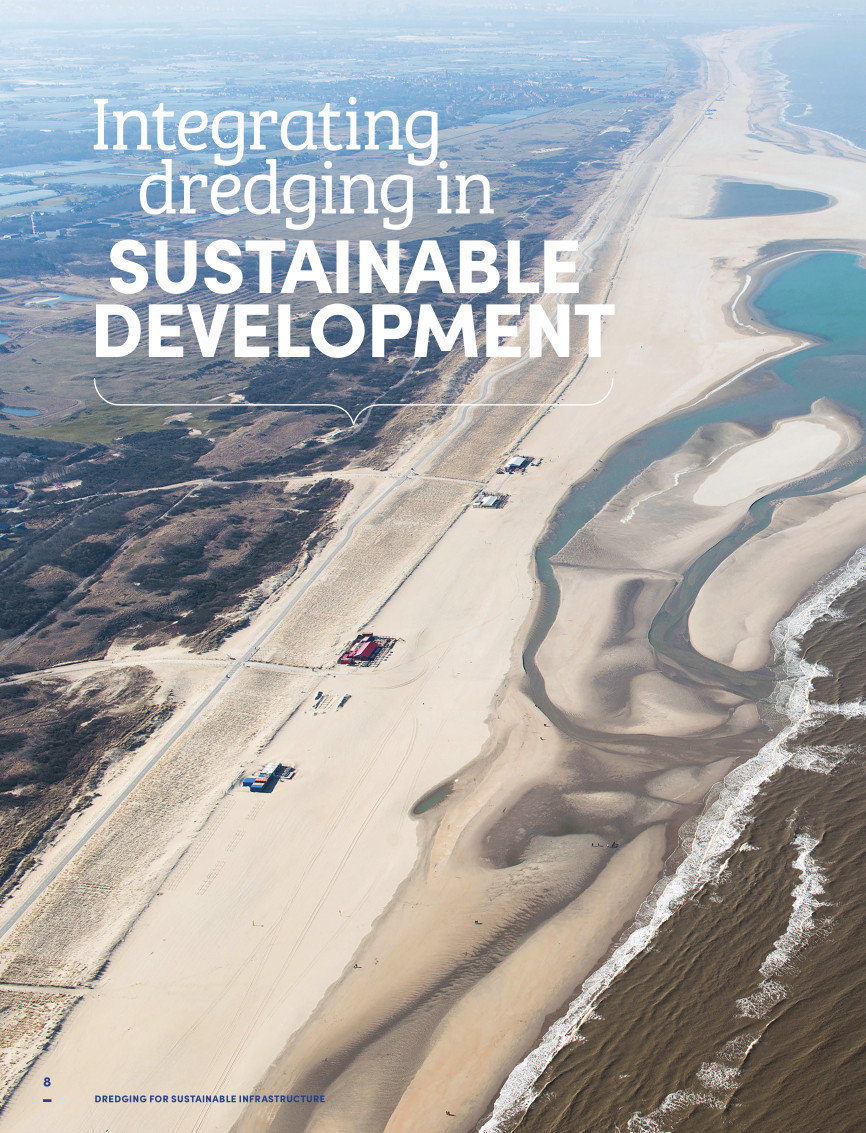
INTEGRATING DREDGING IN SUSTAINABLE DEVELOPMENT
Adapted from the second chapter of Dredging for Sustainable Infrastructure (2018), this article forms the foundation for this first issue and presents the concept of sustainability in relation to dredging projects. It describes the approaches and practices that are key to creating more sustainable solutions and infrastructure – a modern way of thinking about dredging.
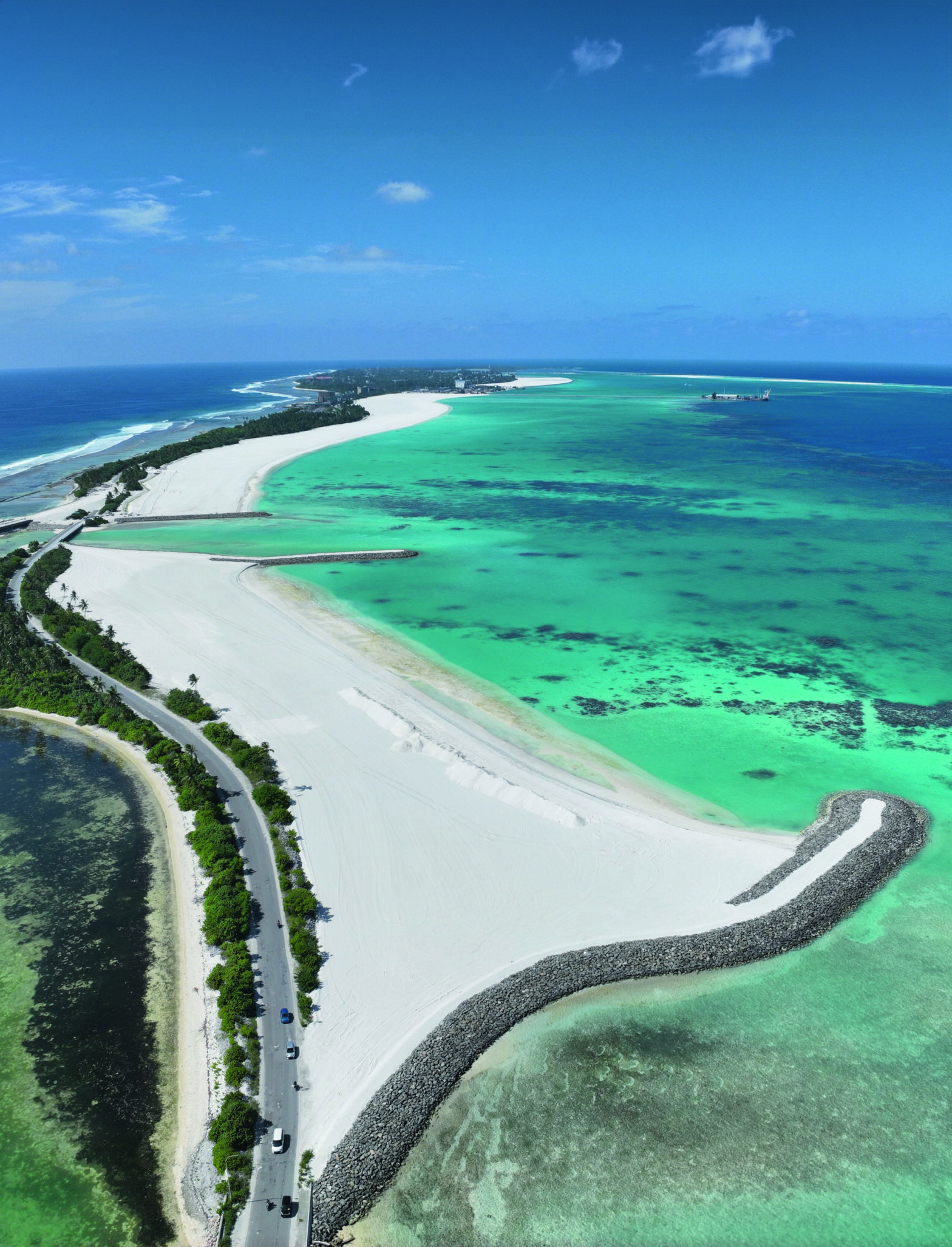
Environmental management and mitigation measures: Addu City project
Dredging and reclamation projects can significantly impact local ecosystems. Negative impacts can be minimised by adopting proper environmental management and mitigation, from preparation to completion phase. Addu City project sets an example of implementing novel construction methodologies and successfully addressing environmental challenges. The project has created over 200 hectares (ha) of climate resilient land for housing and touristic development. Enclosure of footprints, relocation of corals and seagrass (at pilot level) before reclamation process, and monitoring sediment impact in the nearby marine protected areas during dredging and reclamation are exemplary of the management approach applied to ensure minimisation of potential negative environmental impacts.

Integrating dredging in sustainable development
The paper Integrating dredging in sustainable development outlines the philosophy and concepts of sustainability and its application to water infrastructure projects focusing on practical issues for dredging.

Integrating dredging in sustainable development
The International Association of Dredging Companies (IADC) aims to inform the world about the fundamental need for dredging as well as advocating for an industry that makes the world a safer, better and more sustainable place to live. Adapted from the second chapter of the book, Dredging for Sustainable Infrastructure (2018), this article presents the concept of sustainability in relation to dredging projects. It describes the approaches and practices that are key to using dredging and dredge material to create more sustainable solutions and infrastructure – a modern way of thinking about dredging.

Sand as a resource: Best practices to conduct responsible dredging projects

IADC presents paper “Sand as a resource: Best practices to conduct responsible dredging projects”.
IADC presents paper “Sand as a resource: Best practices to conduct responsible dredging projects”. It presents best practices for optimal use of scarce sand resources, on both project and operational levels. Every stage of a project presents opportunities to increase the sustainability of sand extraction.

Sand as a Resource
The paper Sand as a resource: Best practices to conduct responsible dredging projects presents best practices for optimal use of scarce sand resources, on both project and operational levels. Every stage of a project presents opportunities to increase the sustainability of sand extraction.

Regulation and management of marine aggregate dredging in England
Marine dredged sand and gravel make an important contribution to regional supplies of building materials used in England. Marine aggregate dredging however, is known to result in effects to the receiving environment which, if not properly controlled, could cause adverse impacts to a wide range of receptors. As the marine area around England gets busier, competition for space comes with regulatory challenges and an integrated marine management approach that uses a robust planning system is required. This article discusses the regulation of aggregate dredging in England and provides an overview of the sector’s importance in providing primary aggregate.