


Valuing Variations In Dredging Contracts
Variations are essential in dredging contracts and they have the potential to generate extra costs and pose significant delay to projects. So, what is the best way to go about reaching a fair valuation in variations in dredging contracts?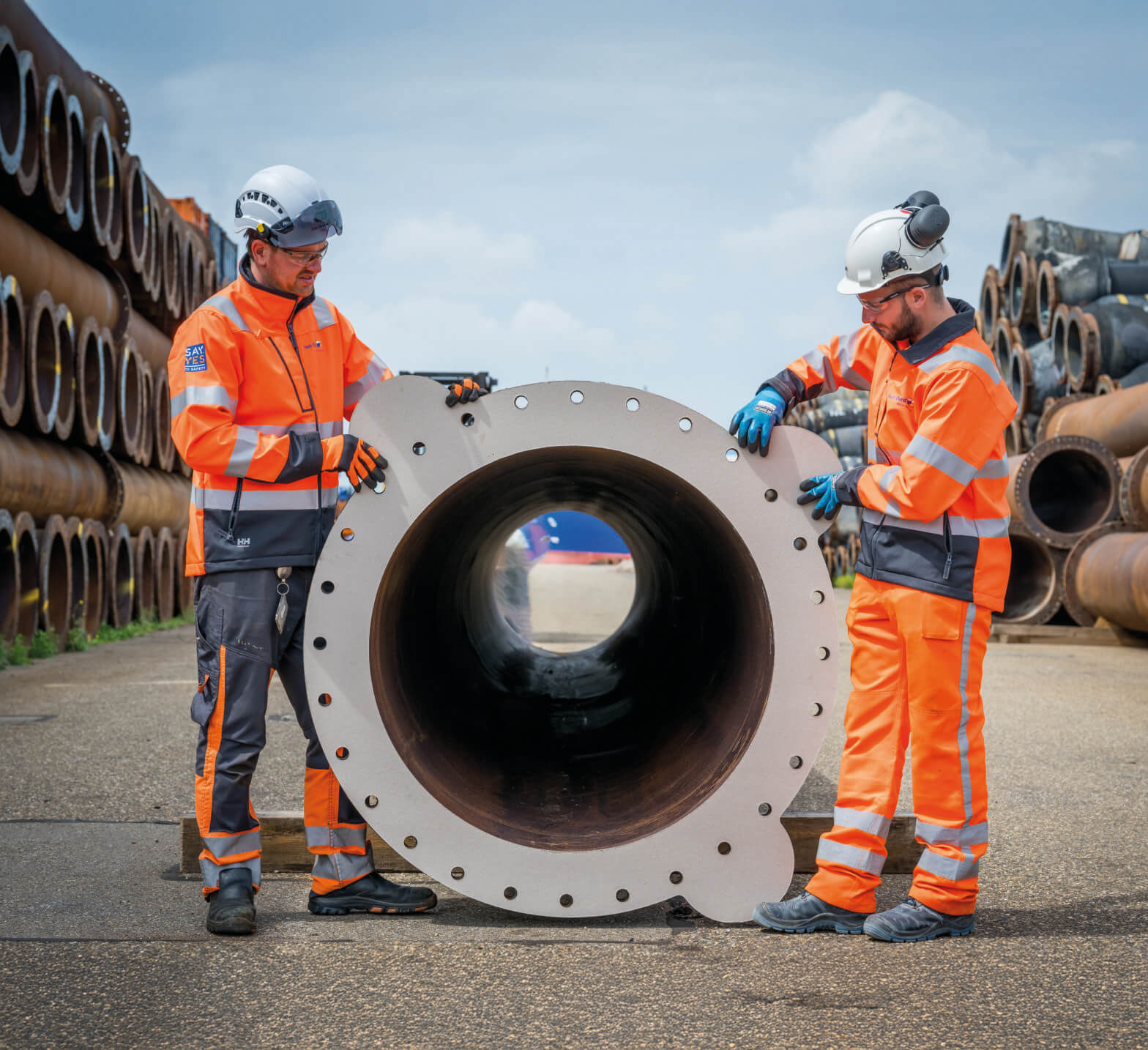
Van Oord’s award-winning reclamation pipe gasket redesign
Sometimes a small improvement can have a huge impact. Van Oord’s new reclamation pipe gasket design significantly reduces the risk of potential finger injuries with an easy to implement and cost-effective solution. The design was chosen as the winner of IADC’s Safety Award 2025.
Vertical Drainage Installed from Pontoons in the Bremerhaven Storage Depot
Rapid dewatering can improve the efficiency of storage depots. During the extension of the quay and the site at a storage depot in the Bremerhaven Osthafen, Cofra BV installed the vertical drainage system BeauDrain-S from floating pontoons.
Vesting and Ownership of Plant on Dredging Projects: A Fair Remedy or a Relic of the Past?
Dredging contractors should remain vigilant that vesting of plant provisions, that is, transferring ownership of the Contractor’s Equipment to the Employer whilst the Equipment is on the Site, still exists and can have consequences.
Waste heat recovery on dredging vessels
Limiting global warming requires the maritime sector to transition to a more efficient and sustainable operation. Reducing greenhouse gas (GHG) emissions, such as carbon dioxide and methane is vital to limit the global temperature rise (IPCC, 2021). Several legislative initiatives are in effect or are being discussed, including the IMO GHG strategy and the FuelEU Maritime initiative. This article discusses the potential of waste heat recovery (WHR) technologies to reduce the fuel consumption of dredging vessels. Available WHR technologies are compared based on working principle and operational performance for different types and ratings of internal combustion engines.
Waterfront Developments in Harmony with Nature
Though human-made beaches and lagoons are considered “artificial”, when well planned by engineers and architects they can become a sustainable, “natural” part of a new coastal landscape.
What happens when individuals step up safety during dredging activities?
By viewing routine processes and situations through a continuous lens of safety, individuals can help make operational processes on water or land safer. Eight solutions nominated for IADC’s Safety Award demonstrate the benefit of this approach.