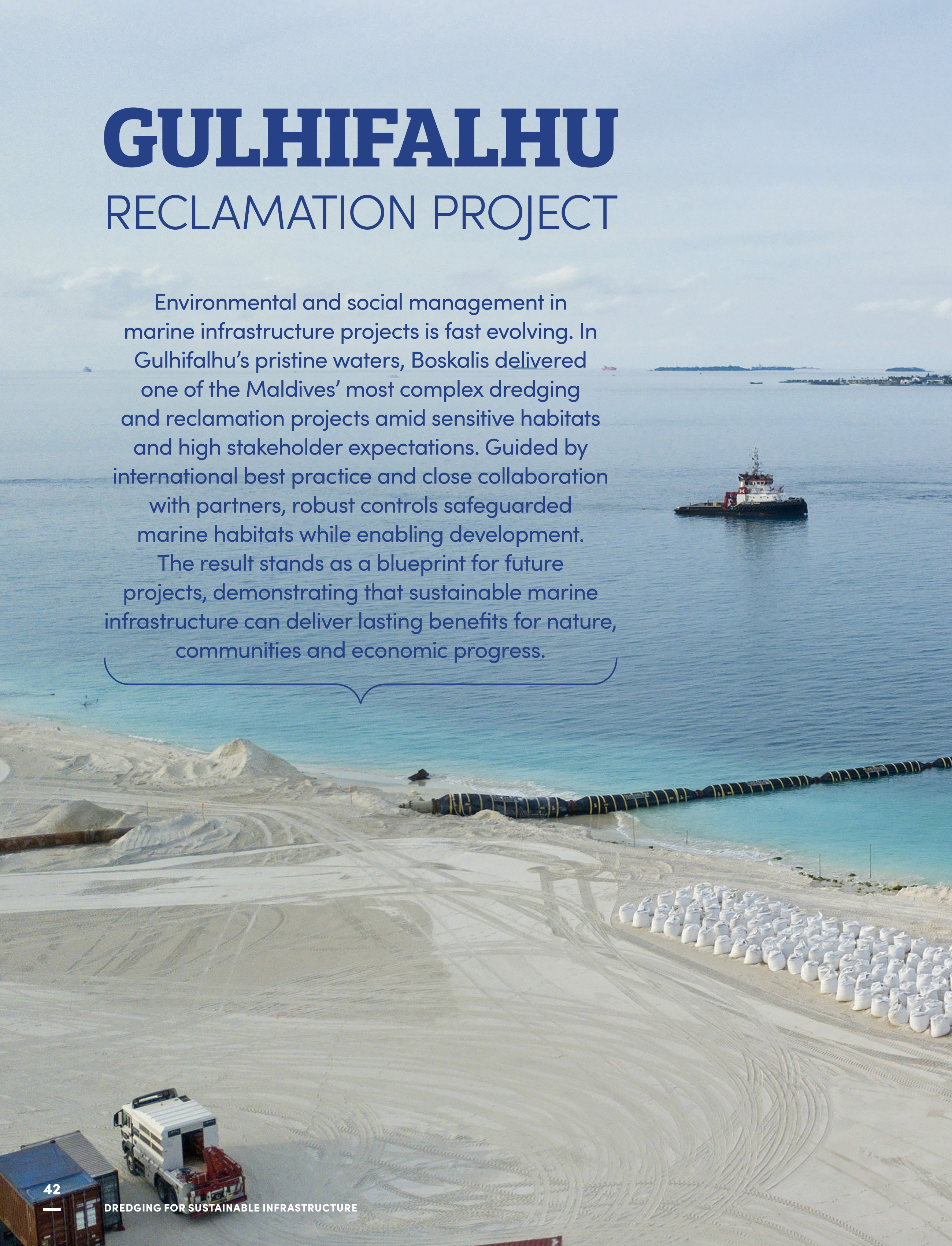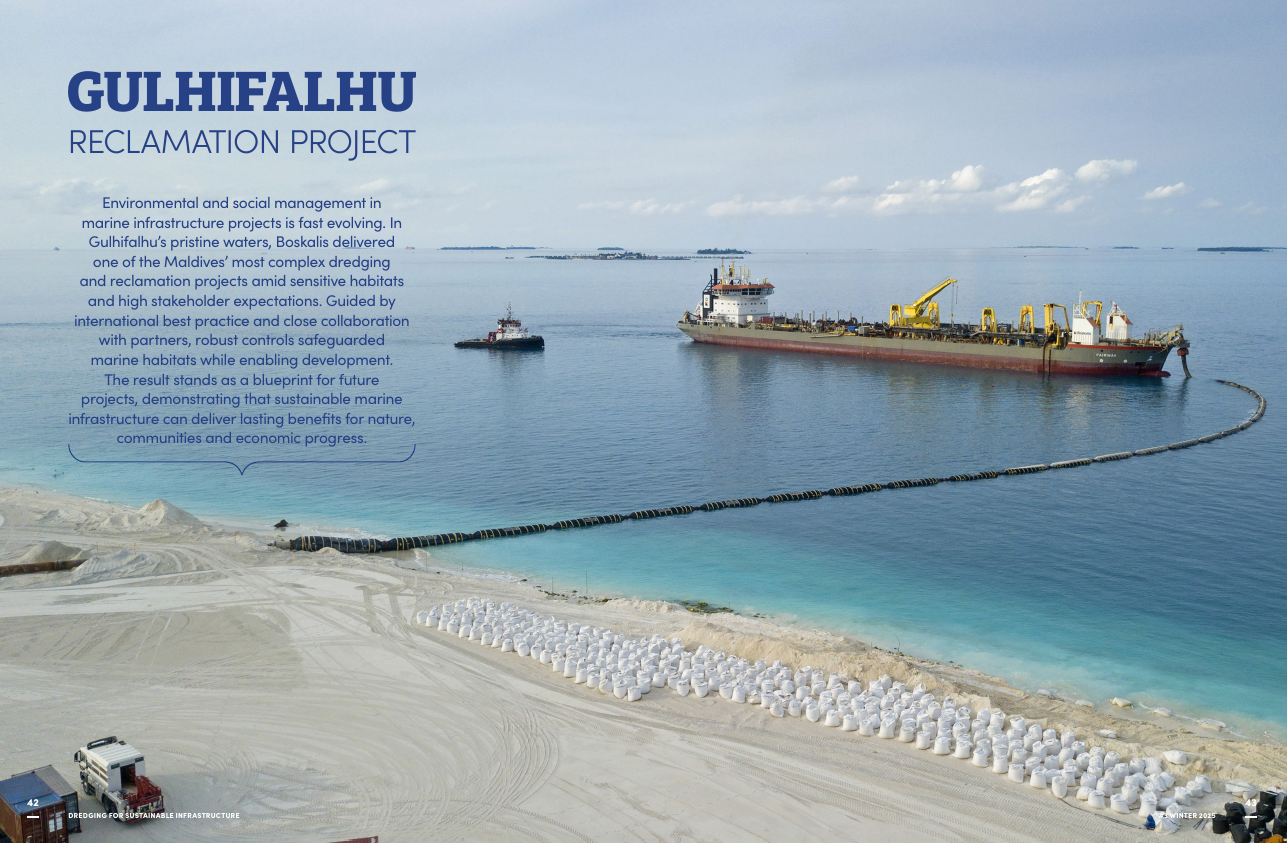

Environmental and social management in marine infrastructure projects is fast evolving. In Gulhifalhu’s pristine waters, Boskalis delivered one of the Maldives’ most complex dredging and reclamation projects amid sensitive habitats and high stakeholder expectations. Guided by international best practice and close collaboration with partners, robust controls safeguarded marine habitats while enabling development. The result stands as a blueprint for future projects, demonstrating that sustainable marine infrastructure can deliver lasting benefits for nature, communities and economic progress.

Environmental and social (E&S) management on dredging projects has become increasingly complex in recent years. Rising expectations – from regulators and the communities we work alongside – translate into more stringent requirements, with greater emphasis on measurable environmental and social performance. Delivering against international requirements in jurisdictions with different domestic regulations can create challenges, but it is attainable through close collaboration with project owners, consultants and stakeholders to achieve the best outcomes for people and nature.

Boskalis’ work on the Gulhifalhu reclamation project offers a strong example of how this complexity was navigated. It is one of the first projects undertaken by the Government of the Maldives in compliance with international E&S standards, reflecting both the challenges and opportunities of aligning such requirements with large-scale marine infrastructure – and highlights the evolving role of a dredging contractor in shaping sustainable results. From the outset, the Ministry and Boskalis shared a clear objective: harmonise national processes with international E&S requirements, ensuring that financing, delivery and environmental stewardship worked in concert. Our experience illustrates how robust E&S frameworks can be seamlessly integrated into dredging operations – reinforcing responsible project delivery while safeguarding sensitive environments.

Maldives context and land reclamation

The Maldives is renowned for its breathtaking natural beauty and exceptional marine biodiversity. The archipelago, consisting of 26 atolls and over 1,000 coral islands, is home to some of the most diverse and vibrant marine ecosystems on the planet. Coral reefs attract tourists from around the globe, provide vital support for local communities and fisheries, and act as natural barriers, protecting the islands from storm surges and coastal erosion.

At the same time, Malé, the capital, is one of the most densely populated cities in the world, with limited residential space. Rising sea levels and frequent flooding intensify this situation. Creating new land through reclamation activities is therefore essential.

Land reclamation in the Maldives can compete for space with critical marine ecosystems. Carrying out construction activities in such an environmentally sensitive area presents significant challenges and necessitates careful planning and execution to minimise environmental and social impacts.
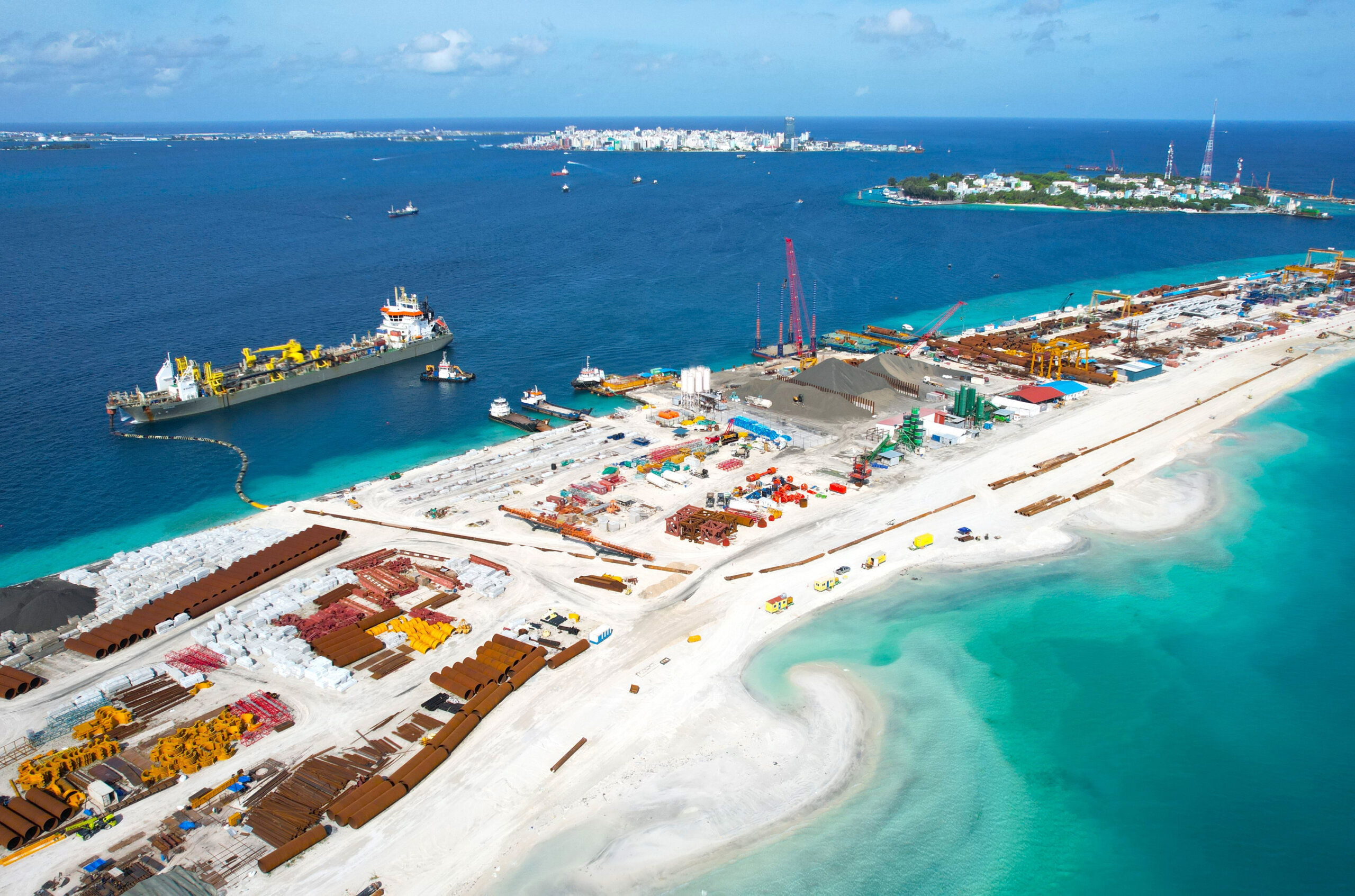
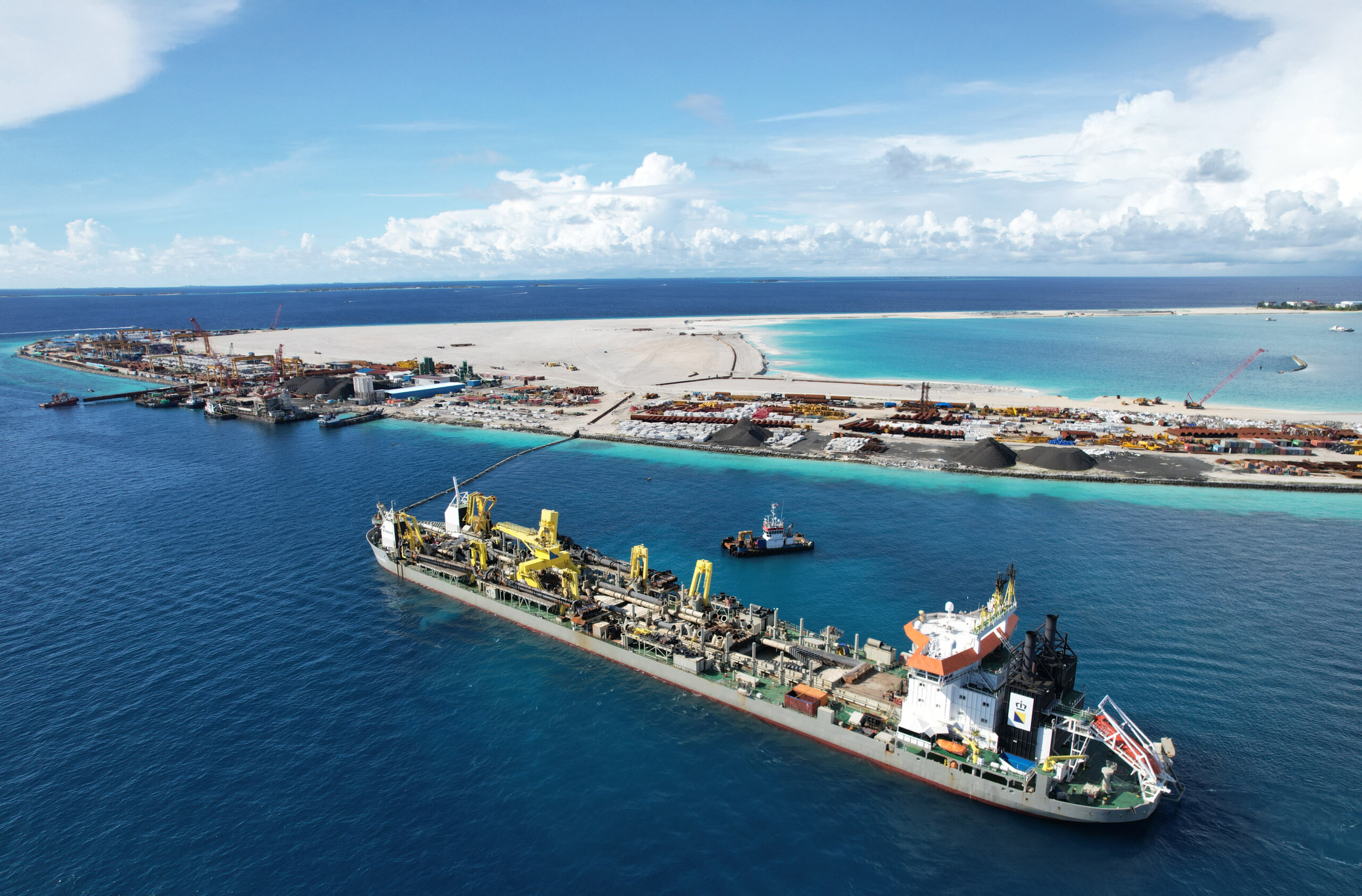
The trailing suction hopper dredger Oranje pumps sand to the reclamation area.

Gulhifalhu project

Located 2.5 kilometres west of the capital Malé, the Gulhifalhu expansion is a critical project aiming to create housing to ease overcrowding. The Gulhifalhu project owner is the Ministry of Construction, Housing and Infrastructure – the government authority responsible for planning and development of public infrastructure and housing.

Boskalis has delivered the project in two stages. In stage I (2020), roughly 30 hectares were reclaimed along the outer lagoon, which was funded by the Government of Maldives. In stage II, the island was expanded by about 150 hectares within the inner lagoon. For this stage, the Ministry pursued external financing through an Export Credit Agency (ECA)- backed loan provided by international lending institutions and Atradius Dutch State Business. As a condition of the financing arrangement, the project was required to comply with the International Finance Corporation’s (IFC) Environmental and Social Performance Standards. This financing structure helped focus all parties on clear roles, traceable commitments and proportionate controls across the project lifecycle.

International financing and the IFC Performance Standards

Securing funding through international financial institutions (IFIs) can play a pivotal role in enabling large-scale infrastructure projects to be realised, particularly in developing countries where access to capital may be limited. Advantages of IFI funding include access to substantial funding not typically available through local banks, more favourable borrowing terms and lower capital costs. Equally important, financing can serve as a catalyst for enhancements, such as extended baselines, cumulative-effects analysis and more frequent verification that strengthen confidence in project decisions.

More than 130 leading global banks and financiers adhere to the Equator Principles - rules to ensure that the projects they finance are both socially responsible and environmentally sound. These projects are required to meet IFC’s Environmental and Social Performance Standards, a global benchmark for managing risks throughout the project lifecycle. Addressing issues, such as fair labour practices, resource efficiency, community well-being and biodiversity protection, these standards help ensure every stage of development delivers benefits for people, nature and the economy.

At Boskalis, we have seen firsthand how these standards shape the approach to environmental and social management and are key to the success of projects like Gulhifalhu.

The trailing suction hopper dredger Queen of the Netherlands.

Role of the dredging contractor in E&S management

Boskalis often operates in jurisdictions where E&S regulations and practices differ from internationally recognised standards. To deliver consistently, Boskalis applies its company-wide E&S management system, based on the OECD Guidelines for Multinational Enterprises, ensuring coherence across planning, execution and monitoring. We identify and evaluate E&S risks and impacts, apply the mitigation hierarchy (avoid, minimise, restore, offset), and embed controls into plans, training for personnel and monitoring.

There are practical limitations: we manage the impacts we cause or control during execution, while the project owner retains overall E&S accountability. On large projects with multiple contractors, it is not possible to direct others, but we always strive to gain insight into how E&S is being managed across different interfaces. As a responsible contractor, we actively draw on our experience to guide, constructively engage and support involved parties where appropriate. This approach helps us meet our commitments and drive continuous improvement across the project, respecting local context while aligning with international best practice.

Preparations for Gulhifalhu stage II

Robust E&S management was established from the project’s inception. A national Environmental Impact Assessment (EIA) was already in place based on Maldivian regulations, but meeting international best practice required additional work. Together with the Ministry, we conducted complementary studies and independent reviews alongside the national process and consolidated findings into a comprehensive Environmental and Social Impact Assessment (ESIA) covering the period from construction through to operation. To align with international best practice, the Government showed its commitment by engaging with local and international experts.

Together with CDE Consulting, a Maldivian E&S specialist, we assessed critical habitats and biodiversity, local livelihoods, cumulative impacts, labour risks and climate risk/resilience. Focused consultations were held with affected groups, including fisherfolk and Vilingili dive operators, ensuring that their voices were heard and included in the ESIA.

Treating the ESIA as a platform for delivery, we translated its findings into tailored management plans, procedures and monitoring frameworks. The Ministry appointed an independent E&S consultant and together we established a project-wide E&S management system with clear roles, controls and reporting.

Key protections were captured in the Project Environmental and Social Management Plan and supporting documents such as the Biodiversity Offset Management Plan. These were reviewed and approved by the lenders before construction began, ensuring safeguards were in place from day one.

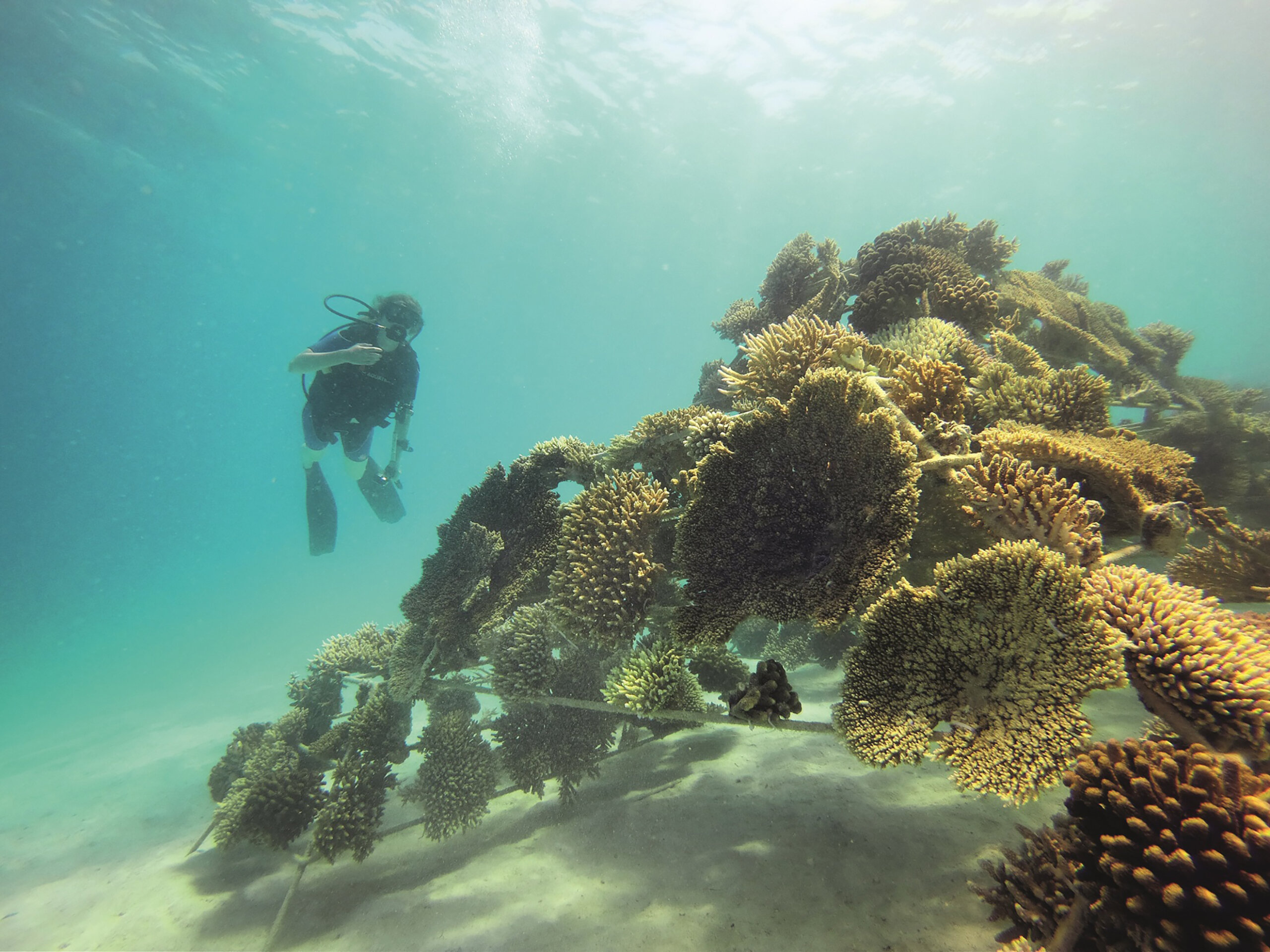
Boskalis assisted the Ministry of Construction, Housing and Infrastructure with the relocation of coral colonies to nearby resorts.

From preparation to execution

Environmental management and monitoring

The reclamation and borrow areas are located within a highly sensitive marine environment, surrounded by key marine protected areas (MPAs), thriving coral reefs, fishing areas and resort islands. These sites, known as sensitive receivers, faced potential risks from sediment dispersion and changes in water quality during the dredging and reclamation process.

Based on detailed habitat assessments, stakeholder input and collaboration with local and international experts, all sensitive receivers were incorporated into the environmental management plans. Tailored work methods and targeted mitigation measures were implemented to keep impacts to a minimum.

Boskalis executed the environmental monitoring scope, delivering accurate, real-time data to guide operations in accordance with environmental safeguards. The Ministry’s independent E&S consultant oversaw compliance and monitored all work.

Turbidity management

Plume modelling by a third party identified locations most likely to experience higher turbidity, informing “no-dredge” zones and operational adjustments such as reducing overflow via a green valve. At the reclamation site, a sediment bund and silt curtains were used to limit dispersion.

Daily in-situ turbidity measurements at various locations were complemented by weekly laboratory total suspended solids (TSS) analysis. Sedimentation traps measured deposition rates. Coastal profiles helped identify shoreline changes. The extensive monitoring programme enabled early warnings and adaptive management when thresholds were approached.

The reclamation and borrow areas are located within a highly sensitive marine environment.

Sensitive coral environment

The sensitive coral habitat required special attention. Together with CDE Consulting, we conducted coral health surveys across all reefs surrounding the reclamation and borrow areas. Except for coral close to the reclamation site, coral health appeared to be unaffected by the dredging activities.

We paid particular attention to coral health during two critical but distinct events. During mass coral spawning, when corals reproduce and are highly sensitive to disturbance, we coordinated with nearby resorts and the Maldives Marine Research Institute (MMRI) to adjust or temporarily pause works to avoid disruption. During the coral bleaching season, when elevated temperatures cause stress and mortality, we intensified monitoring to assess impacts and recovery. This revealed significant bleaching across the entire atoll. Together, these experiences highlight the need for long-term planning and continuous monitoring of construction projects in sensitive reef environments.

Supporting the client

Biodiversity offsets

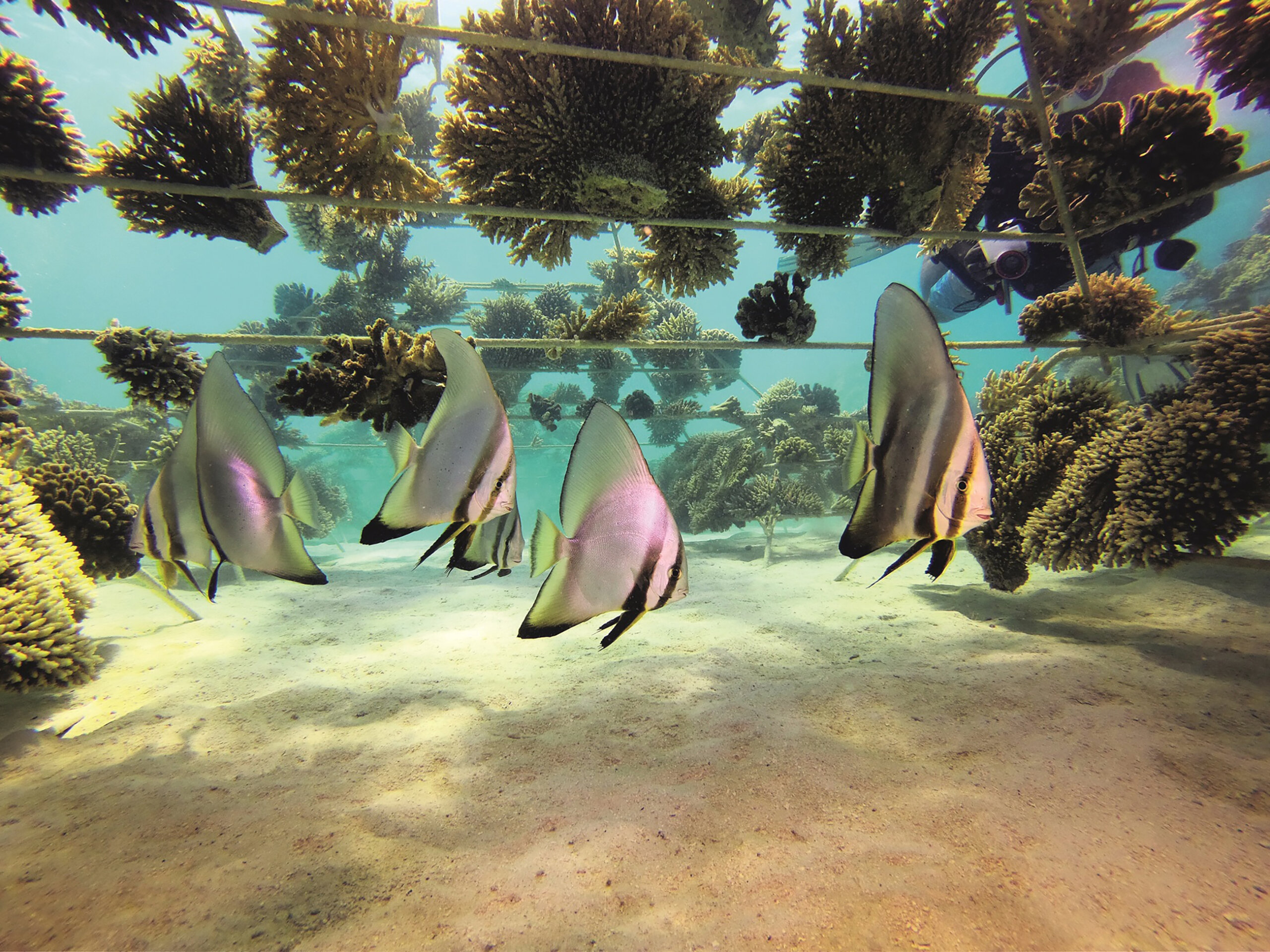
The ESIA identified unavoidable coral loss within the Gulhifalhu lagoon. To offset this impact, the Ministry (working closely with CDE Consulting) established two new MPAs and developed conservation action plans for both sites. This marked a major milestone in the protection of coral reefs in the Maldives. In addition, a long-term restoration plan was established to rehabilitate corals at the MPA adjacent to Gulhifalhu island, ensuring that ecological recovery continues well beyond the project’s construction phase.

Before the project commenced, Boskalis assisted the Ministry with the relocation of coral from the Gulhifalhu lagoon to nearby resorts. This process involved careful planning and execution to move coral colonies to designated safe areas without causing damage, ensuring their survival and continued growth. The coral relocation was carried out in collaboration with local marine biologists to determine the optimal methods and setup at selected resort sites. Through our own initiative, we successfully relocated even more coral totalling thousands of colonies. The initial survival rate was high, which is promising for coral conservation throughout the Maldives. The lessons learned and partnerships forged with resorts and local experts now form a practical playbook for future projects.

Stakeholder engagement

Boskalis supported the Ministry with stakeholder engagement and grievance management throughout the project. A dedicated project website was developed and actively updated during the project, including all monitoring reports. This acted as a one-stop information site to keep communities and stakeholders informed of studies, progress, key milestones and planned activities.

In close collaboration with the Ministry, we launched a practical, accessible grievance management system designed to make every voice heard. Submissions can be made online or in person, with each complaint logged, tracked against agreed timelines and addressed promptly and consistently. To strengthen community engagement, the Ministry appointed a dedicated Community Liaison Officer as the first point of contact for stakeholders and grievance handling. On site, teams were fully briefed on how to refer inquiries, capture and track concerns, and escalate issues swiftly, ensuring feedback was handled transparently and with accountability.

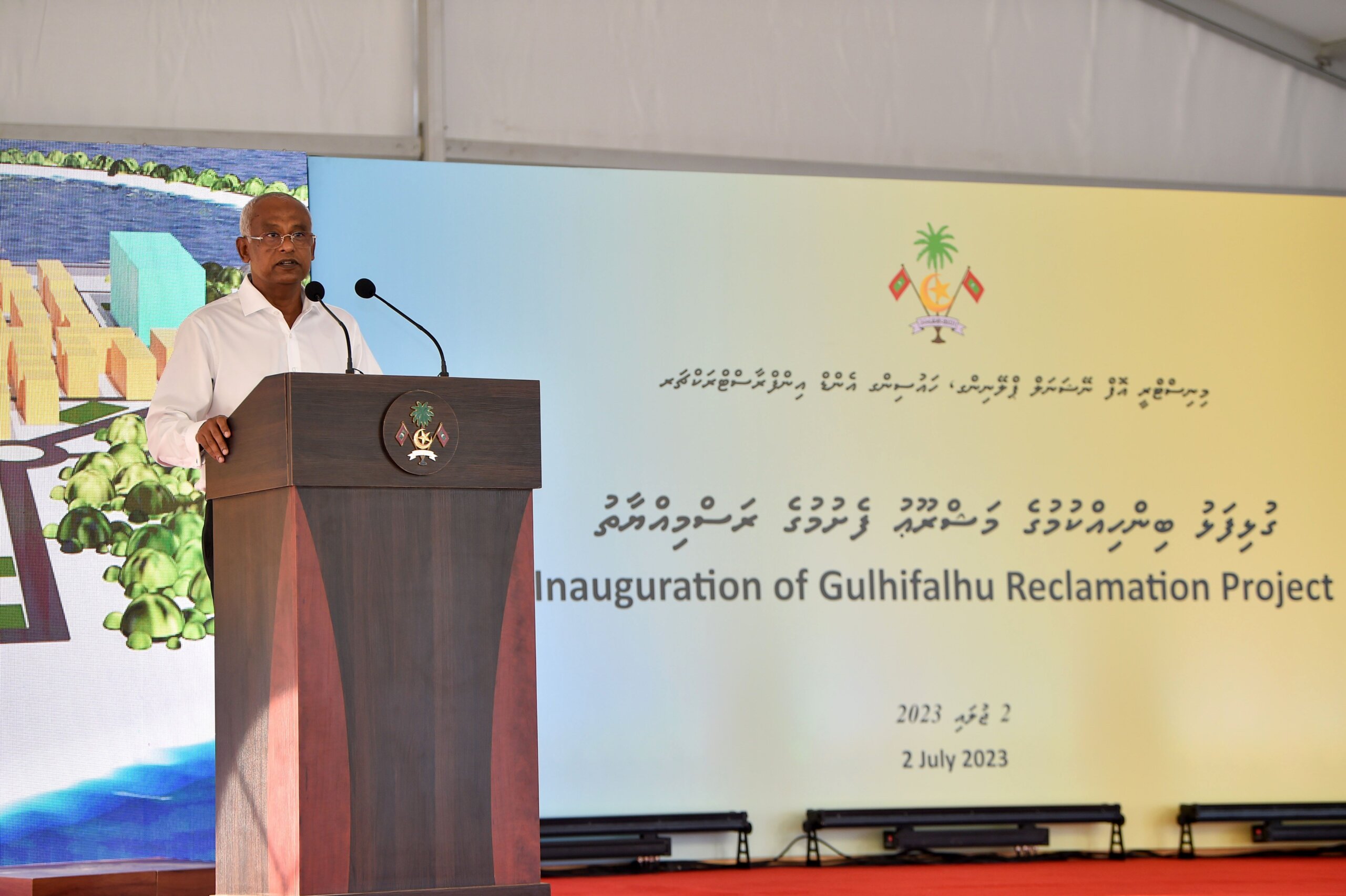
In his inauguration speech, Maldives President Ibrahim Mohamed Solih called the Gulhifalhu project “an important development initiative with significant, positive impacts for the entire country”.

Cumulative impacts

Managing cumulative impacts is inherently challenging where multiple projects operate on overlapping timelines and in connected marine and community environments. Visibility into adjacent projects’ schedules, mitigation measures and monitoring data is often limited, making it difficult to attribute effects and coordinate responses.

Boskalis worked with the Ministry to identify plausible cumulative impacts (e.g., turbidity, vessel traffic, noise, access to fishing grounds), request and share relevant information and, where feasible, align thresholds, monitoring locations and early-warning triggers with neighbouring activities. When potential cumulative issues emerged, we raised them promptly through the Ministry’s coordination forums so measures could be adjusted at a programme level.

Capacity building to contractors and suppliers

To help embed good practice locally, Boskalis provided targeted capacity building to contractors and suppliers we engaged with who had limited prior exposure to IFC-level documentation and monitoring. Activities included pre-mobilisation workshops on E&S requirements, method statements and risk controls, along with practical coaching and joint inspections. They also featured toolbox talks on topics, such as waste management, spill prevention, marine fauna protection and community safety. This practical, hands-on approach improved consistency on site and strengthened local ownership of E&S performance all the way up to IFC standards.

Oversight by project lenders

The project was subject to project lenders’ oversight, with independent advisors reviewing plans and performance against agreed standards and actions. Prior to construction, key E&S plans underwent external review and approval. During execution, the lenders conducted periodic site audits and document reviews, focusing on implementation and monitoring results. Boskalis and the Ministry responded promptly to findings with corrective and preventive actions agreed with the lenders. This oversight promoted continuous improvement, ensured traceability of commitments and provided assurance that E&S measures were effectively implemented in practice.

Creating new horizons through collaboration and E&S excellence

Dredging projects are increasingly complex, driven by rising expectations for transparency, accountability and long-term sustainability. In this context, Boskalis and its clients choose to act responsibly, planning for long-term outcomes rather than short-term delivery. The Gulhifalhu project exemplifies this commitment.

Elevating a project of this scale to meet international E&S standards required substantial capacity, specialised expertise, strong managerial support, sufficient time and seamless communication among all stakeholders. These requirements posed considerable challenges compared to projects that solely rely on national benchmarks, particularly in areas, such as biodiversity management, stakeholder engagement and grievance mechanisms, where national legislation and global standards can differ significantly.

Together with the Ministry, we carried out works in line with environmental and social best practices. Our approach combined targeted E&S studies, extensive stakeholder consultations and careful alignment with both the local regulatory framework and site-specific impacts.

The Gulhifalhu project demonstrates that proactive E&S management and collaborative delivery can achieve rigorous performance while harmonising national and international E&S processes. Through early alignment, close collaboration, clear interfaces and adaptive management, we delivered positive outcomes in a sensitive environment. Most importantly, this project gave the Government of the Maldives an opportunity to strengthen institutional capacity and take meaningful steps toward raising future projects to international E&S standards.

This partnership model fits the growing complexity of large-scale projects in support of durable and sustainable outcomes, setting a precedent for responsible, world-class marine infrastructure delivery.

Authors

Iain Wood

Social Impact
Advisor, Boskalis,
the Netherlands.

OTHER ARTICLES BY THIS AUTHOR
Brent Hendriksen

Environmental
Engineer, Boskalis,
the Netherlands.

OTHER ARTICLES BY THIS AUTHOR

PDF download

Download the PDF version of this article with high resolution pictures and layout.

Single-page view

DOWNLOAD PDF Document | 7,37 MB

Two-page view

DOWNLOAD PDF Document | 7,34 MB

Share this page